
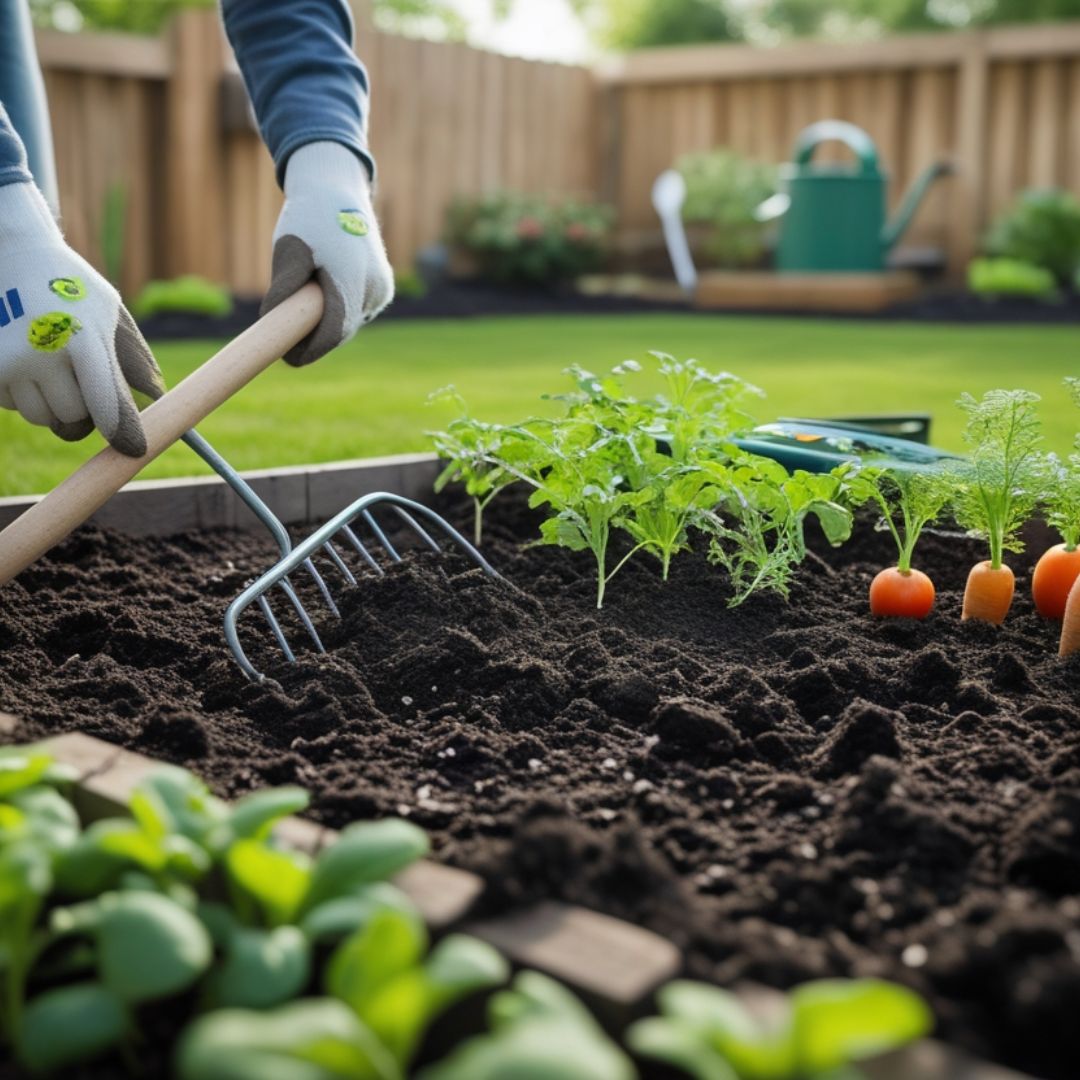
You can turn a small patch of yard into a productive backyard vegetable garden that saves money, tastes better, and connects you to your food. Start by choosing the right spot, prepping healthy soil, and picking a few easy crops—this gives you quick wins and keeps you motivated.
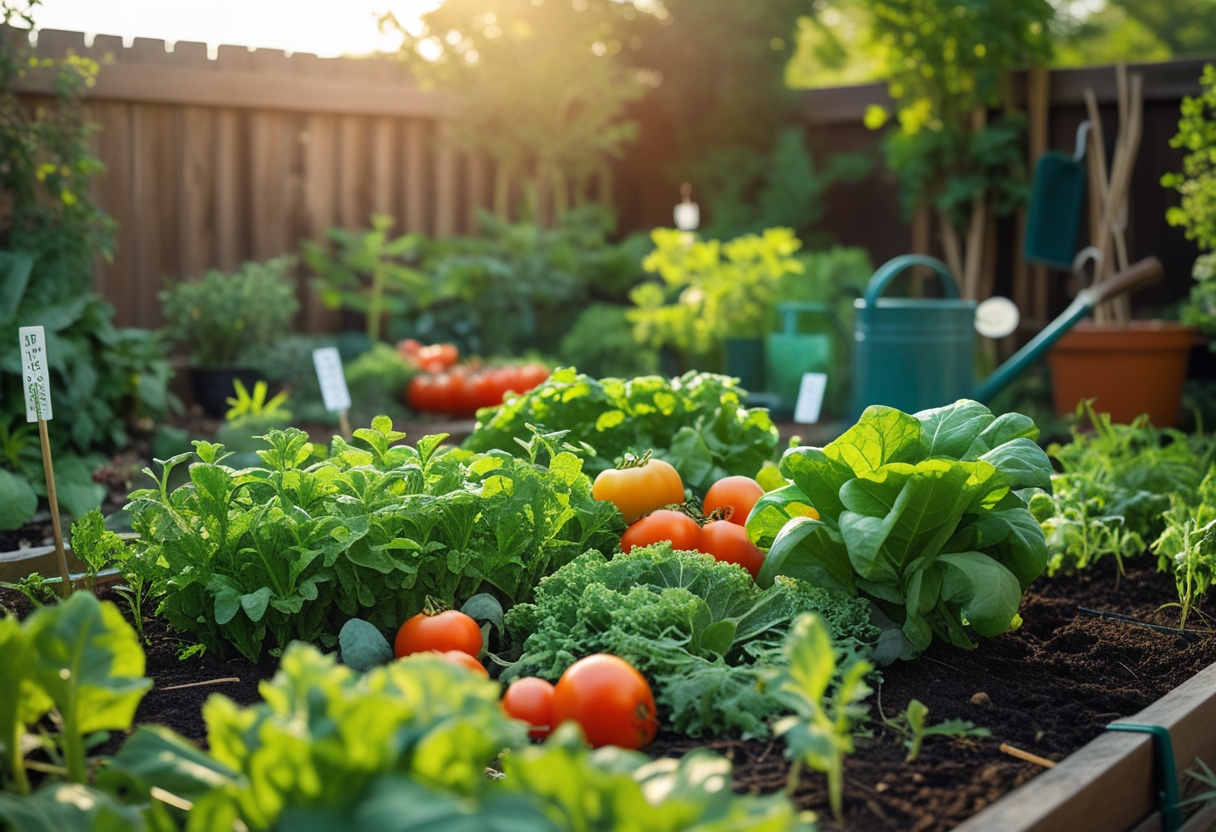
This guide walks you through simple garden layouts, essential tools, soil tips, and beginner-friendly vegetable and herb selections so you can grow your own food with confidence. Expect practical ideas for maximizing small spaces and creative designs that make planting and harvesting easier and more rewarding.
Getting Started: Site, Layout, and Tools
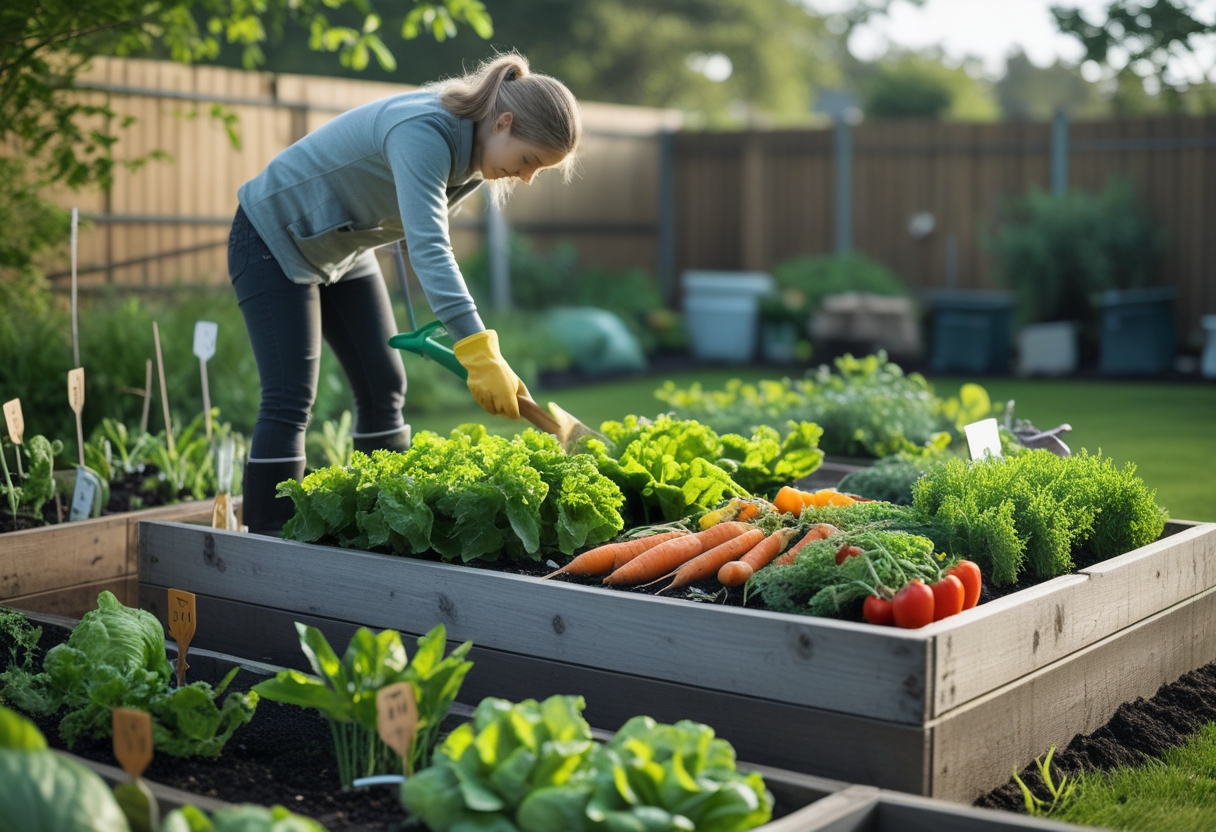
Pick a spot with steady sun and good drainage. Decide whether you want fixed beds, movable containers, or a mix, and gather a few basic tools to make planting and upkeep easier.
Choosing Location and Sunlight
Choose a place that gets at least 6–8 hours of direct sun for tomatoes, peppers, and most warm-season crops. Leafy greens and herbs can tolerate partial shade near taller plants. Check light at different times of day before you commit.
Avoid low spots where water pools. Good drainage protects roots; if your yard stays wet, use raised garden beds or gravel pathways to improve runoff. Consider nearby structures: north-facing fences can block light, while a south-facing wall can create heat for early starts.
Think about access. Place beds within easy reach of a water source and the garden shed. Short paths let you carry a watering can and tools like a garden fork and trowel without difficulty.
Planning Your Garden Layout
Start small with one 4×4 or 4×8 raised bed or a 10×10 in-ground plot. Sketch a simple plan on graph paper or a garden planner app. Mark beds, paths, and sun angles so tall crops don’t shade low ones.
Use 2–3 foot-wide beds so you can reach the center without stepping on soil. Leave 18–36 inch paths or gravel paths between beds for comfortable walking and tool access. Include space for compost, tool storage, and a spot for a watering can or hose.
Mix permanent features and flexible areas. Fixed raised garden beds, a pallet garden, or a keyhole garden can stay in place year-round. Reserve a border or containers for seasonal crops and vertical gardening—railing planters, gutter gardens, and trellises save space.
Selecting Raised Beds or Containers
Raised beds give warmer soil, better drainage, and easier access. Build with rot-resistant lumber, concrete blocks, or buy a raised garden bed kit. Aim for 10–12 inches deep for most vegetables; root crops like carrots need deeper beds.
Containers work when space is tight—a balcony garden, grow bags, bucket gardening, or railing planters let you grow on patios and small yards. Use pots at least 5 gallons for tomatoes and 3–5 gallons for peppers and herbs. Ensure good drainage holes.
Keep tools and ergonomics in mind. Elevated beds reduce bending; a garden trowel, hand pruners, garden gloves, and a watering can are enough to start. If you plan larger beds, add a garden fork and a spot for a glass greenhouse or a small shed for supplies.
Soil Preparation and Essential Growing Practices
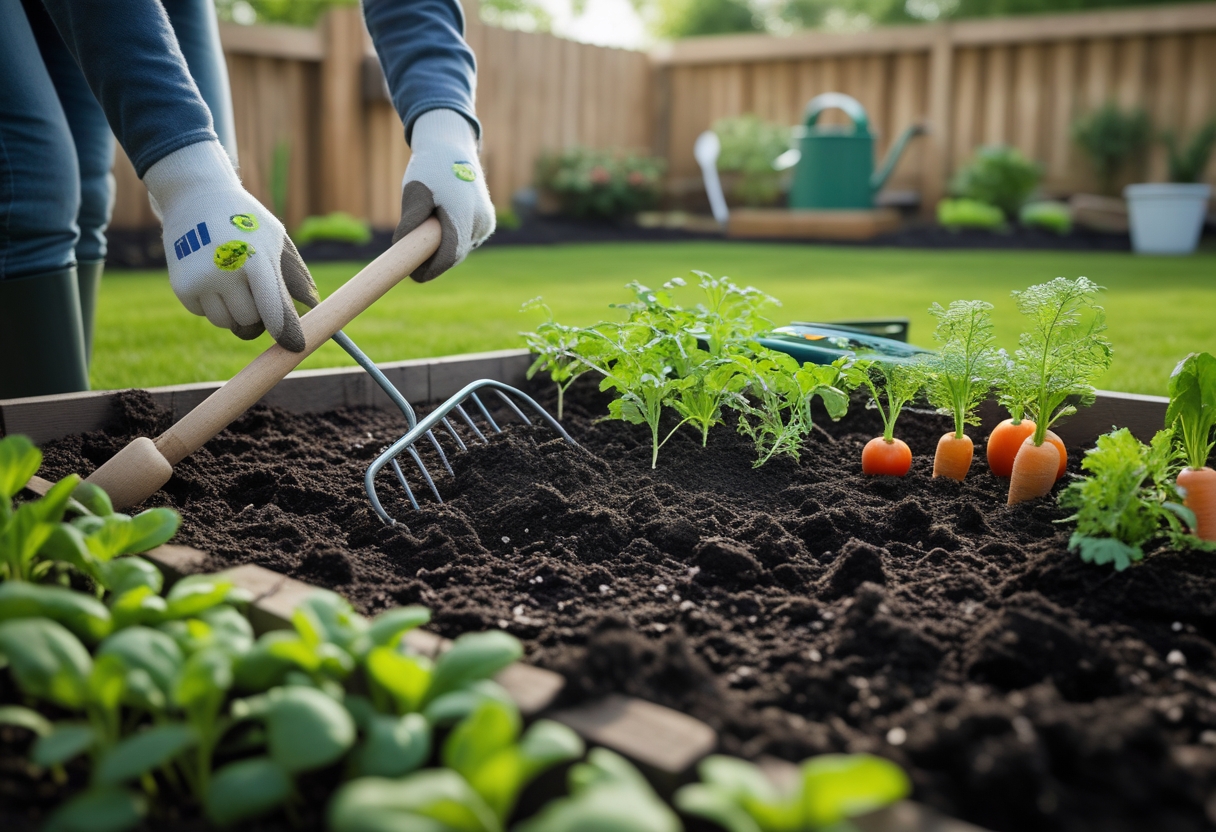
Good soil starts with testing, adding organic matter, and creating a firm but crumbly seedbed. Plan amendments by bed (or raised bed garden), set planting dates around your frost dates, and lay irrigation before planting.
Soil Improvement and Composting
Test your soil pH and nutrient levels first. Use a simple kit or send a composite sample from several spots in a bed. That tells you whether to add lime, sulfur, or fertilizer and prevents guesswork.
Build compost to supply steady nutrients. Use a compost bin and layer kitchen scraps, yard waste, and dry carbon (leaves or straw). Turn the pile every 1–2 weeks to speed breakdown. Finished compost looks dark, smells earthy, and mixes easily into the top 4–6 inches of your bed or raised bed garden.
If you start seedlings, mix compost into potting mixes at 10–20% for nutrients without burning roots. Record days to maturity and keep a planting calendar so you add compost in the off-season or 3–4 weeks before major plantings.
Mulching and Soil Amendment
Apply mulch after planting to retain moisture and cut weeds. Use 2–3 inches of straw, shredded leaves, or bark and keep mulch 1–2 inches away from stems to avoid rot. Mulch helps reduce evaporation when you water with a soaker hose or drip irrigation.
Match soil amendments to the problem. Add coarse sand or leaf mold to speed drainage in heavy soils, and add compost or vermiculite to hold water in sandy beds. For high-salt or tight-clay issues, gypsum can help without changing pH much. Work amendments into the top 4–6 inches and wait 7–14 days before planting large transplants.
Set up irrigation lines now. Lay soaker hoses or drip lines under mulch so roots get steady water. Use your planting calendar and local frost dates to schedule first and last plantings for best results.
Vegetable and Herb Selection for Maximum Success
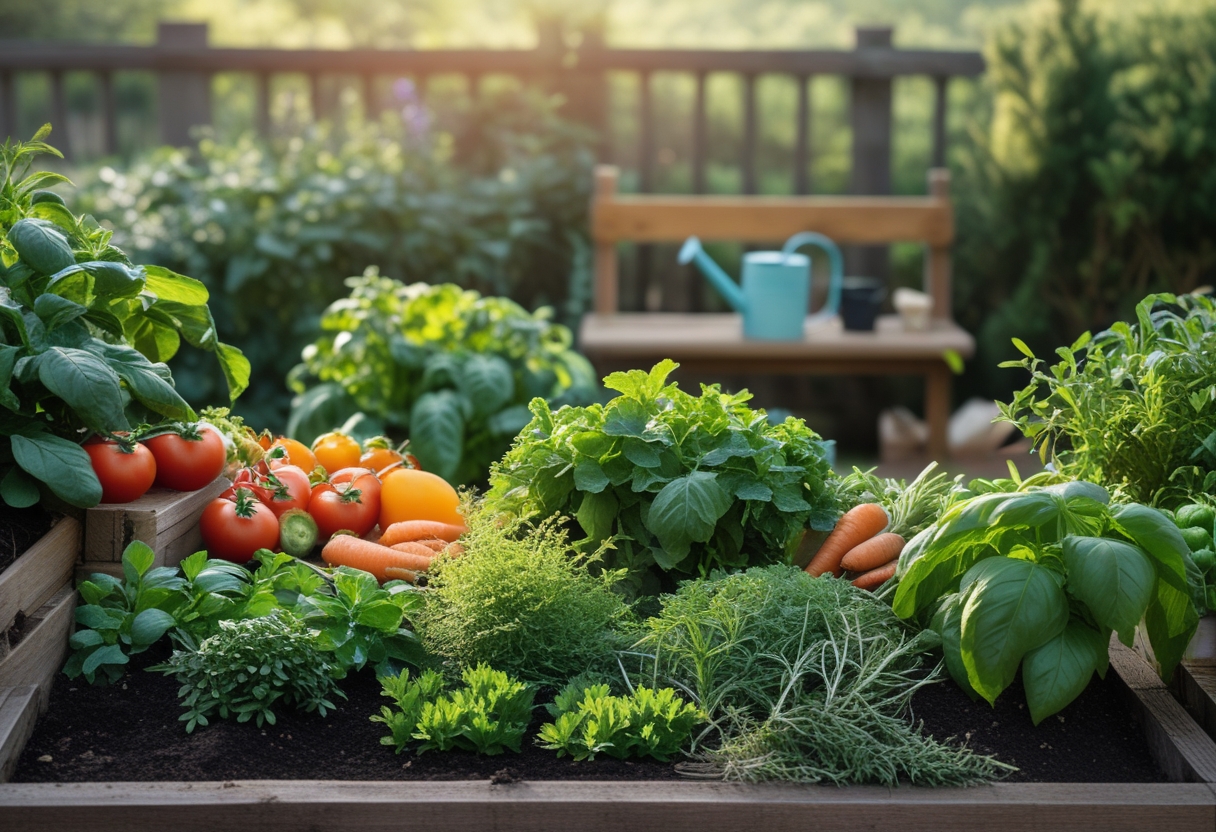
Pick plants that match your sun, space, and how often you can water and harvest. Choose reliable varieties, group plants by needs, and include herbs for flavor and pest control.
Best Vegetables for Backyard Gardens
Focus on tried-and-true crops that give high yields and fit most yards. Tomatoes and peppers repay space with many meals; choose determinate types for containers or indeterminate for long-season harvests. Cucumbers and zucchini produce heavily—train cucumbers on a trellis to save room. Leafy greens like lettuce, spinach, and kale grow fast and tolerate partial shade. Root vegetables such as carrots, beets, radishes, and turnips need loose soil; sow radishes and carrots in succession for steady harvests. Onions, garlic, and leeks store well and require little space once planted. Potatoes, broccoli, and green beans are reliable staples; green beans climb to save ground. Strawberries and edible flowers add variety and attract pollinators.
Ideal Crops for Small Spaces and Containers
Use compact varieties and vertical growing to make the most of small areas. Cherry tomatoes, patio pepper cultivars, and dwarf eggplants fit well in 5–7 gallon pots. Herbs—basil, parsley, chives, cilantro, rosemary, thyme, and mint—thrive in containers; keep mint confined to its own pot to stop spreading. Salad gardens with mixed lettuce, arugula, and edible flowers give frequent cut-and-come-again harvests. Peas and pole beans climb a trellis, while cucumbers on a vertical support free up ground. Small-rooted crops like radishes, baby carrots, and turnips do well in deep pots or raised beds. For a salsa garden, grow compact tomatoes, peppers, cilantro, and onions together for easy access.
Smart Growing Strategies and Creative Design Ideas
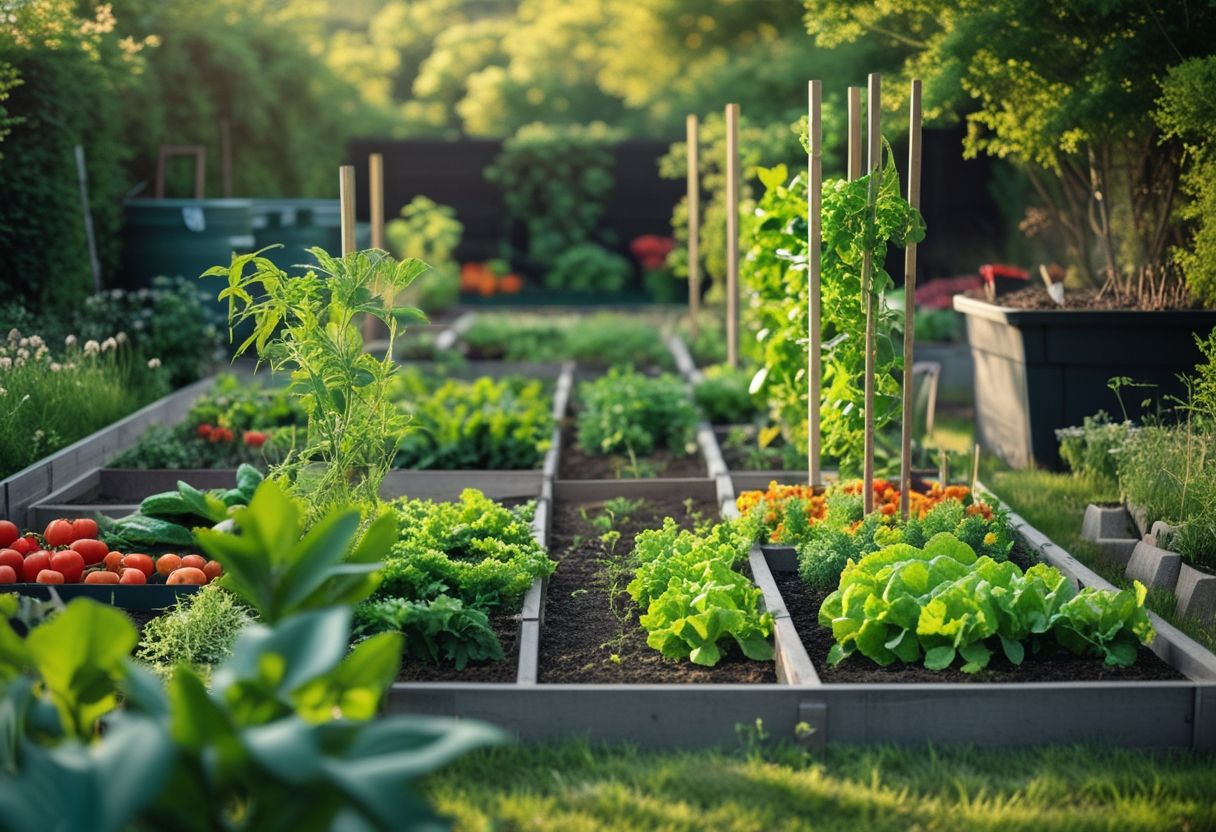
Use plant placement and timing to boost yield, cut pest problems, and make the most of small spaces. Combine companion planting with tight bed layouts, and add vertical supports where vining crops can climb.
Companion Planting and Interplanting
Companion planting pairs crops that help each other. Plant basil and marigolds near tomatoes to repel pests and attract pollinators. Put onions or garlic beside carrots to mask carrot scent from pests. Use interplanting by slipping fast crops—radishes or lettuce—between slower ones like tomatoes to fill space and shade soil.
Design small beds so tall plants face north or back of beds to avoid shading smaller crops. Add flowering herbs and a few marigold clusters to invite beneficial insects like ladybugs and lacewings. Use trellis supports, arbors, or a garden trellis for vining crops (peas, cucumbers, beans) to free bed space and improve air flow. In containers, stake or use PVC gutter gardens horizontally for herbs and shallow roots.
Square Foot Gardening and Succession Planting
Square foot gardening divides beds into 1-foot squares for precise spacing. In a 4×4 bed, place one tomato or pepper per 1–1.5 squares, nine carrots per square, or 16 baby greens. This layout simplifies irrigation, crop rotation, and companion matches.
Pair square-foot grids with succession planting: sow quick crops every 2–3 weeks in empty squares. After harvesting radishes, replace with bush beans or late lettuce. Use vertical gardening towers or trellises on the south edge to grow vining crops without stealing square footage. Track planting dates on a simple chart so you stagger harvests and keep beds productive through the season.
