
You can grow a lot more food in a small space by training plants to climb. Vertical gardening saves space, keeps fruits cleaner, improves air flow, and makes harvesting easier so you get more from each square foot.
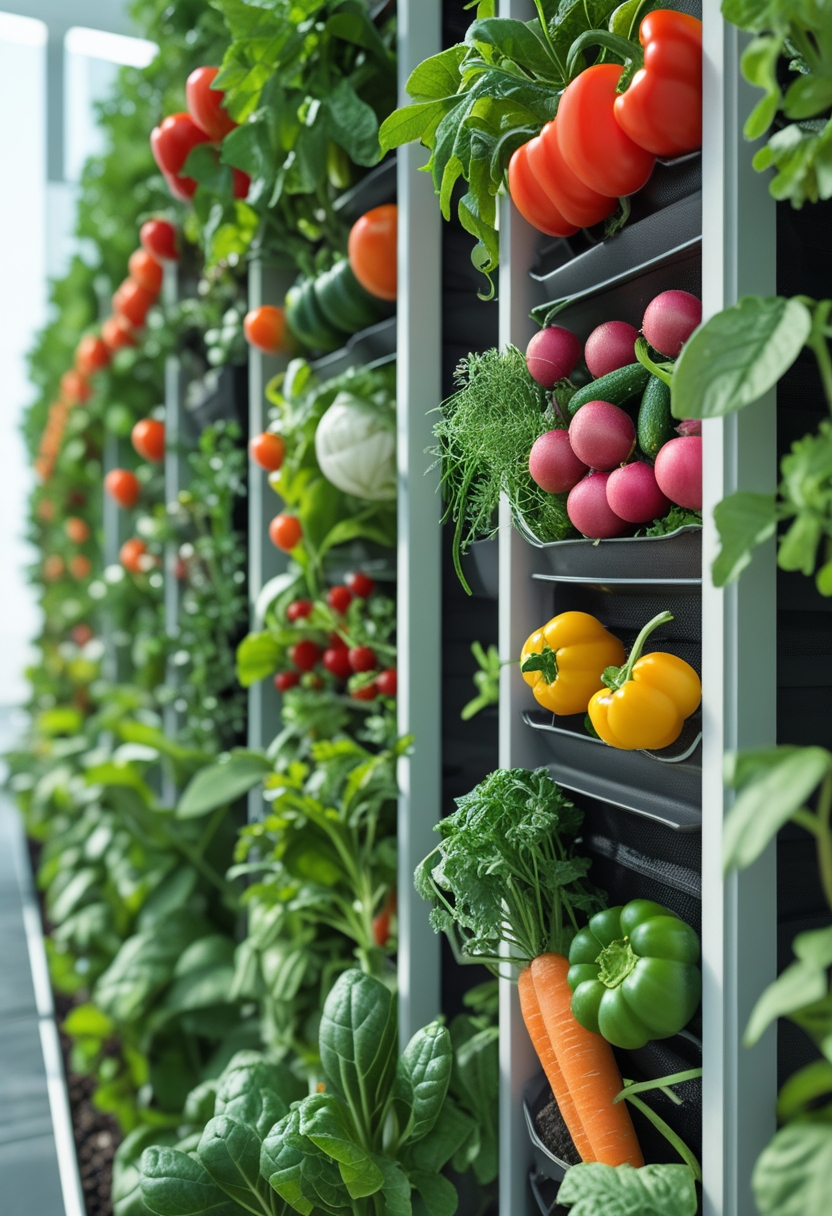
This article shows practical, easy-to-grow vegetable options that thrive when trained upward. You’ll learn which crops work best, simple support ideas, and tips to keep vines healthy so your vertical garden succeeds.
1) Cucumbers (vining varieties like ‘Marketmore 76’)
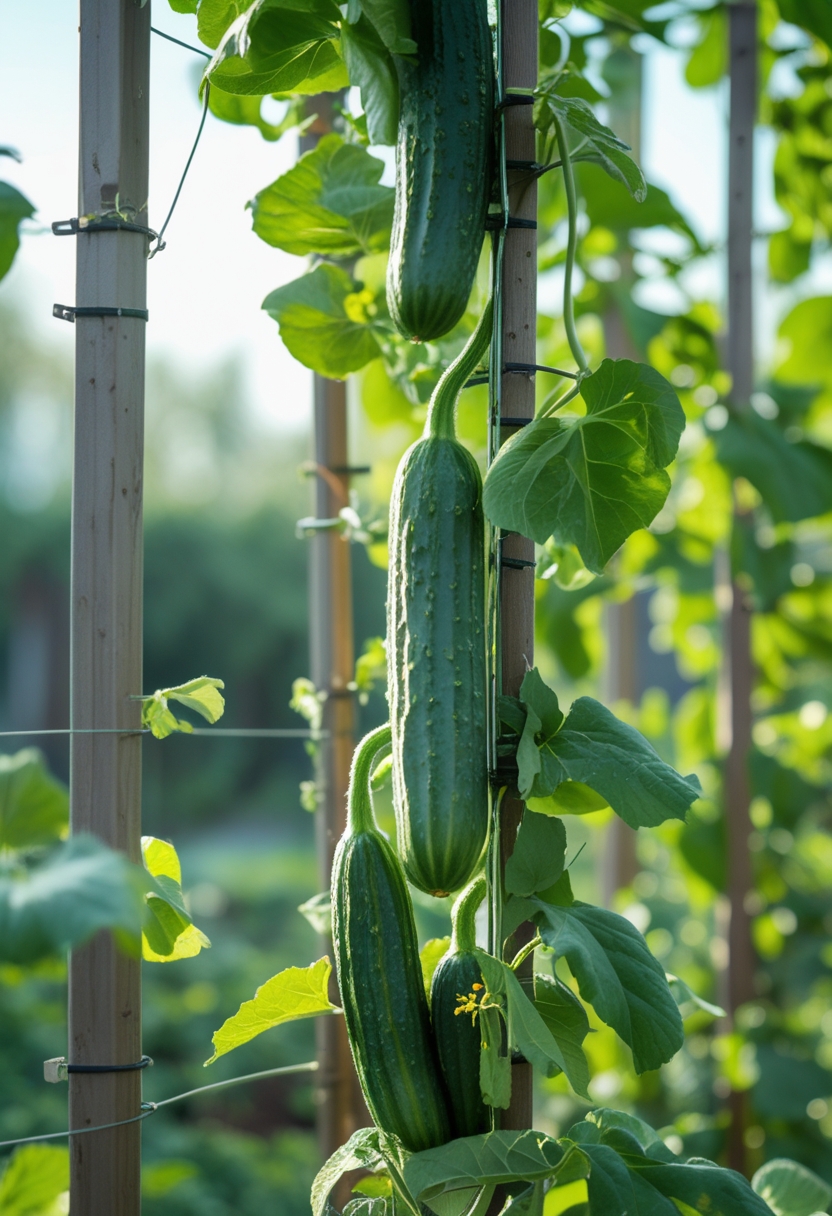
Choose vining cucumbers for tight spaces; they climb a trellis and save ground. Marketmore 76 is a reliable slicer that resists common diseases and fruits all season.
Plant in full sun with warm, fertile soil and keep soil evenly moist. Train vines upward and harvest regularly to encourage steady production.
2) Pole beans (e.g., ‘Kentucky Wonder’)
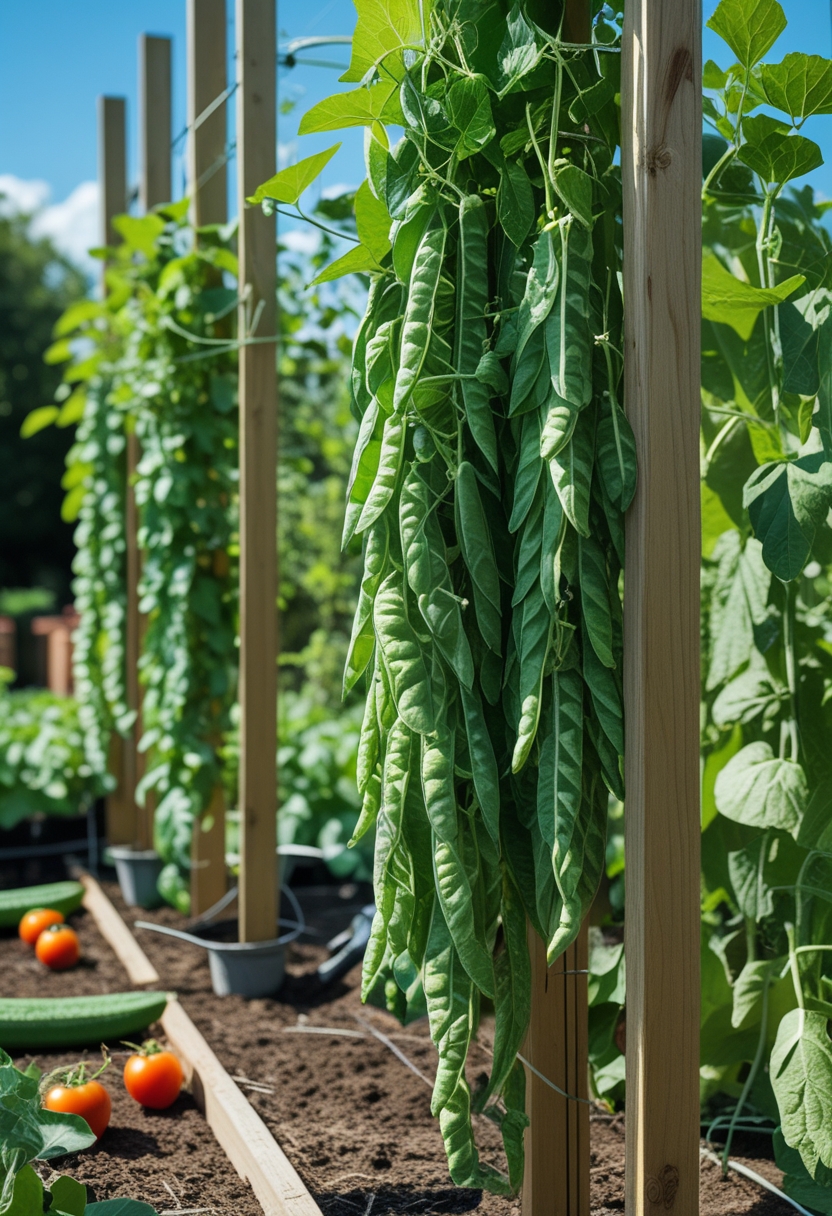
You can grow pole beans up tall to save ground space and get big yields.
Kentucky Wonder is a classic climber with long, tender pods and steady production.
Plant seeds after frost when soil is warm, and give sturdy supports like trellises or poles.
Keep soil evenly moist and pick beans often to encourage more pods.
3) Indeterminate tomatoes (e.g., ‘Sungold’)
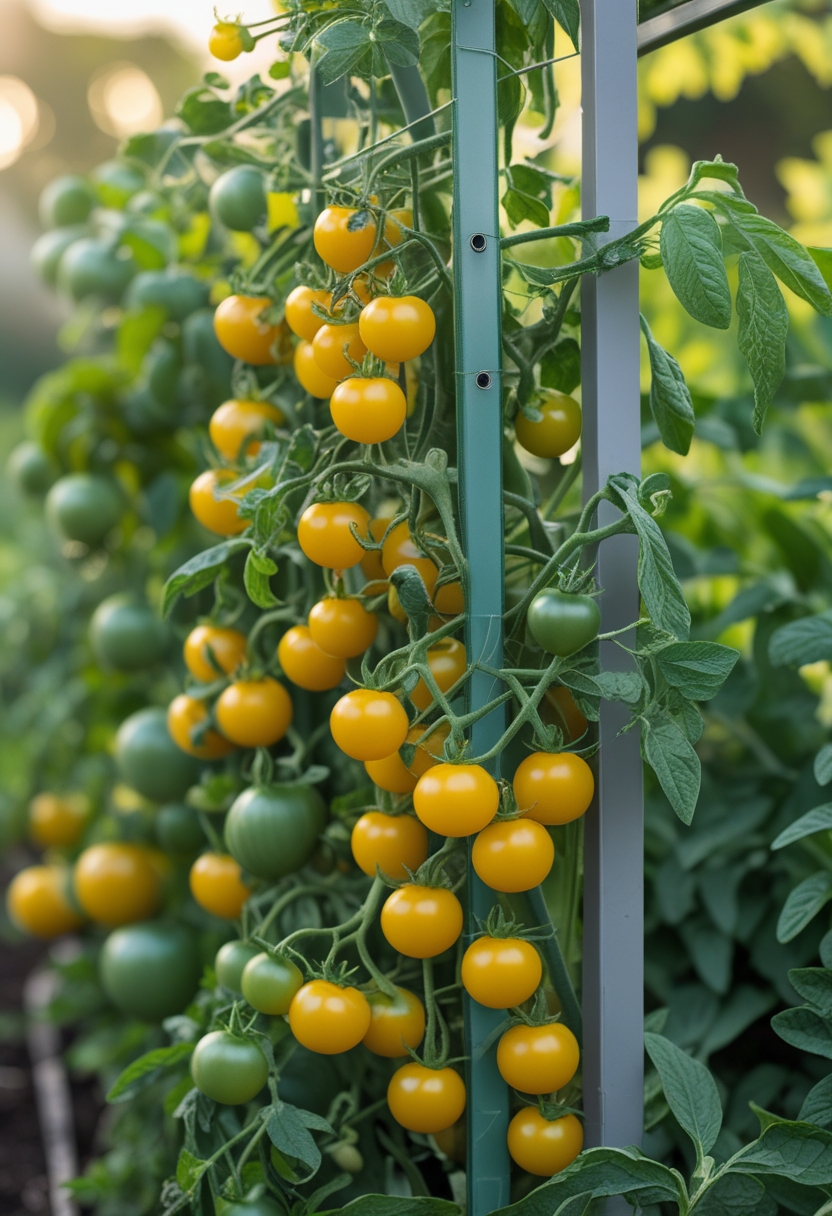
You can grow indeterminate tomatoes up a trellis or stake to save ground space.
They keep producing fruit all season, so you get steady harvests from one plant.
Choose a strong support and prune a few side shoots to improve air flow.
Sungold is a popular cherry type with sweet, low-acid fruit and early yields.
4) Peas (spring shelling or snap, like ‘Sugar Snap’)
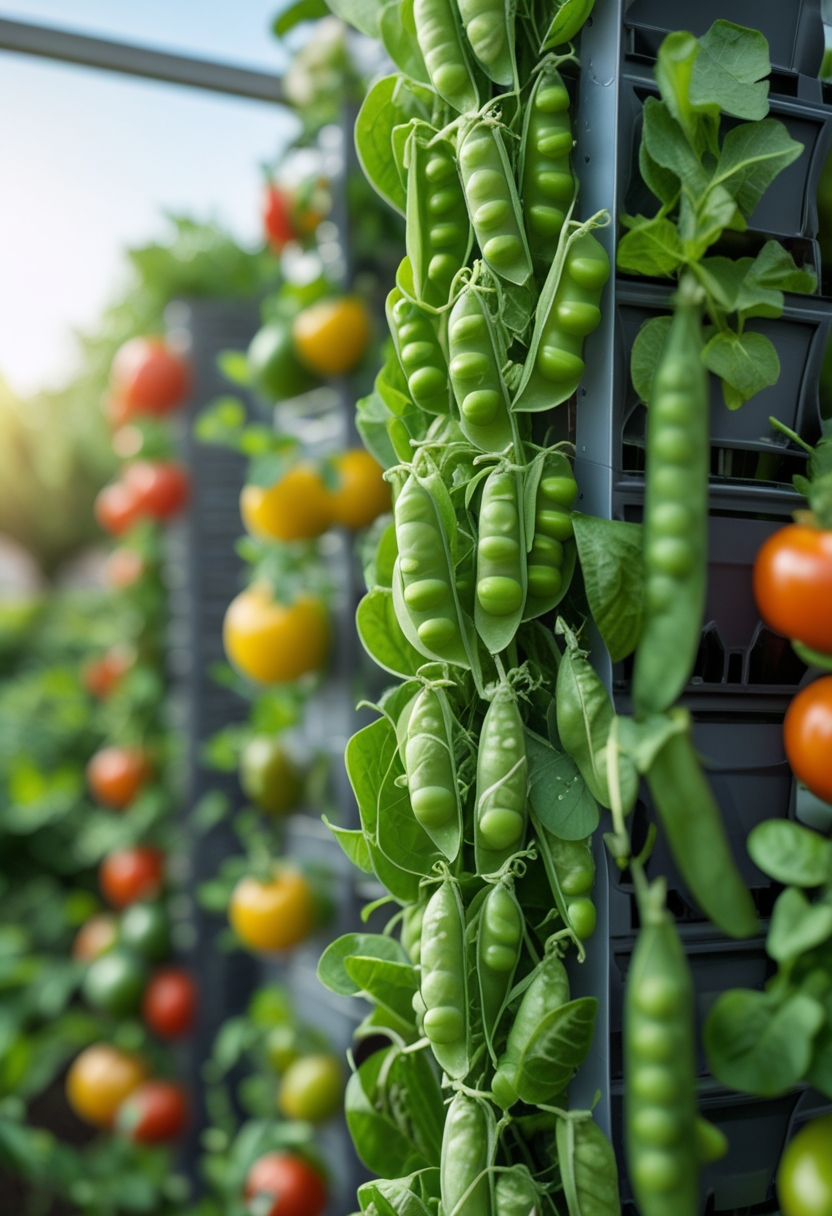
Peas climb naturally, so give them a trellis or netting and they’ll use vertical space well.
Plant seeds in cool soil in early spring and keep soil moist until they germinate.
Sugar snap peas have edible pods and are quick to harvest, while shelling peas give you full pods to shell.
Space rows or containers so air circulates to reduce disease.
5) Sweet potatoes (vine-trained slips)
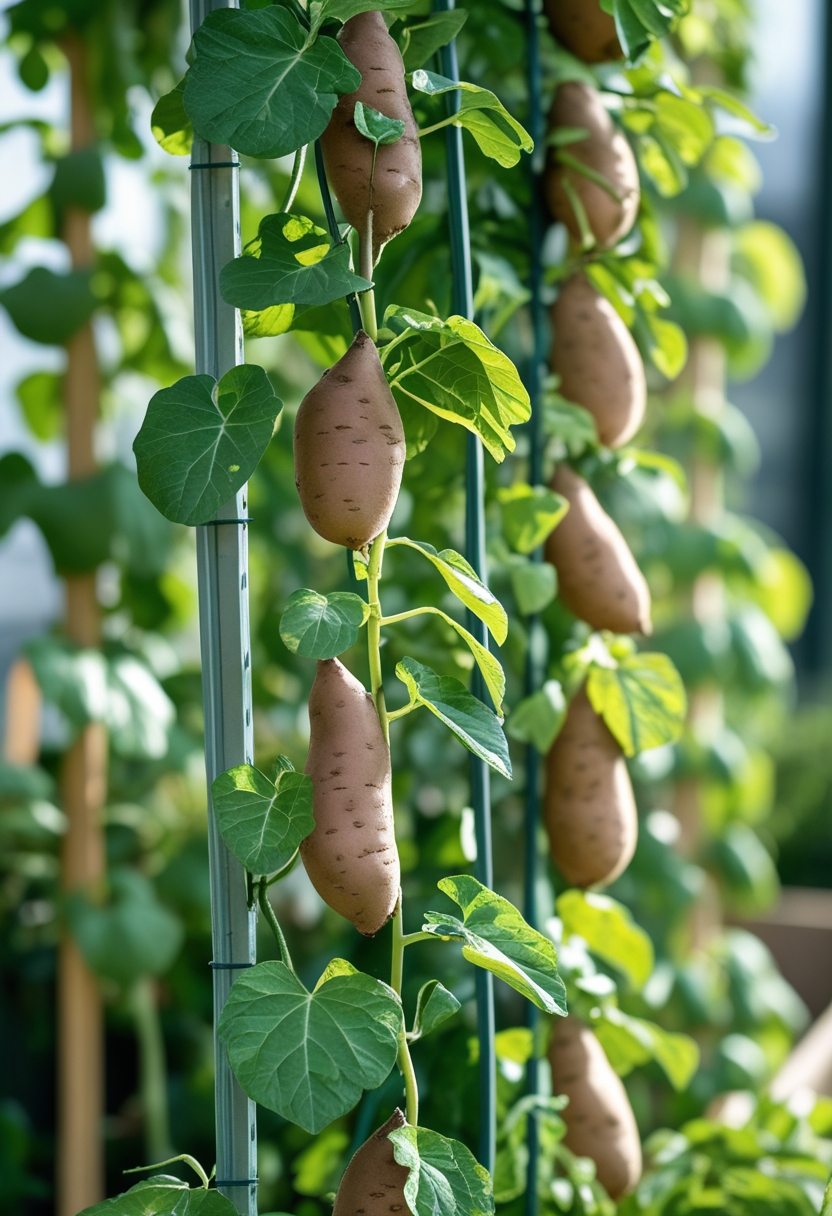
Train sweet potato slips up a sturdy trellis to save ground space and keep foliage tidy.
You can start slips from tubers or buy them; plant in rich, well-draining soil and give full sun.
Tie vines gently as they climb and check supports often.
Growing vertically reduces rot and pest contact while still allowing you to harvest tubers from the soil below.
6) Scarlet runner beans (‘Painted Lady’)
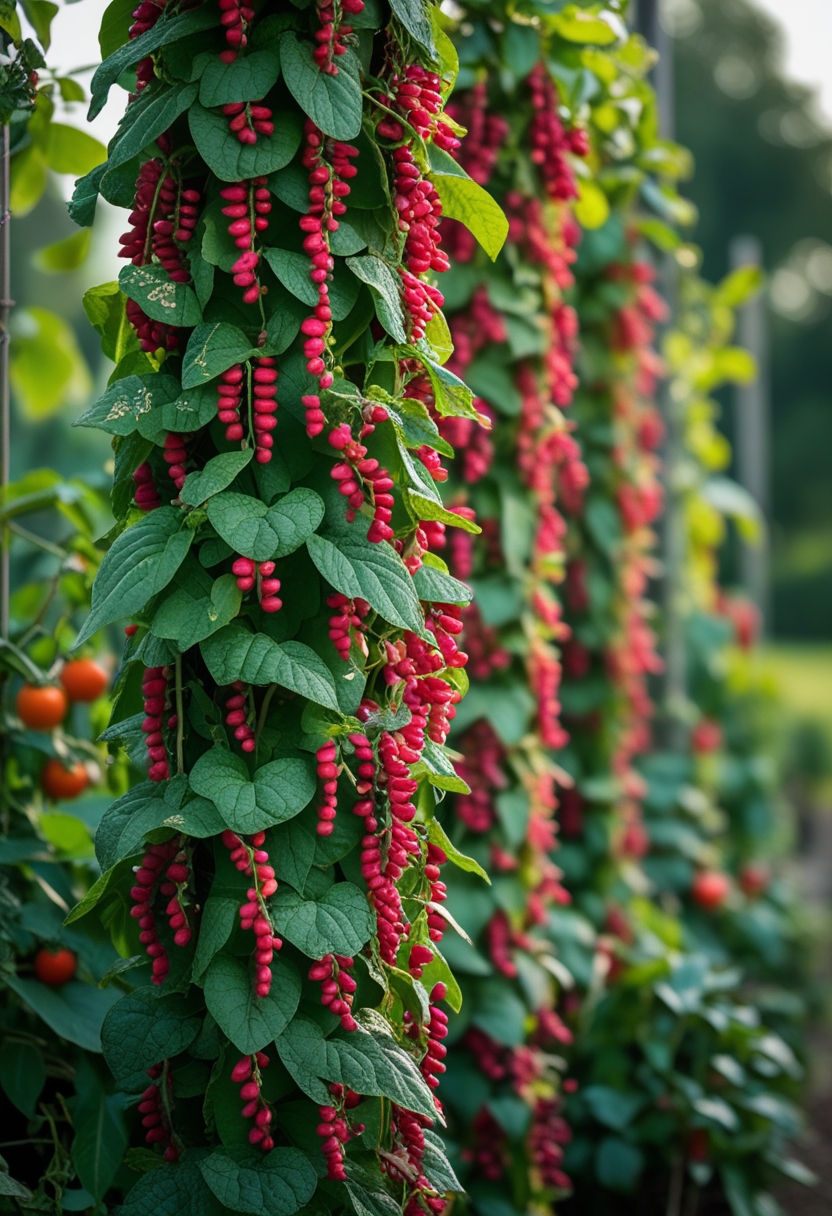
You can grow ‘Painted Lady‘ up a trellis or teepee to save ground space.
The vines climb 8–10 feet and produce bicolored coral-and-cream flowers that attract pollinators.
You can harvest tender pods or later pick seeds for drying.
Plants prefer full sun, regular water, and support for sturdy vertical growth.
7) Slicing cucumbers (‘Straight Eight’)
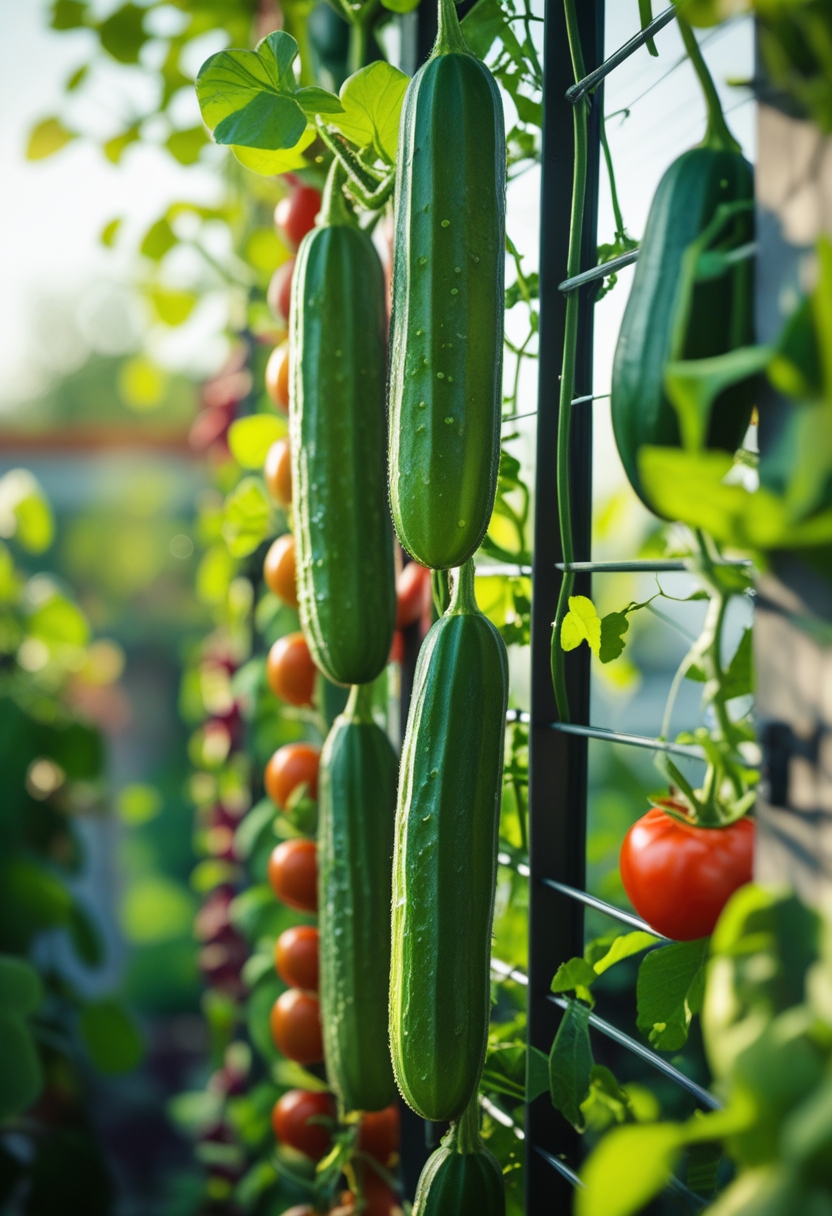
You get firm, straight fruits that suit salads and slicing when you train Straight Eight up a sturdy trellis.
This vining type needs about 6+ hours of sun and regular watering to avoid bitter spots.
Tie vines loosely as they climb and check supports for heavy fruit.
Growing vertically saves space, improves air flow, and reduces rot.
8) Melons (compact types like ‘Minnesota Midget’)
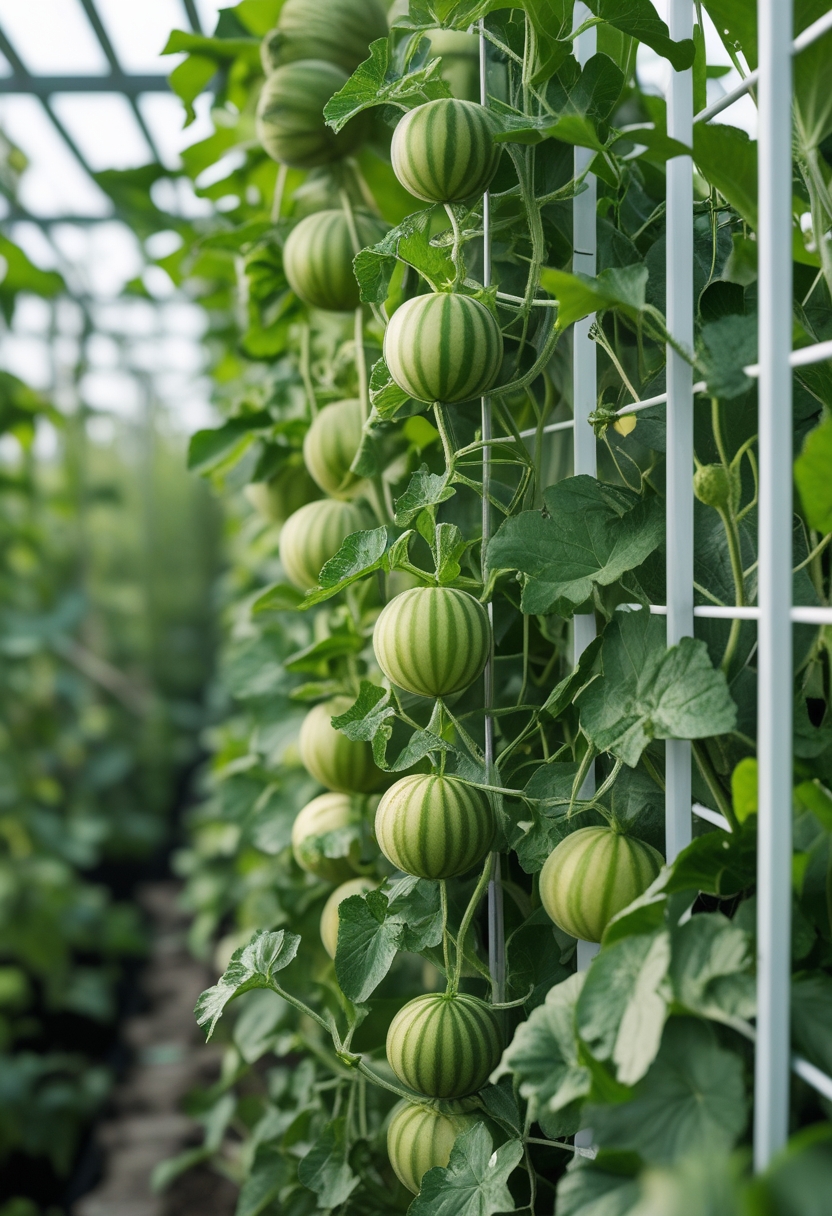
You can grow compact melons on a sturdy trellis or in a large container.
Choose varieties like Minnesota Midget that ripen early and stay small.
Train vines upward to save space and improve air flow.
Support fruits with slings to prevent pulling and bruising.
Keep soil warm and well-drained, and water deeply at the roots.
Fertilize lightly once fruits set to encourage sweet, firm melons.
9) Hops (for ornamental/vertical use)
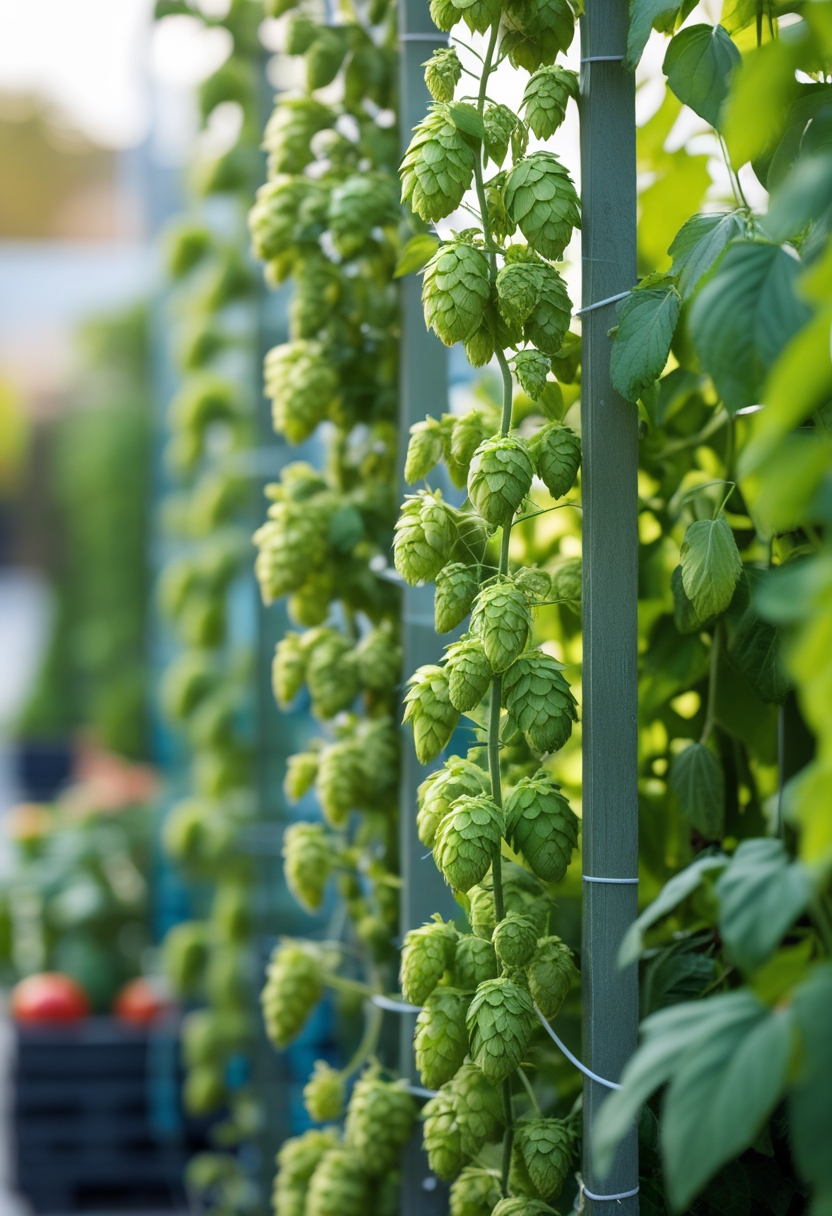
You can train hops to climb a tall trellis or strings for fast vertical coverage. They grow long bines that wrap around supports and make a dense screen.
Hops add texture and fragrant cones that look attractive even if you don’t brew beer. They need full sun, regular water, and sturdy, tall support to reach their potential.
10) Climbing nasturtiums (edible flowers like ‘Alaska’)
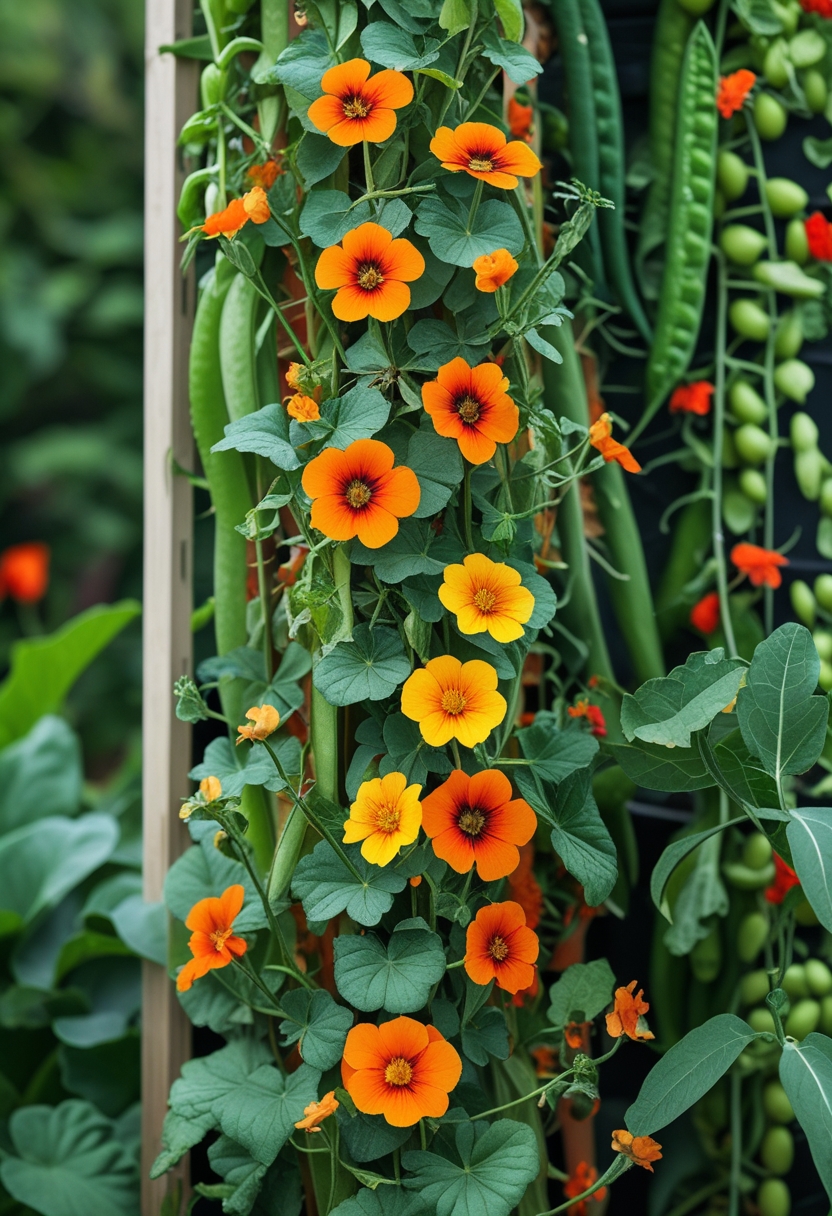
You can train climbing nasturtiums on trellises, fences, or arbors to save space and add color.
Their flowers and leaves are edible, with a peppery flavor that boosts salads and garnishes.
Plant seeds in full sun to light shade and use well-draining soil.
Varieties like ‘Alaska’ offer compact growth and long bloom periods.
