
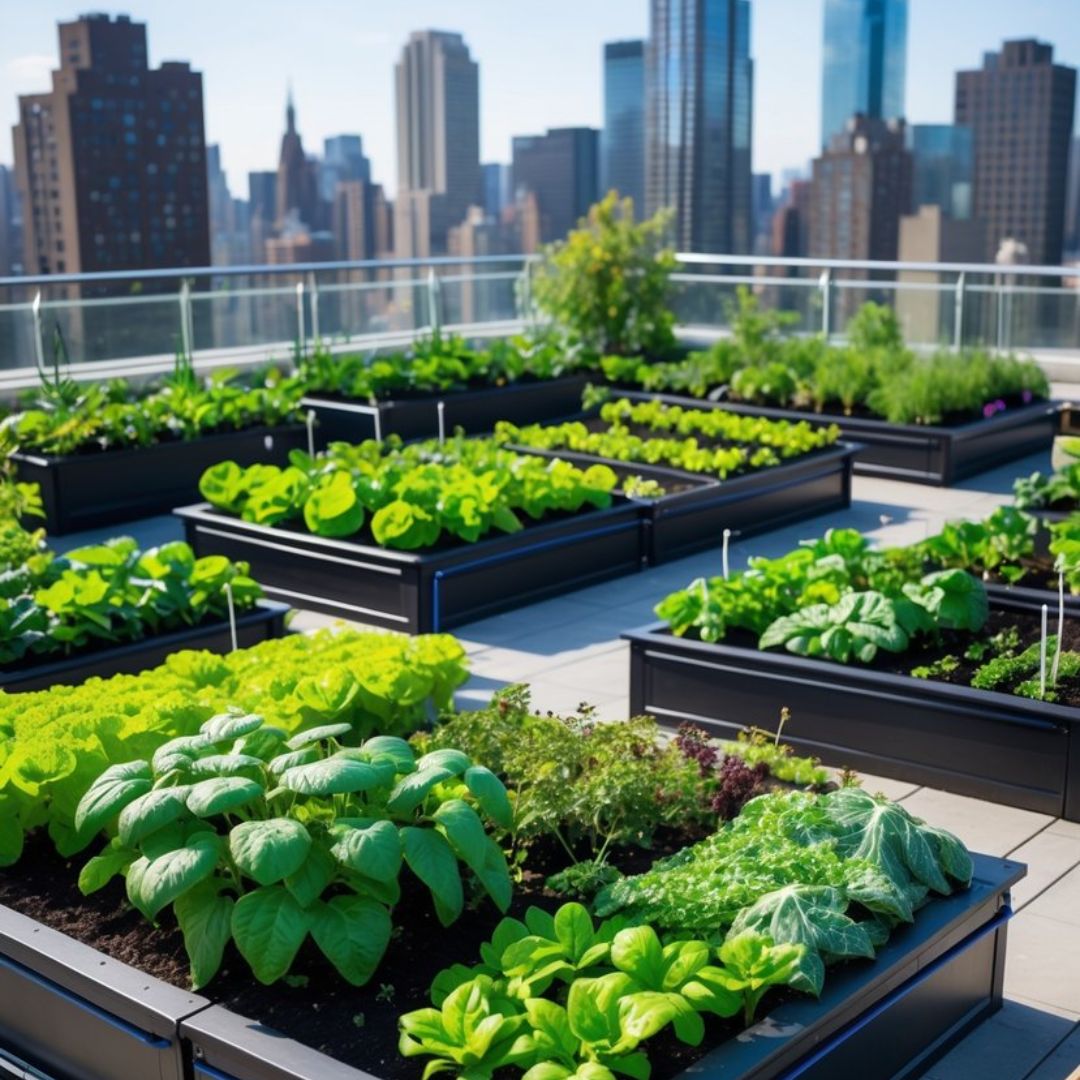
You can turn any terrace into a useful, beautiful outdoor room that fits your space and schedule. This article gives you 20 practical, easy-to-follow terrace garden ideas so you can choose the styles and systems that match your light, space, and goals.
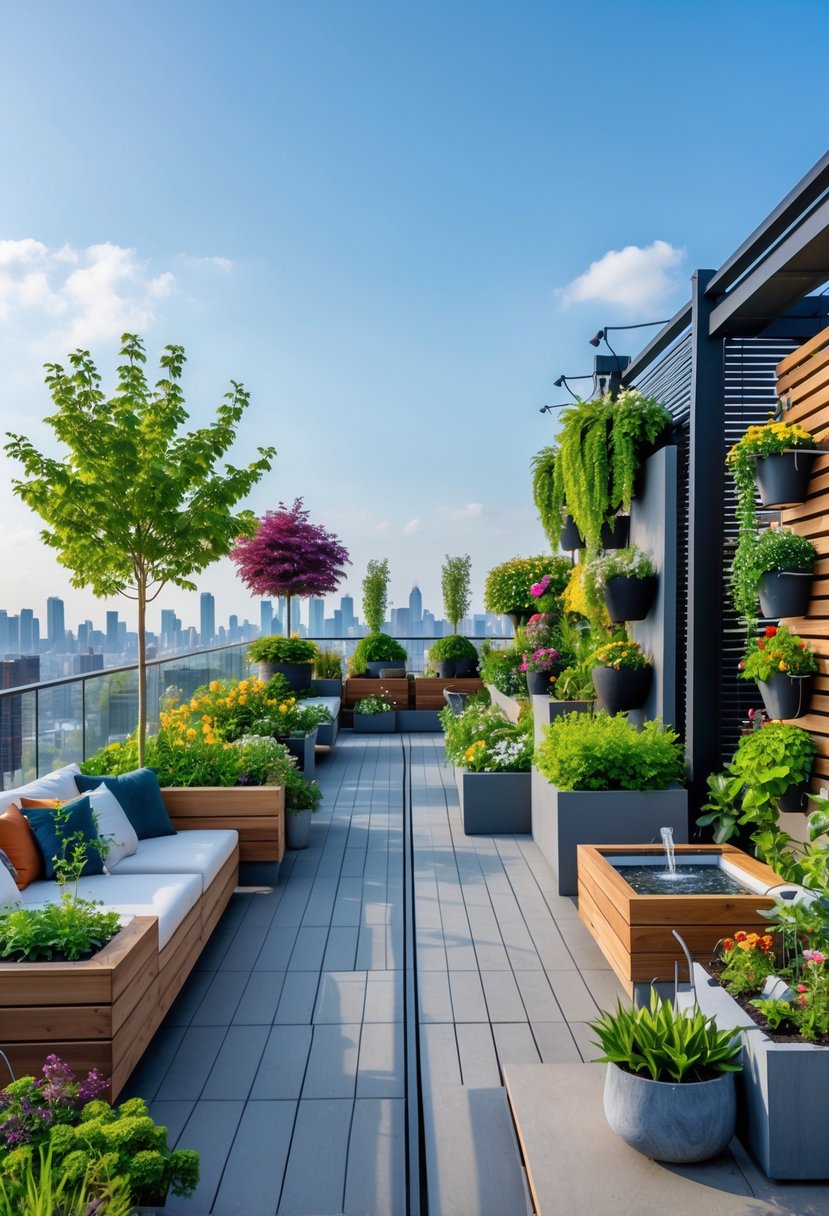
Expect designs for small balconies and full rooftops, from low-maintenance drought-tolerant beds to edible planters, vertical systems, and cozy seating nooks with lighting and water features. Use these ideas to plan layout, planting, and simple DIY projects that make your terrace greener and more livable.
1) Rooftop raised beds with drip irrigation
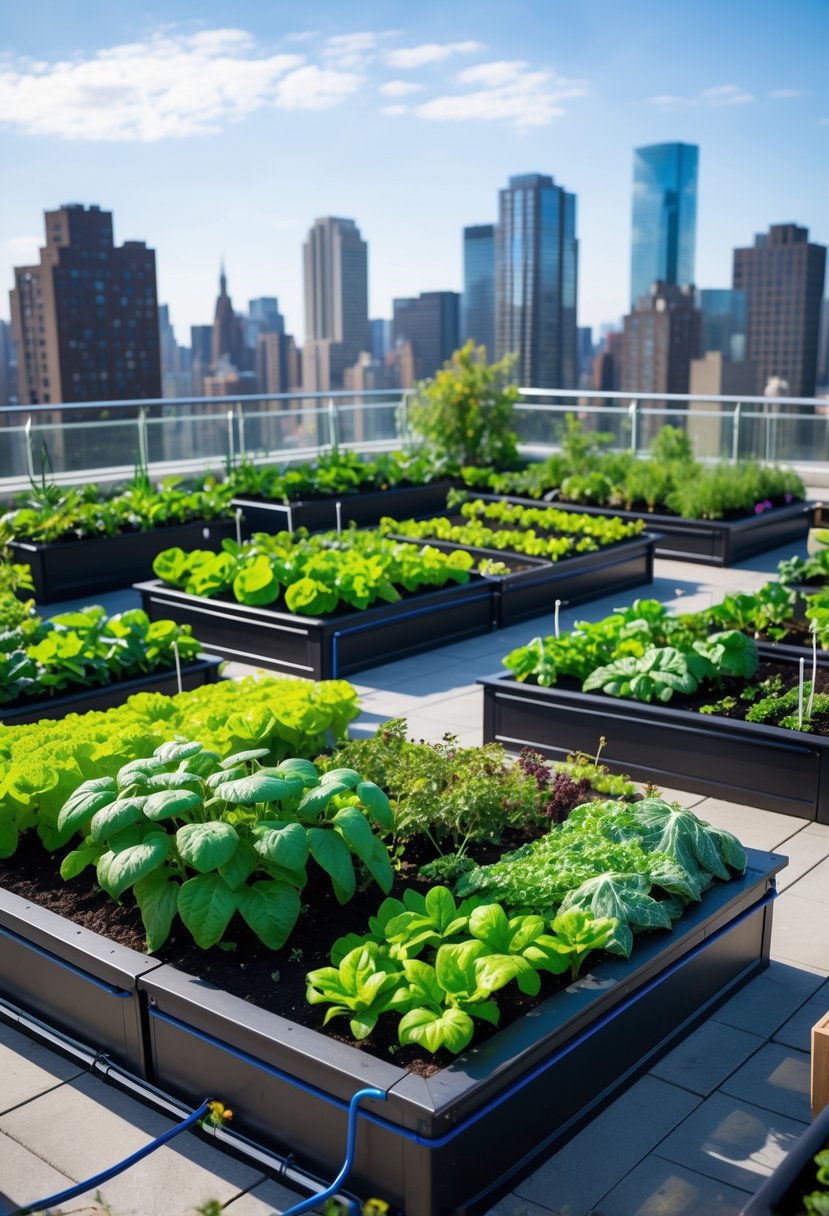
Choose lightweight raised beds to protect your roof and make planting easier. Drip irrigation delivers water slowly and directly to roots, saving water and reducing disease.
Lay drip lines close to plants and run a timer for consistent watering. Check roof drainage and waterproofing before installing beds to avoid leaks.
2) Vertical pallet planter wall
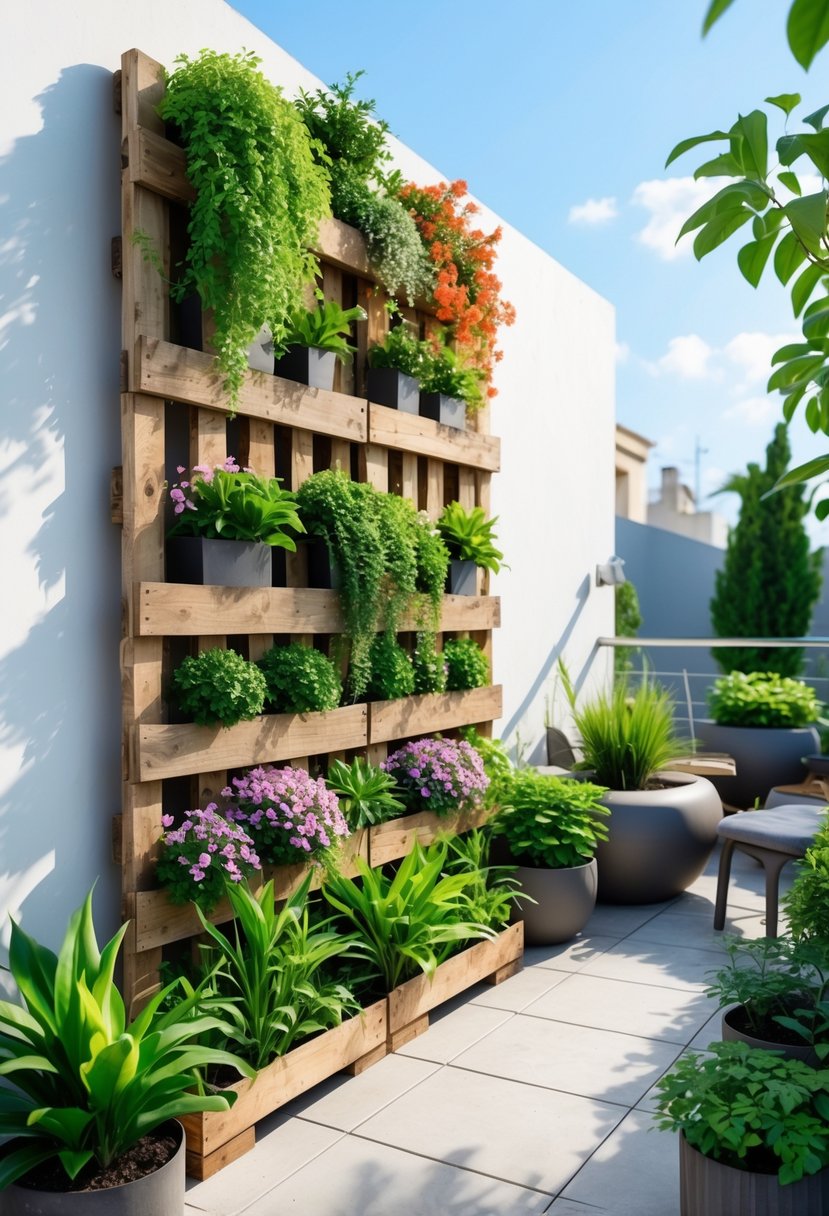
You can turn a reclaimed wood pallet into a space-saving vertical planter for your terrace. Attach a backing, add pots or fabric pouches, and secure the pallet to a wall or railing.
Choose herbs, succulents, or trailing flowers that suit sunlight and watering needs. Paint or seal the wood to protect it from weather and extend its life.
3) Succulent and cactus rock garden
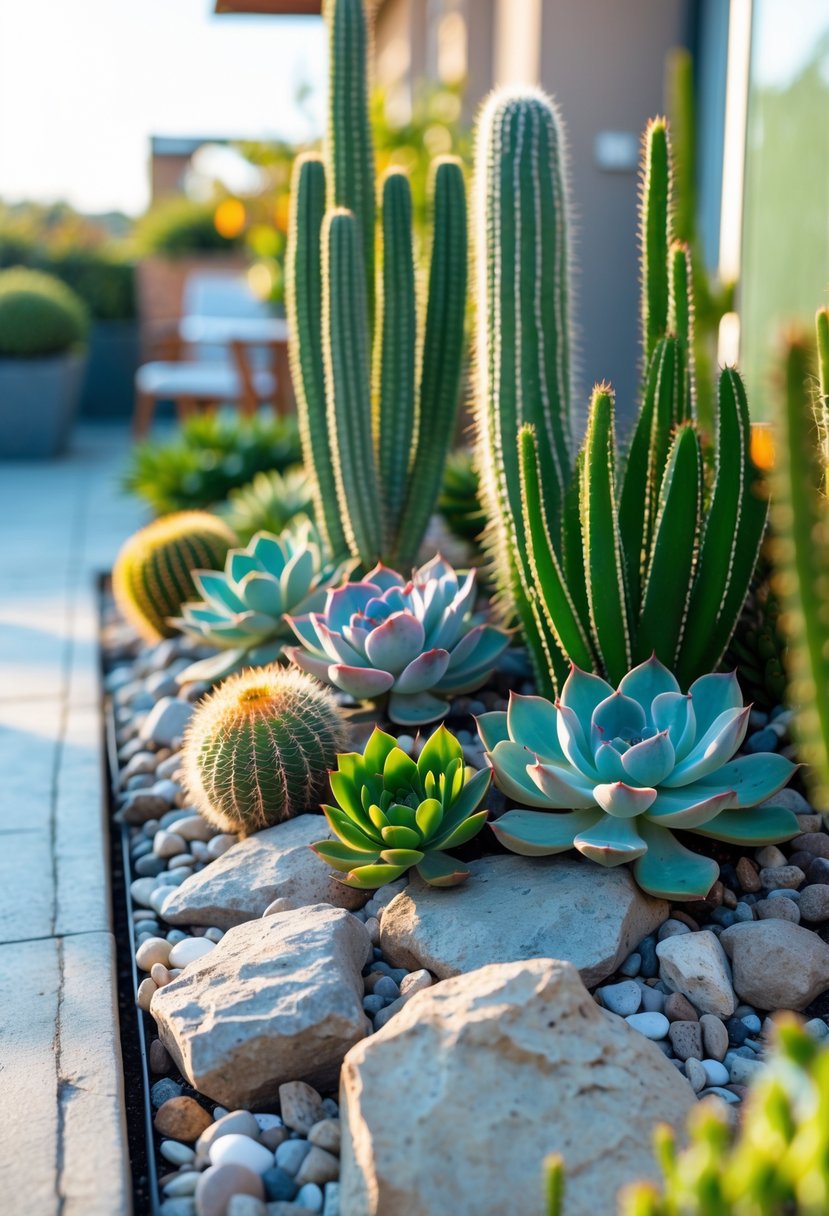
Create a low-water, low-maintenance terrace with succulents and cacti set among stones. Use varied rock sizes to add texture and anchor plant groupings.
Choose well-draining soil and containers with drainage holes to prevent rot. Mix small succulents with a few sculptural cacti for contrast and tidy spacing.
Place the garden in full sun or bright light and water sparingly, letting soil dry between waterings.
4) Herb spiral for Mediterranean herbs
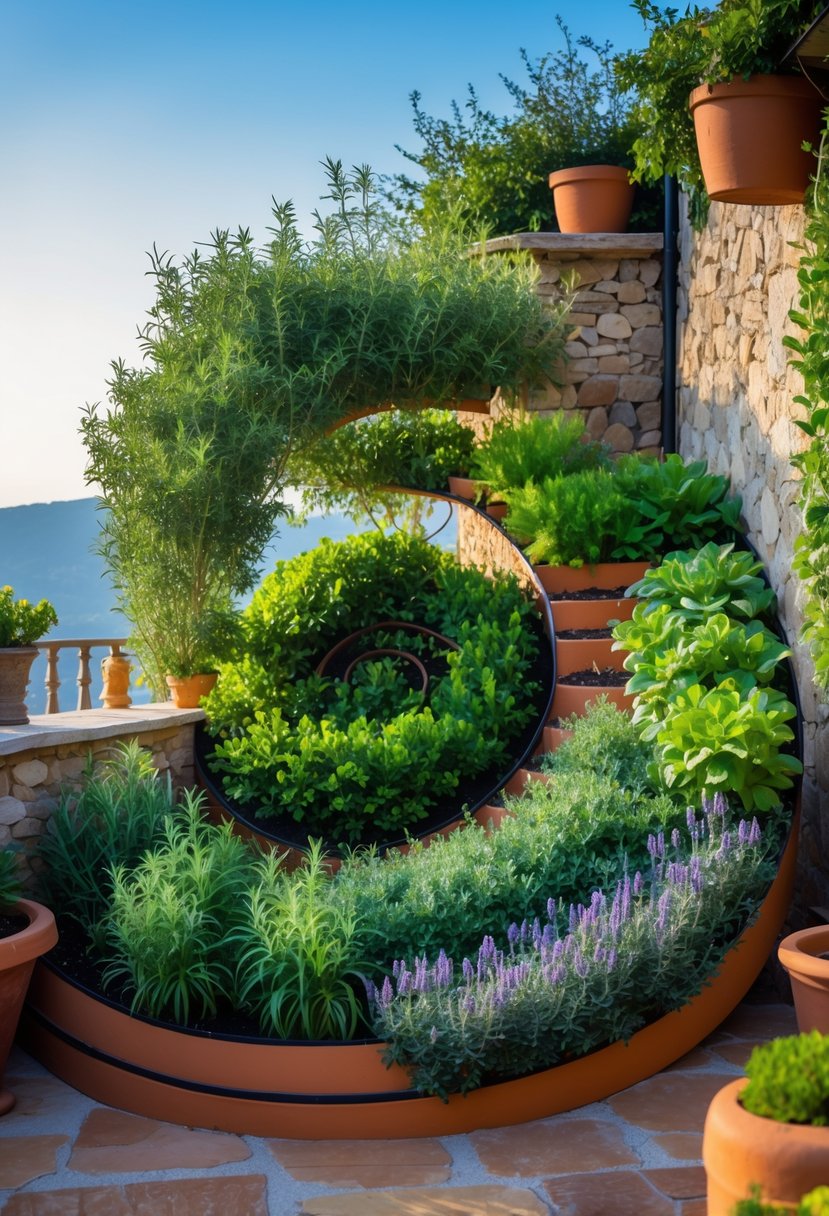
Build a low stone spiral to save space and create warm, dry spots for rosemary, thyme, and oregano.
Place drought-tolerant herbs near the top where soil drains fast and put moisture-loving plants at the base.
Use local stones for thermal mass; they warm the soil by day and release heat at night.
This design lets you grow many herbs in a small terrace area and makes harvesting easy.
5) Modular timber planter boxes
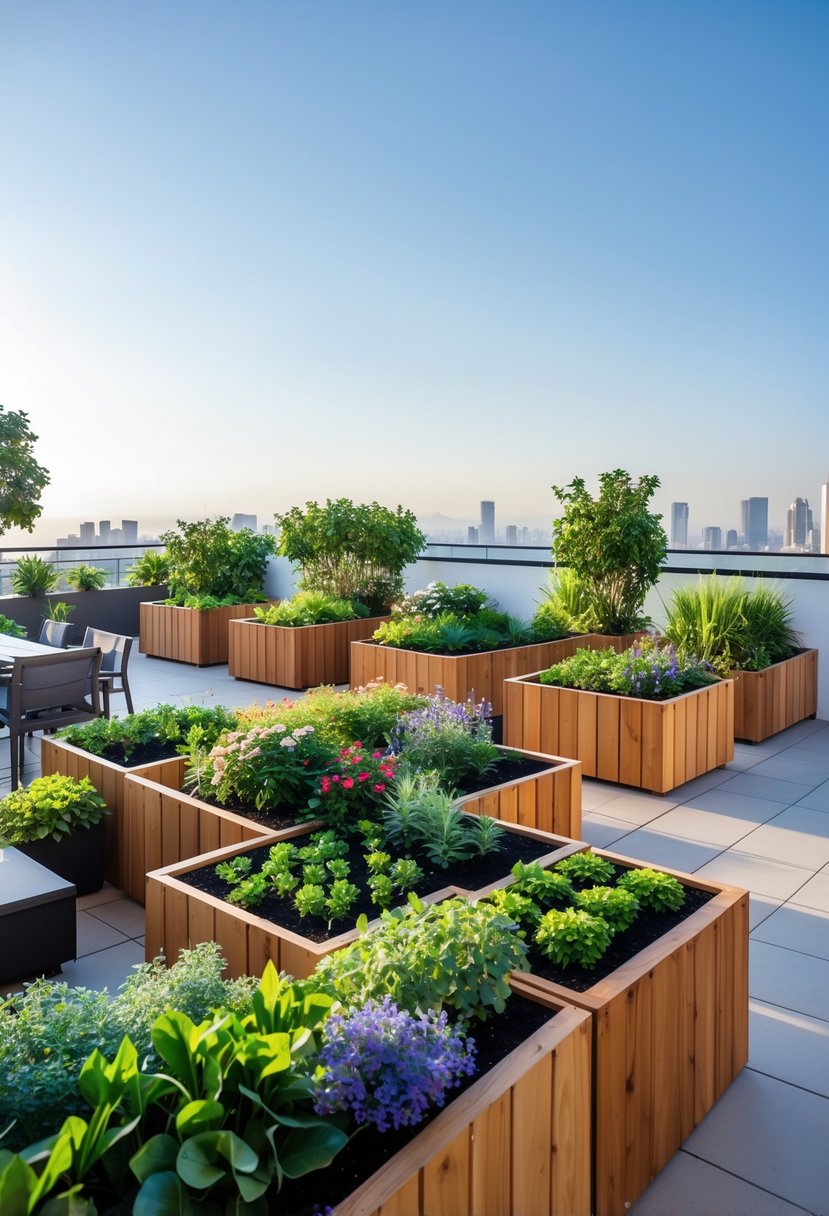
Modular timber planter boxes let you build a layout that fits your terrace and plants.
You can stack or join modules to change height and shape as needs shift.
They work well for herbs, salads, and small shrubs.
Choose rot-resistant timber and allow drainage to protect roots and wood.
6) Hanging planter baskets with trailing petunias
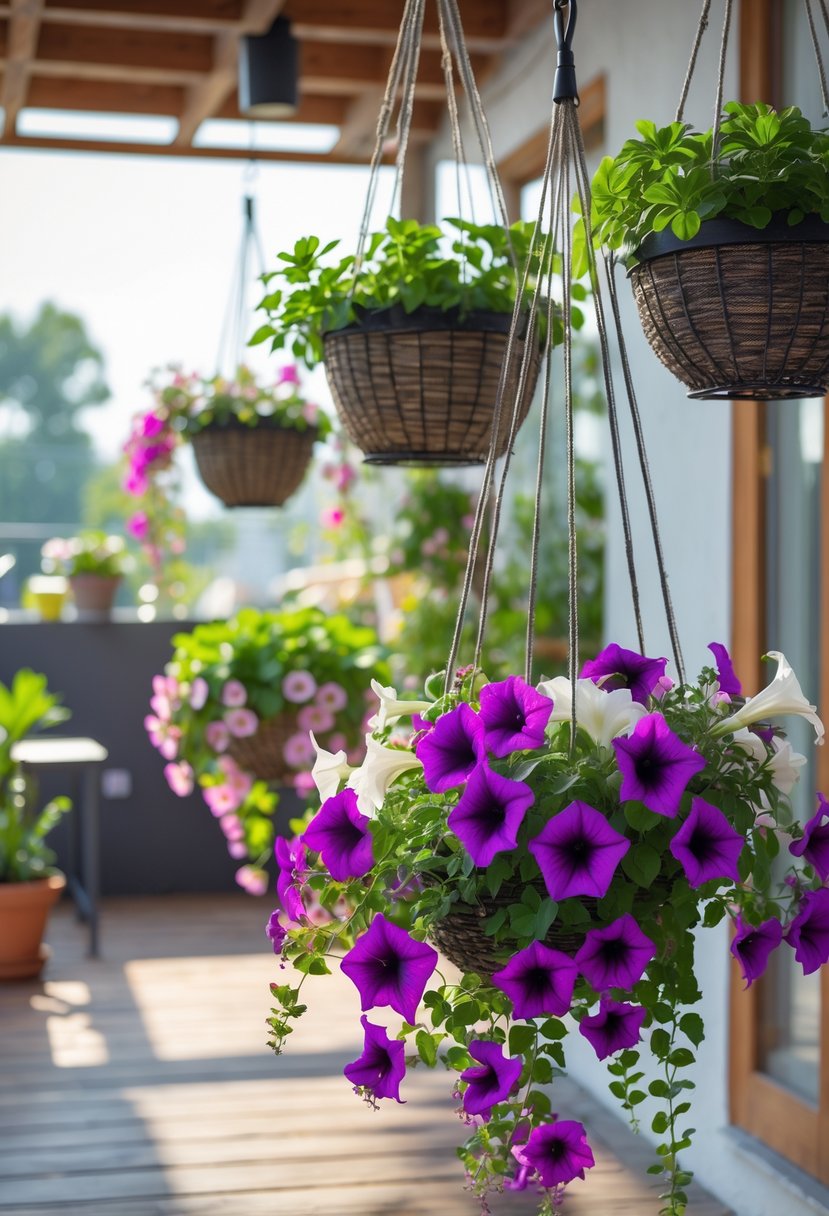
You can add bright color and soft movement by hanging baskets filled with trailing petunias. Place them where they get 5–6 hours of sun and water regularly to keep the soil evenly moist.
Use a 12–18 inch basket and plant 3–7 petunias depending on size; denser planting gives a fuller cascade. Feed weekly with a balanced liquid fertilizer during peak bloom for best performance.
7) Mini citrus tree in large container
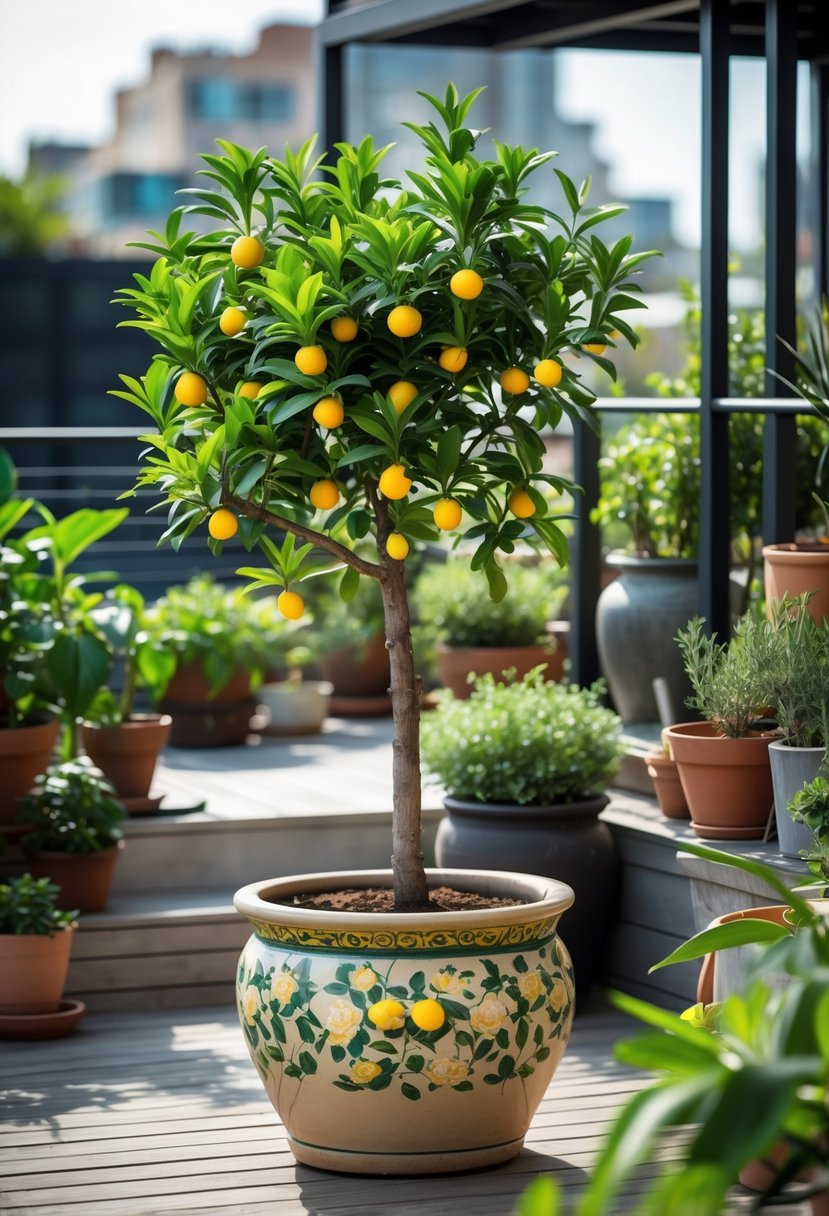
Plant a dwarf lime or lemon in a large pot to add scent and fruit without needing a full yard. Use a well-draining potting mix and a container with good drainage holes.
Place the pot in a sunny spot and water deeply but infrequently, letting the top inch of soil dry between waterings. Prune lightly to keep the tree compact and remove crossing branches for better airflow.
8) Shade-sail seating nook with potted ferns
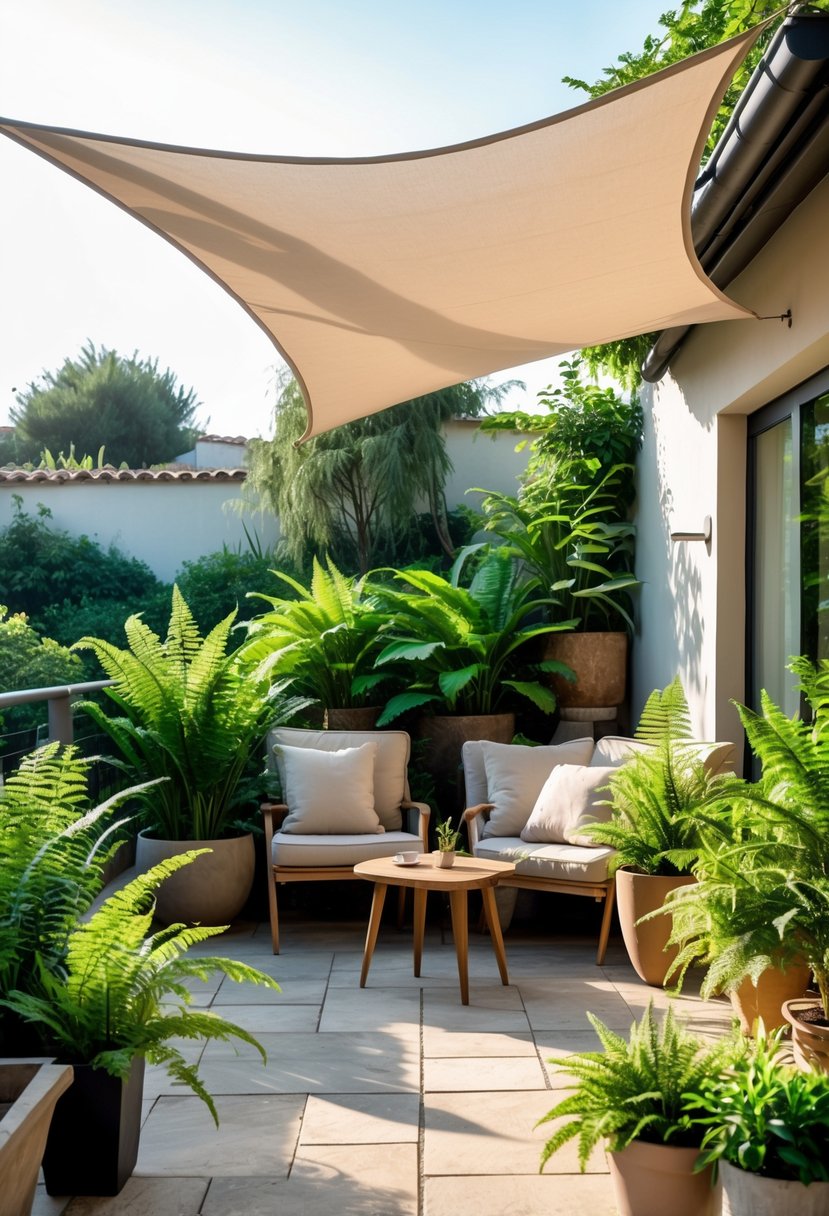
Create a cozy seating nook under a simple shade sail to cut glare and heat.
Place a small bench or bistro set and surround it with potted ferns for soft, green texture.
Use lightweight, UV-resistant fabric for the sail and anchor it to posts or walls.
Choose fern varieties that tolerate your light level and water them regularly to keep the nook lush.
9) Vertical hydroponic tower system
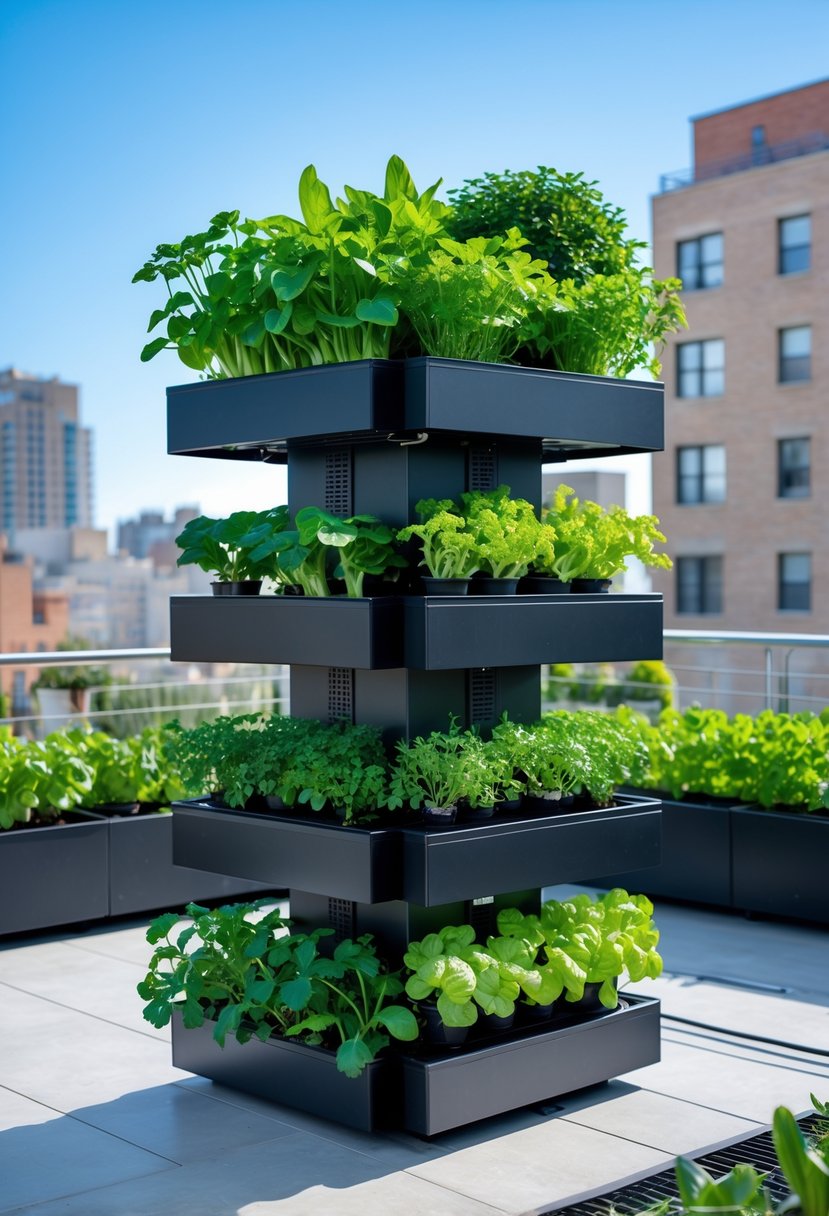
A vertical hydroponic tower saves space and lets you grow many plants in a small terrace. You plant into stacked pockets while a pump cycles nutrient solution upward and gravity returns it.
You control feed, light, and airflow for steady growth with less soil mess. This setup fits balconies and compact roofs, and you can grow lettuce, herbs, and small vegetables year-round.
10) Terraced stone retaining beds with lavender
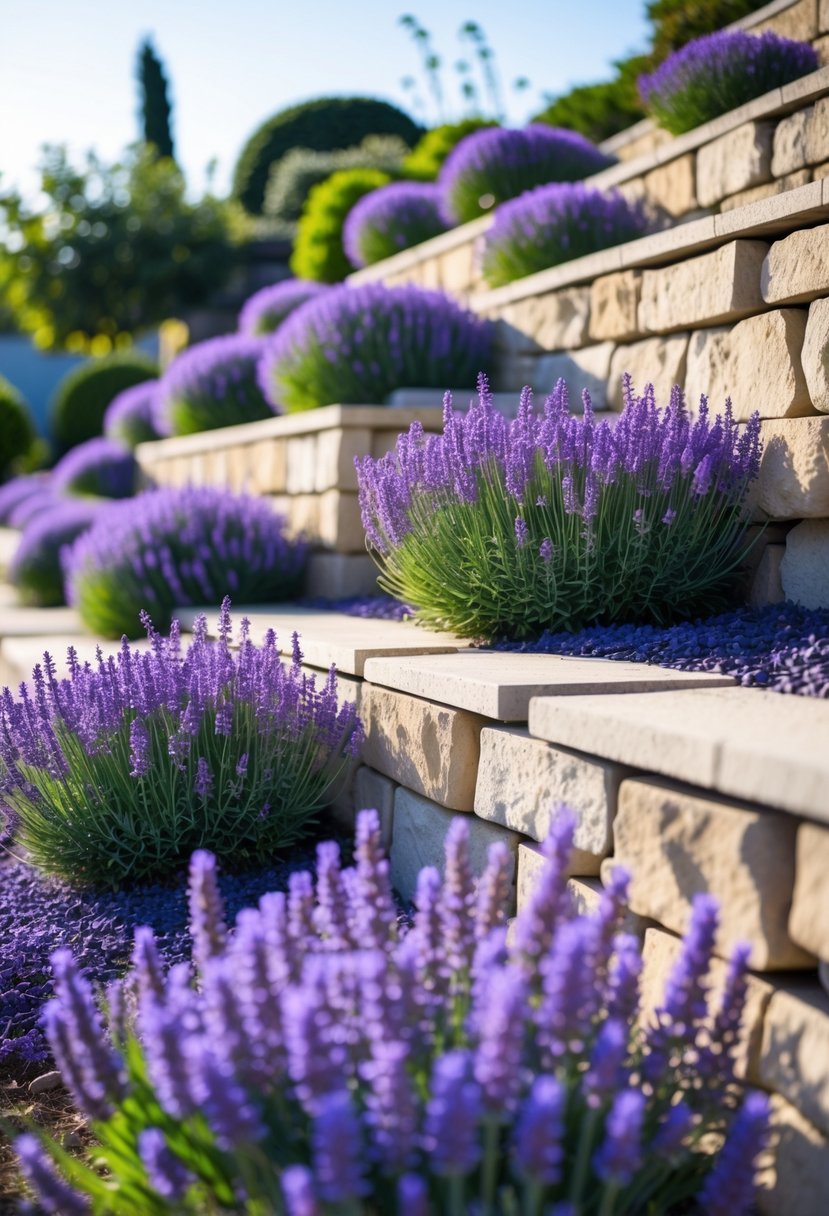
You can build low stone retaining beds to level a slope and create planting tiers.
Lavender suits these beds because it likes good drainage and full sun.
Place stones tightly for stability and add gravel under soil to improve drainage.
Plant lavender in groups for color and to reduce maintenance while keeping scents strong.
11) Compact espaliered fruit tree row
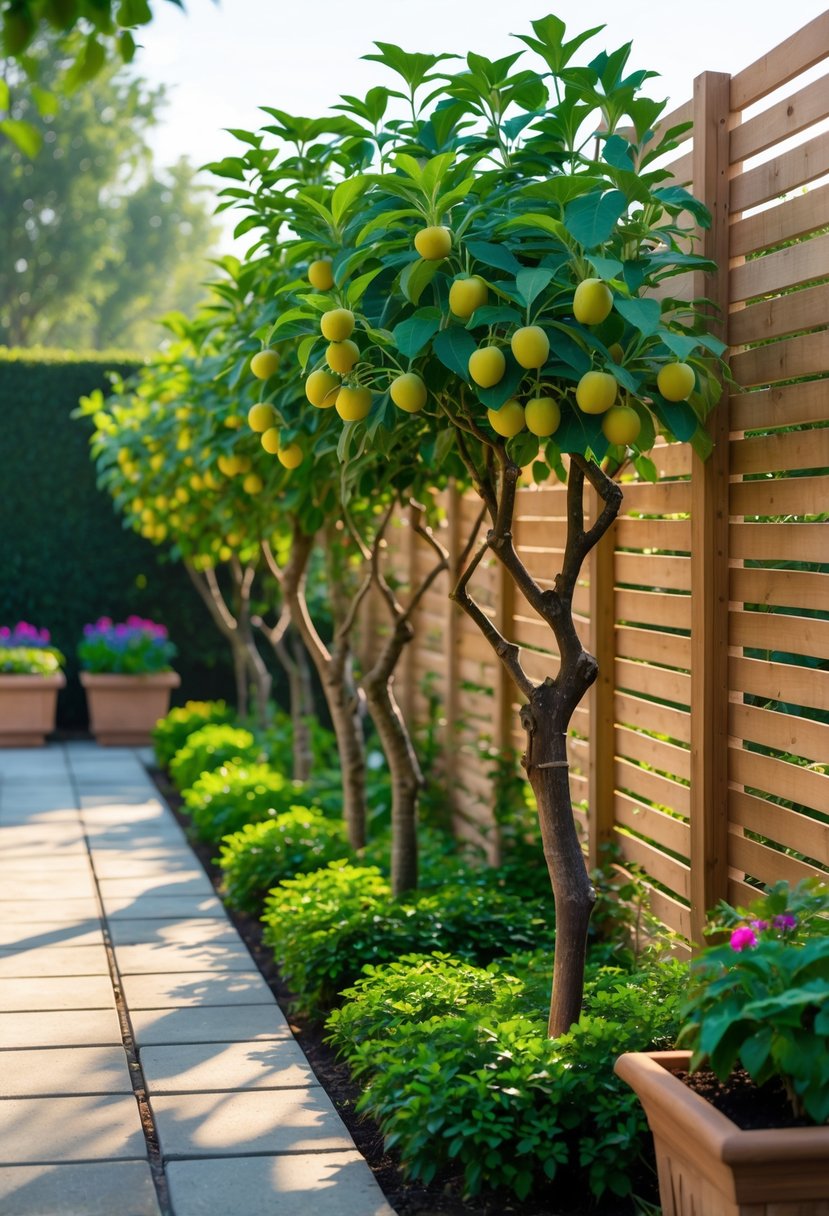
Train dwarf fruit trees flat against a low wall or fence to save space and add structure to your terrace. You get easy harvests because fruit sits within reach and sunlight hits branches evenly.
Choose apples, pears, or small plums on dwarf rootstocks and prune each season to keep a neat, two-dimensional form. This creates a productive, tidy screen that fits narrow terraces without crowding your pots or pathways.
12) Butterfly-friendly native wildflower patch
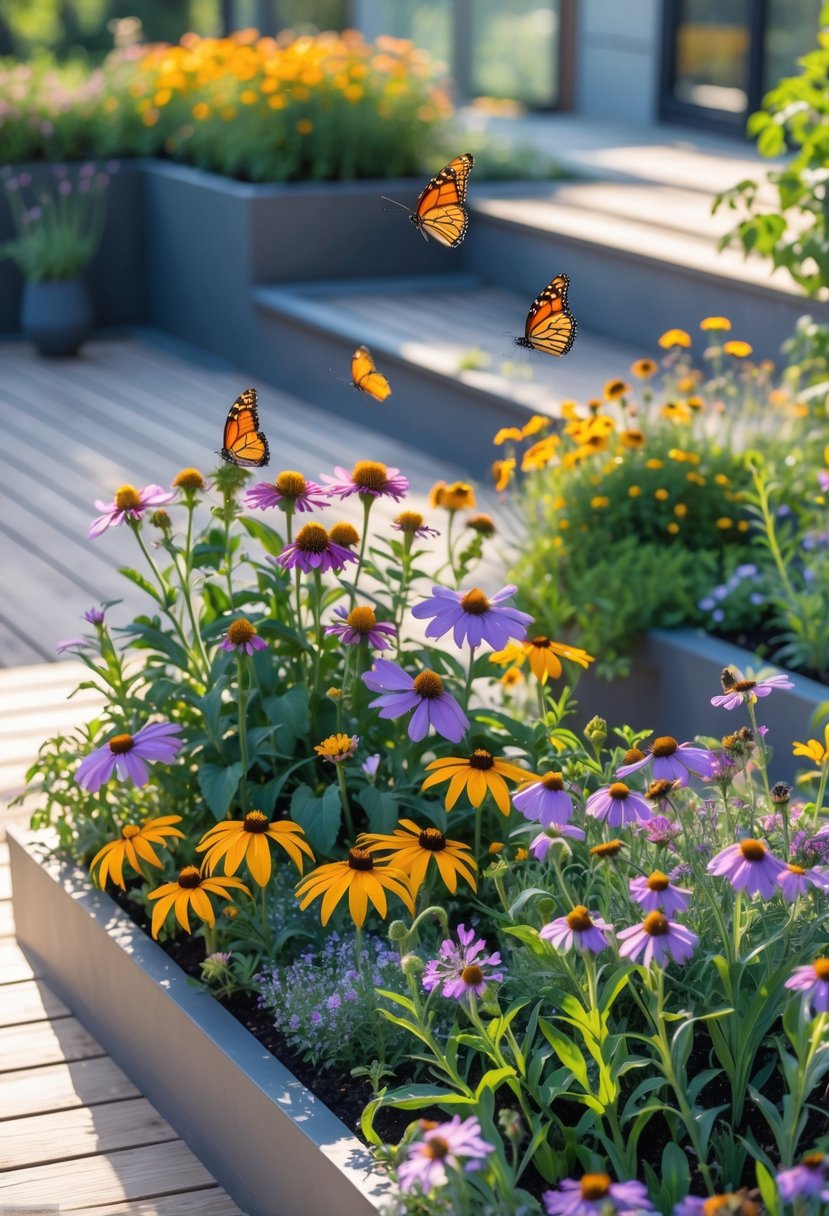
Plant native wildflowers that feed local butterflies and suit your terrace conditions. Choose species like coneflower, black-eyed Susan, and milkweed if they are native to your region.
Group plants in sunny spots and add flat stones for basking. Keep a small water dish and avoid pesticides to protect caterpillars and adults.
13) Edible planter box with salad greens mix
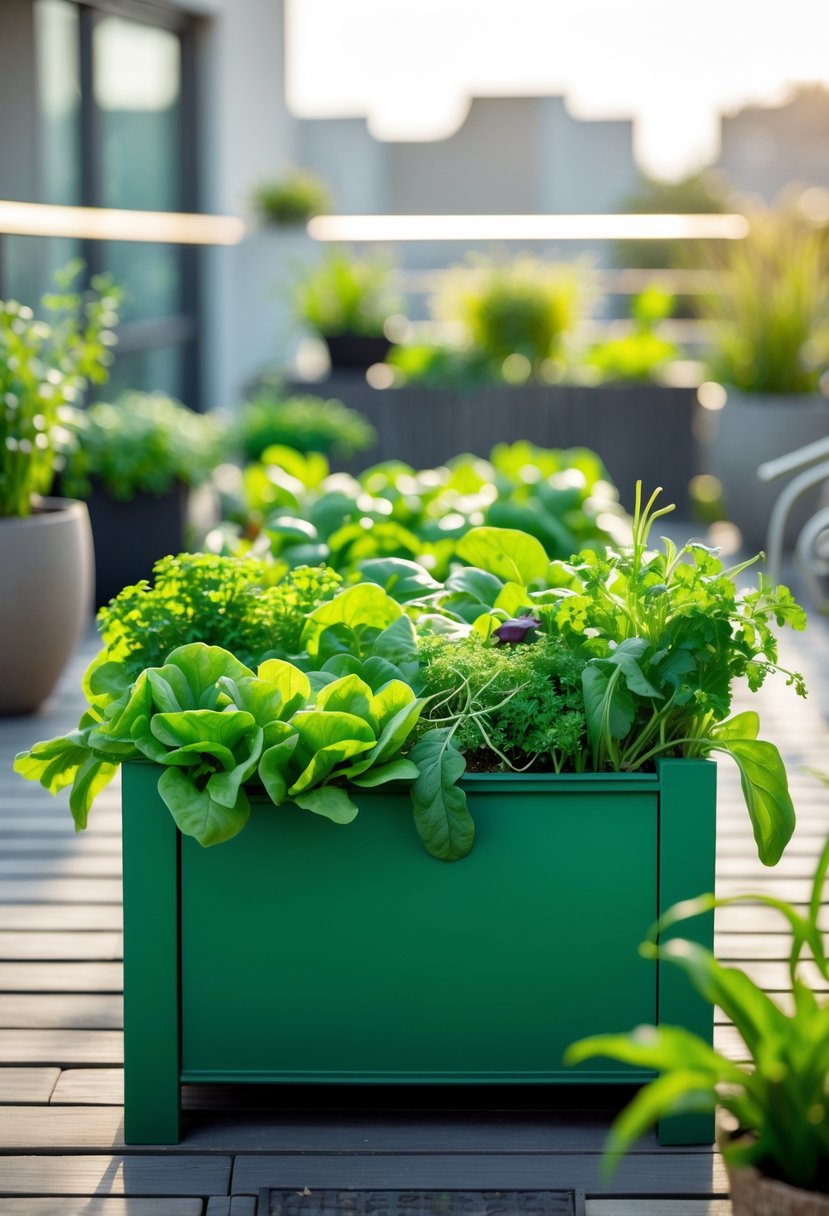
You can grow a mix of lettuce, arugula, and baby spinach in a shallow planter box. Plant seeds in rows or broadcast them for a quick, dense harvest.
Use well-draining soil and water lightly every day or when the top inch feels dry. Harvest outer leaves often to encourage new growth and extend your yield.
14) DIY trellis for climbing roses
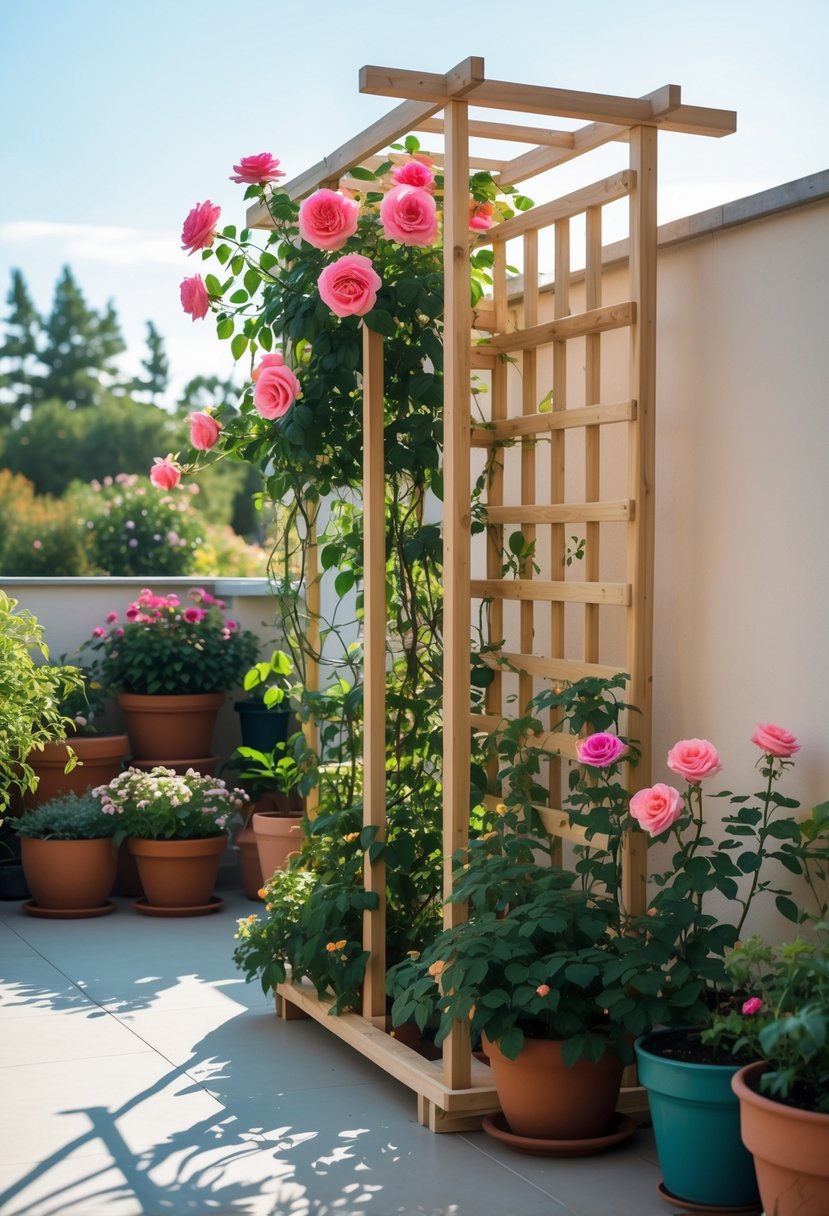
Building a simple trellis gives your climbing roses a sturdy place to grow and keeps blooms visible. Use wood, metal, or repurposed ladders for a look that fits your terrace and budget.
Place the trellis where roses get morning sun and good air flow. Train stems gently and tie them loosely to encourage upward growth and fuller blooms.
15) Mediterranean drought-tolerant bed (olive, rosemary, thyme)
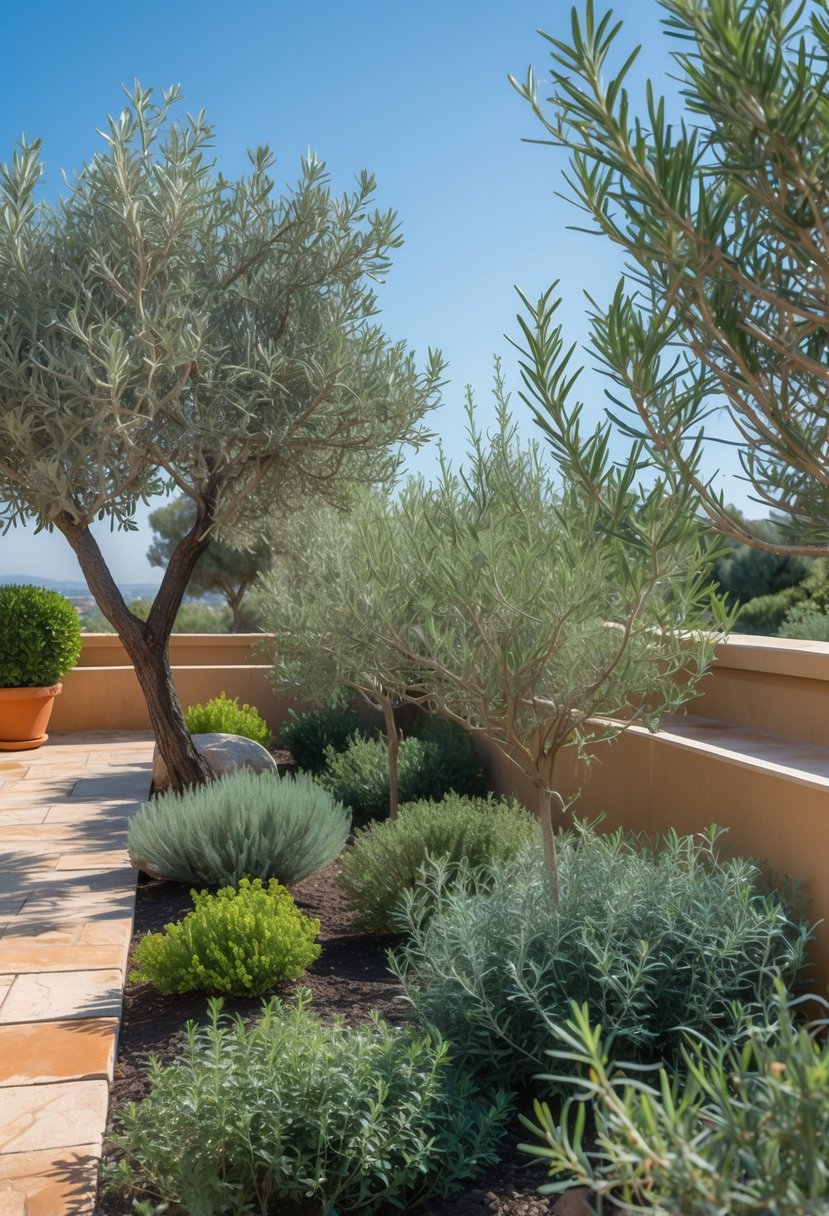
Plant olives, rosemary, and thyme for a low-water terrace bed that still feels lush and fragrant.
Place olives as focal trees in large pots and group rosemary and thyme around them to fill space and add scent.
Use gritty, well-draining soil and water deeply but infrequently.
Prune rosemary and thyme lightly after flowering to keep shape and encourage new growth.
16) Container vegetable garden with cherry tomato cages
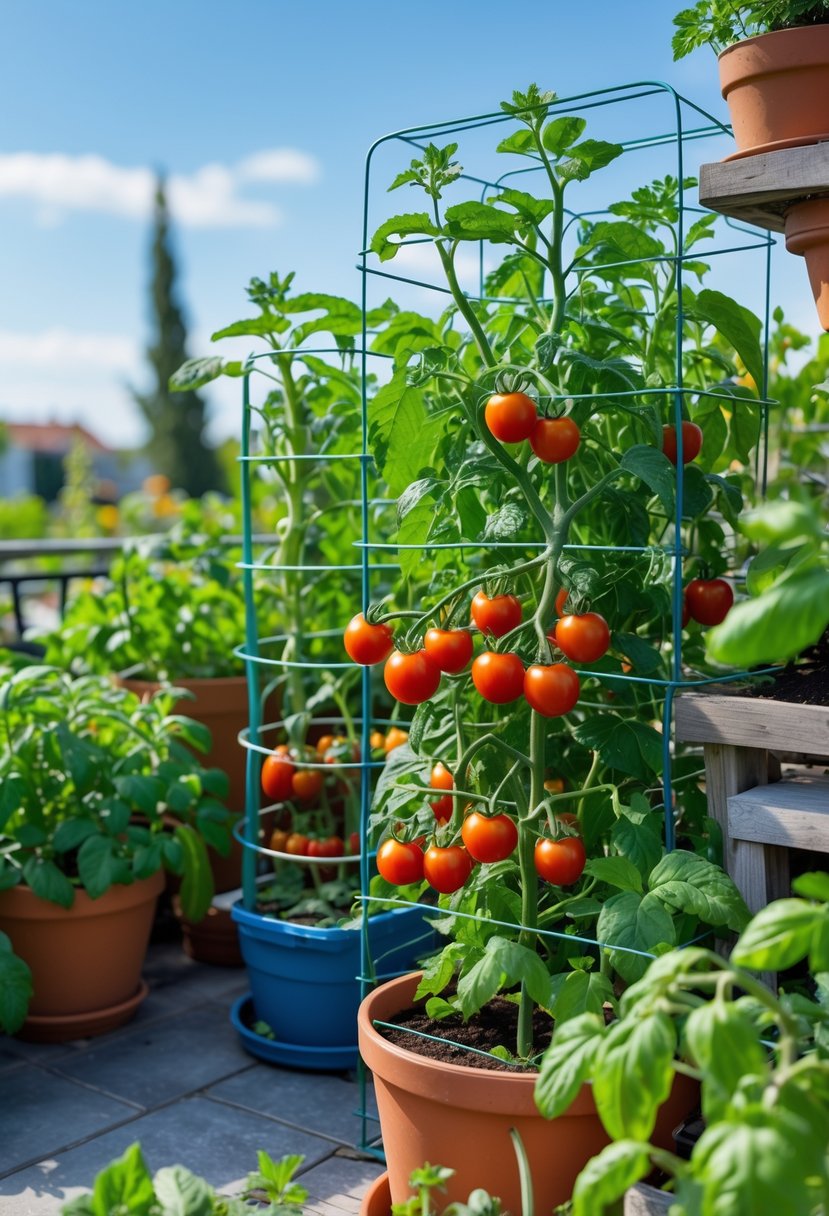
You can grow cherry tomatoes in large pots using sturdy tomato cages for support. Choose a deep container and quality potting mix to keep roots healthy and soil moist.
Place cages before planting so stems weave through as they grow. Water regularly and feed with a balanced fertilizer to keep plants productive.
17) Water feature: small recirculating pond
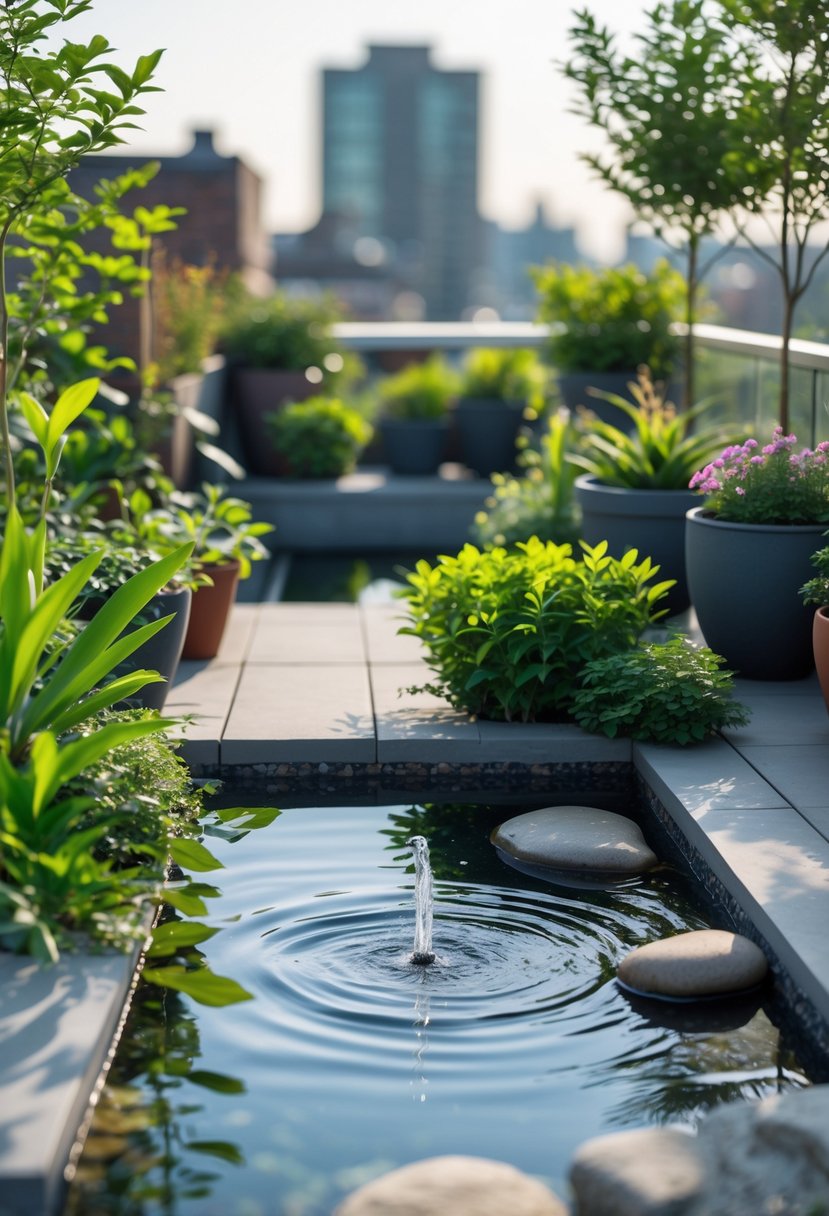
A small recirculating pond adds sound and movement without needing a large footprint. You can fit one in a corner, on a raised bed, or inside a wide planter.
Choose a pump and liner sized for the volume to keep water clean and moving. Add a few native plants and smooth stones to help wildlife and reduce algae.
18) Convertible deck with built-in planters
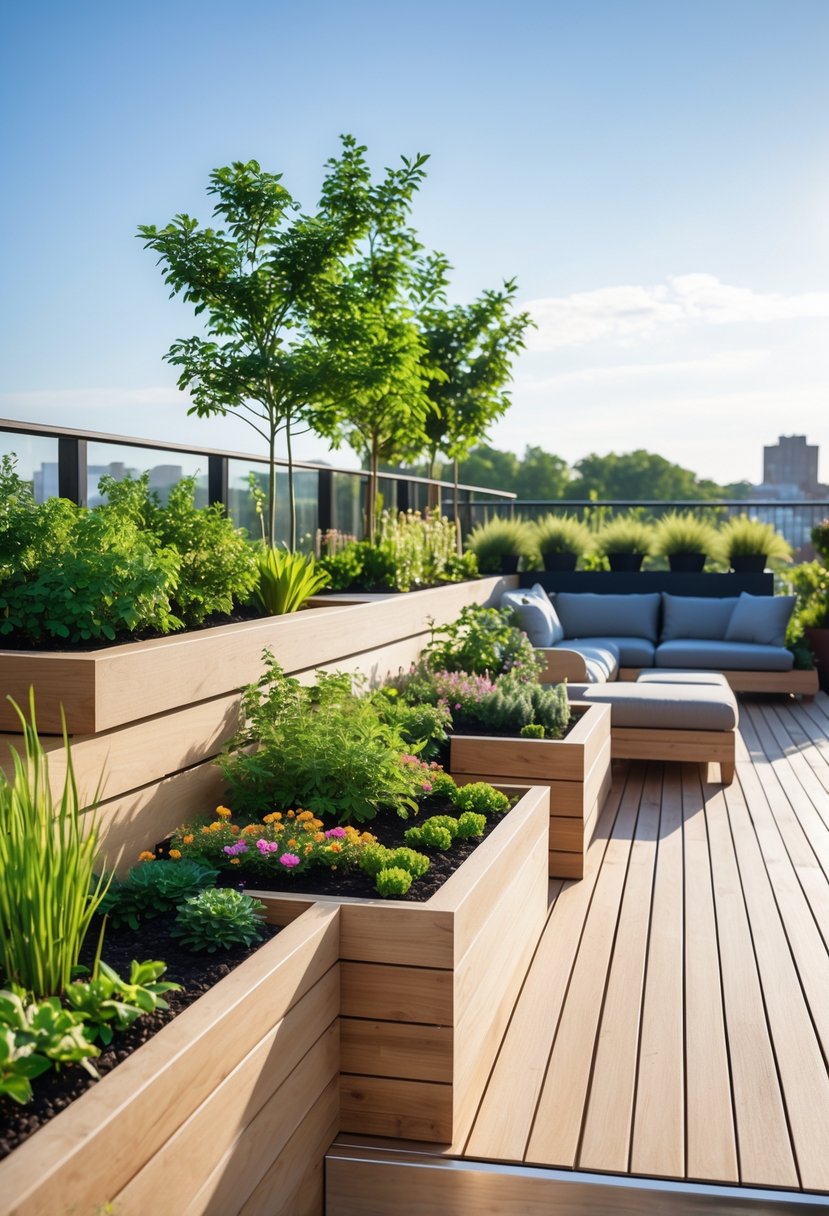
You can add built-in planters to a deck that convert between seating, storage, and garden space.
Choose wood or composite materials for weather resistance and a look that matches your deck.
Use tiered or vertical planter inserts to grow herbs, flowers, or small vegetables without losing floor space.
Plan for drainage and easy access so you can water and swap plants without heavy lifting.
19) Balcony railing herb garden planters
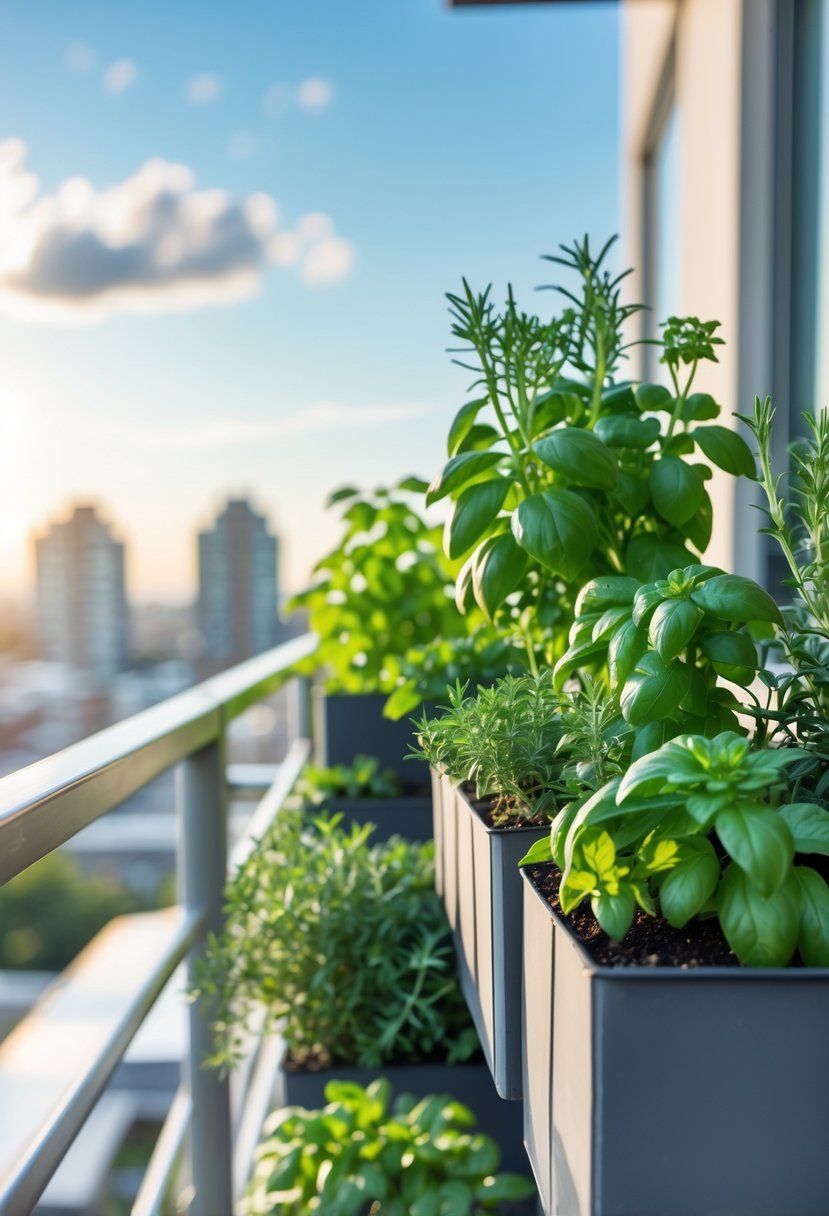
You can turn railing space into a productive herb strip that saves floor room. Use lightweight, weather-proof planters that hook securely over the rail.
Choose herbs that like similar sun and water needs, such as basil, parsley, and chives. Water from the top and check drainage often to avoid root rot.
Rotate pots seasonally and replace soil yearly to keep plants healthy and productive.
20) Nightlighting scheme with solar path lights
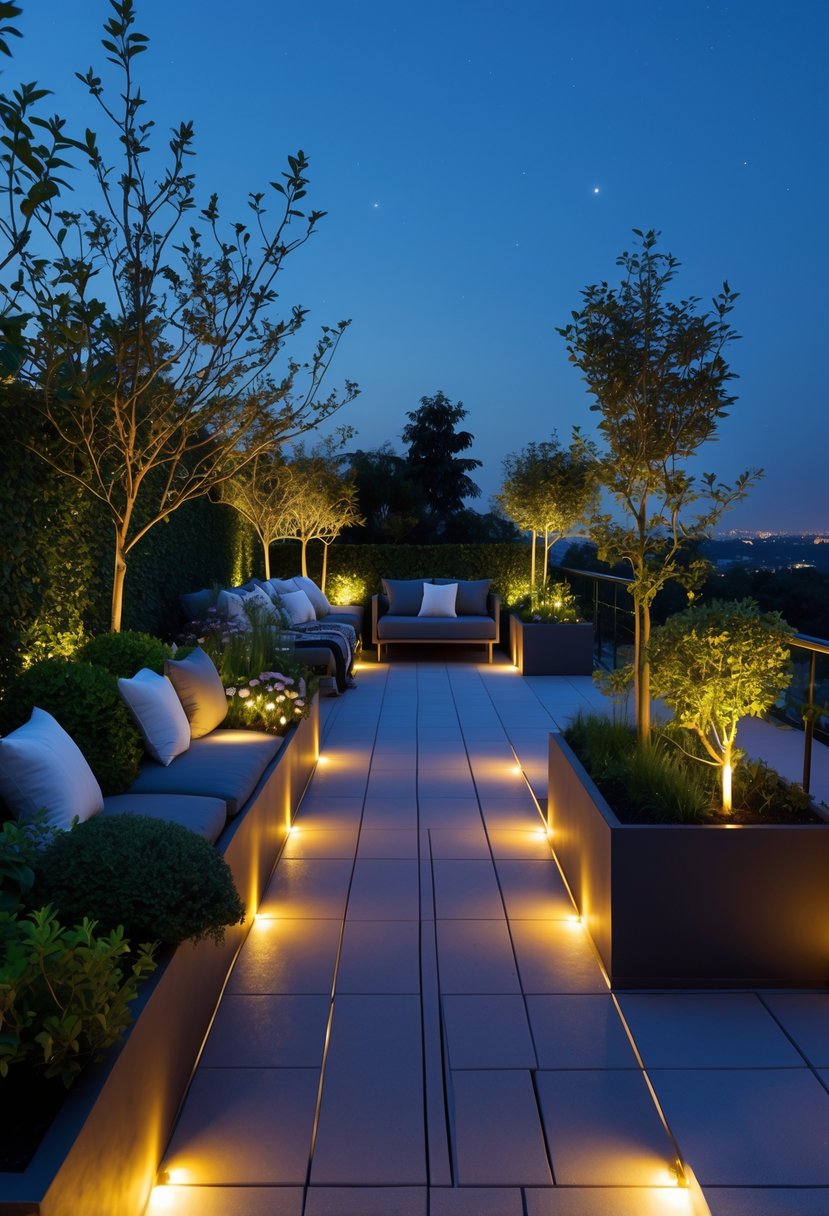
Use solar path lights to mark walkways and edges so you can move around safely at night. They need no wiring and charge by day, which keeps installation simple.
Place lights at regular intervals for even glow and mix heights for depth. Choose warm white LEDs to create a calm, inviting atmosphere on your terrace.
