

You can give your outdoor space more function and style without spending much money. These five cinder block garden wall ideas show simple ways to build sturdy walls, add plant-friendly features, and create seating or decorative boundaries that fit your yard.
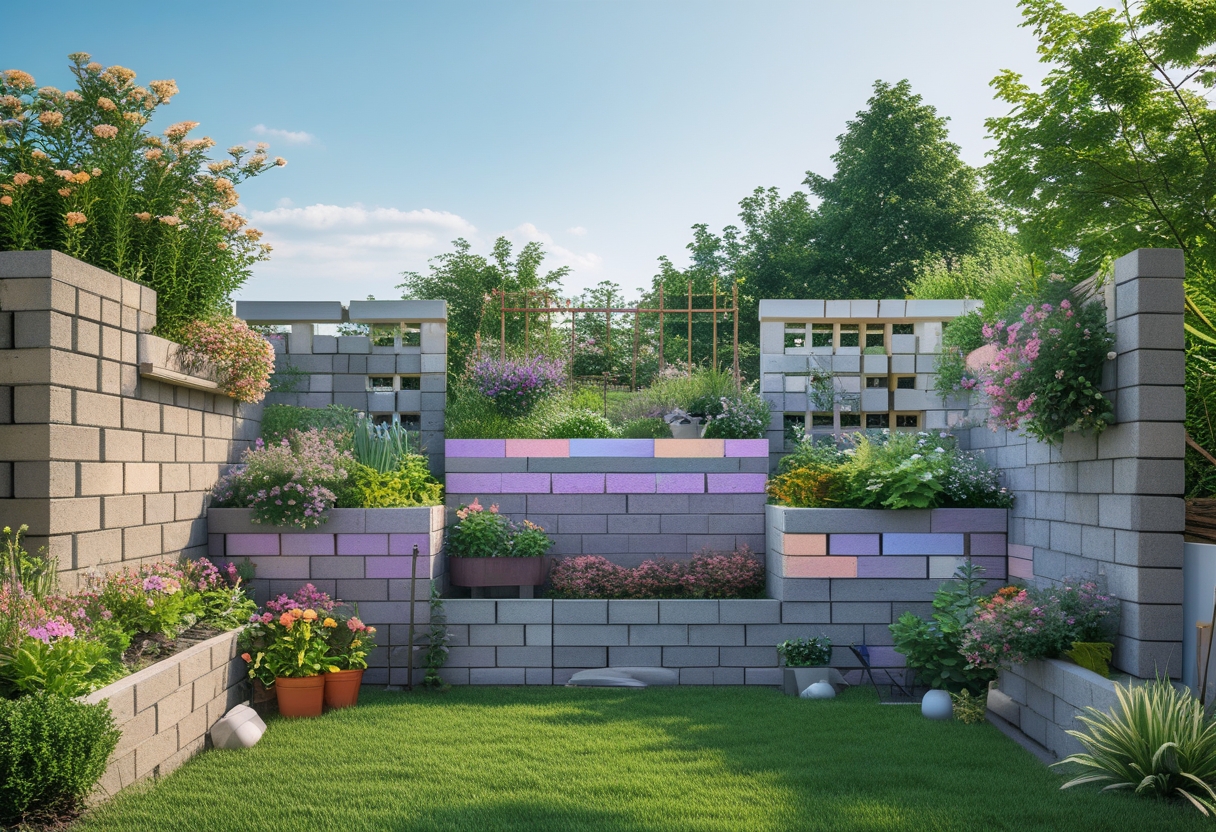
Follow practical options that match different needs—from slope stabilization and drainage to vertical planting and painted patterns—so you can pick the approach that fits your space and skills. Keep each project smart and doable, whether you want a low-cost retaining wall, a planter-packed vertical screen, or a raised bed with bench seating.
1) Stacked staggered cinder block retaining wall with gravel backfill
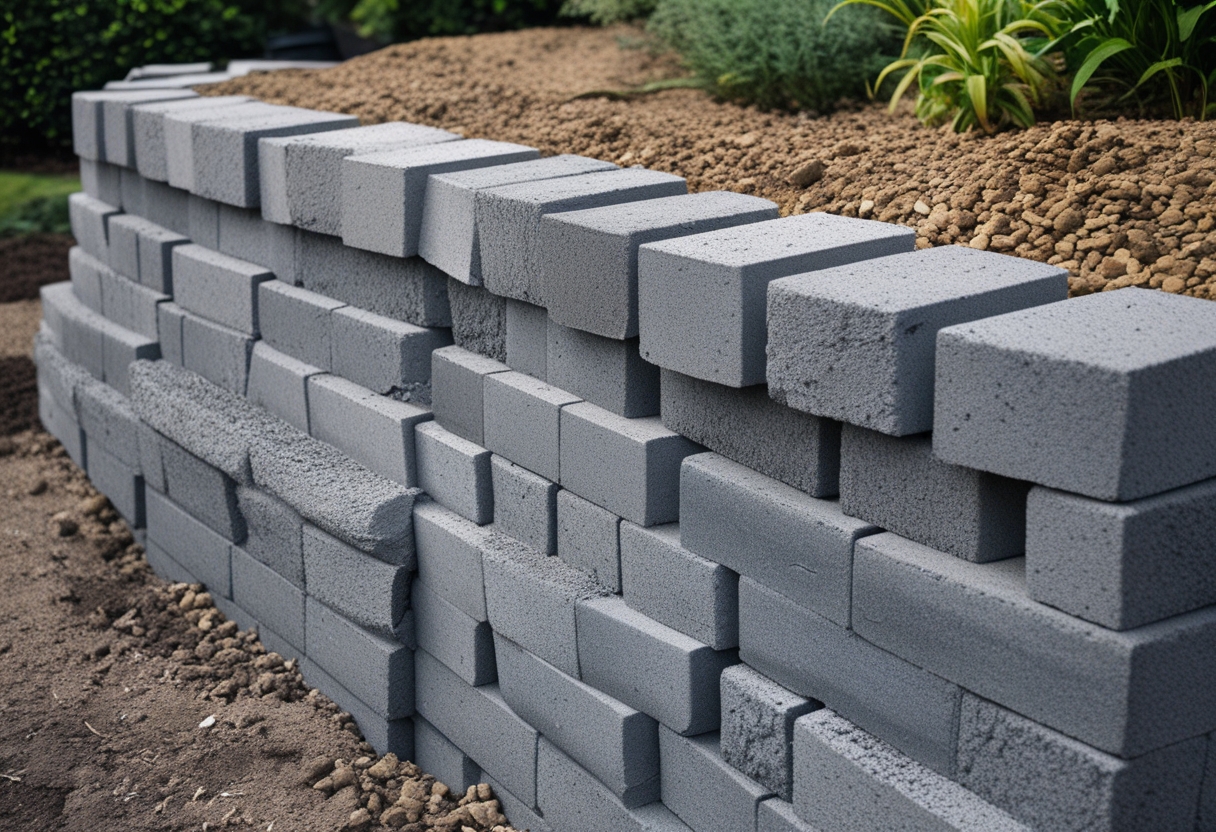
You stack cinder blocks in a staggered pattern to lock the rows together and add stability.
Place the first course on a compacted gravel base so the wall stays level and resists settling.
Backfill behind the wall with clean gravel as you build each row.
Gravel sheds water and reduces pressure on the wall, lowering the risk of failure.
Brace larger walls with rebar and concrete-filled cores when needed.
Keep the slope and drainage directed away from the wall to protect your work.
2) Hollow cinder block vertical planter wall (blocks with succulents in cores)
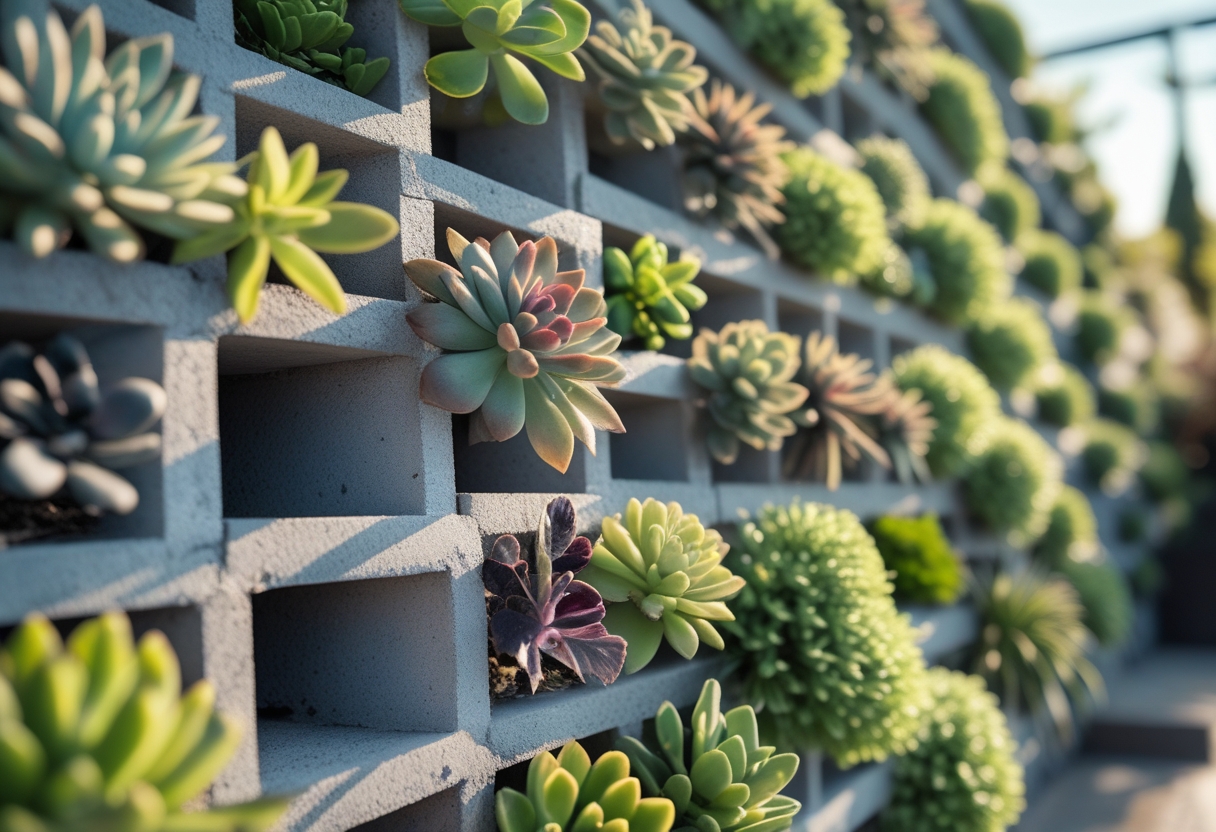
You can stack cinder blocks so the hollow cores face outward and create pockets for succulents. This uses vertical space and keeps the footprint small.
Fill each core with well-draining soil and plant drought-tolerant succulents or herbs. Water sparingly and choose plants that handle shallow soil.
Paint or leave blocks natural to match your yard. Secure the stack against tipping, especially if it’s tall or in windy spots.
3) Painted patterned cinder block decorative garden boundary
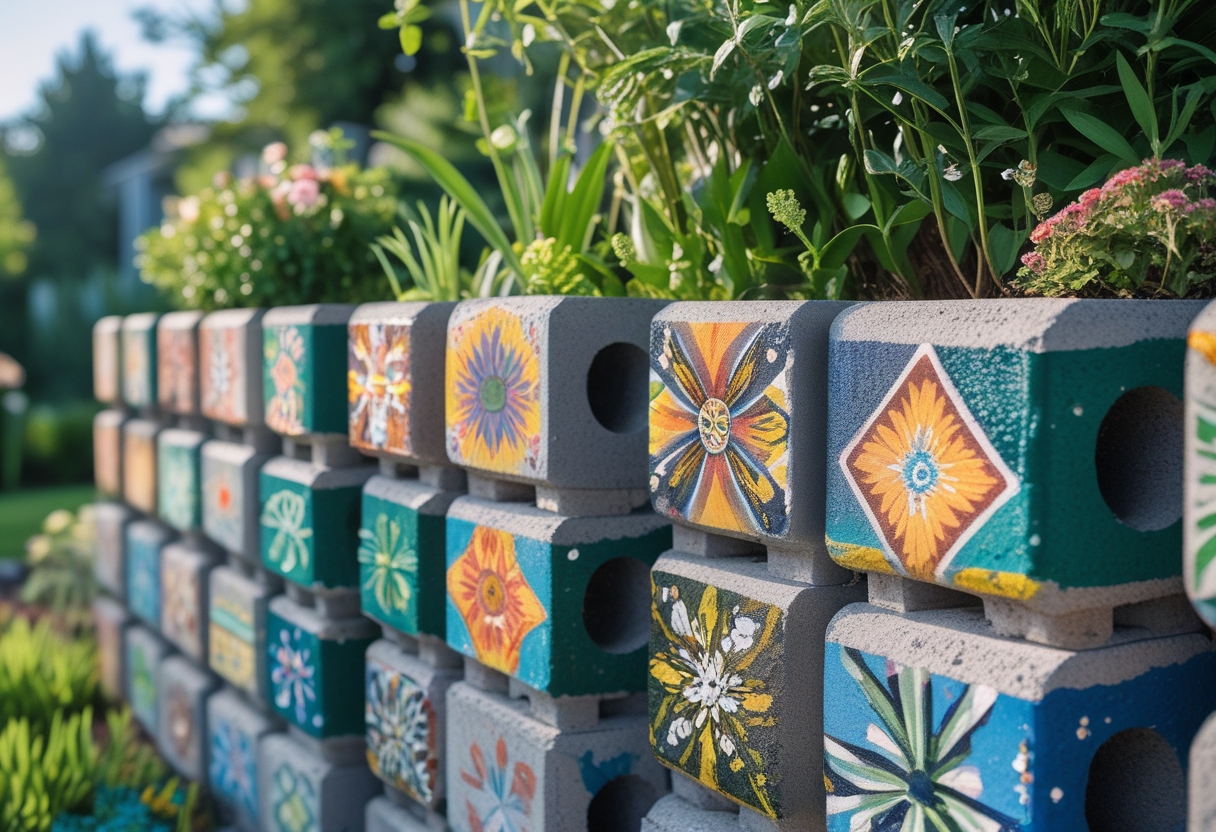
You can turn a plain cinder block wall into a clear decorative border with simple paint patterns. Choose geometric shapes, stripes, or repeating motifs for a neat, modern look that suits your yard.
Prep blocks with a primer and use exterior paint so the design lasts through rain and sun. Paint one repeating pattern across the wall or mix a few complementary colors for a lively but controlled effect.
Leave some blocks unpainted for texture, or add small plant pockets in a few blocks to blend color and greenery.
4) Cinder block raised bed wall with integrated bench seating
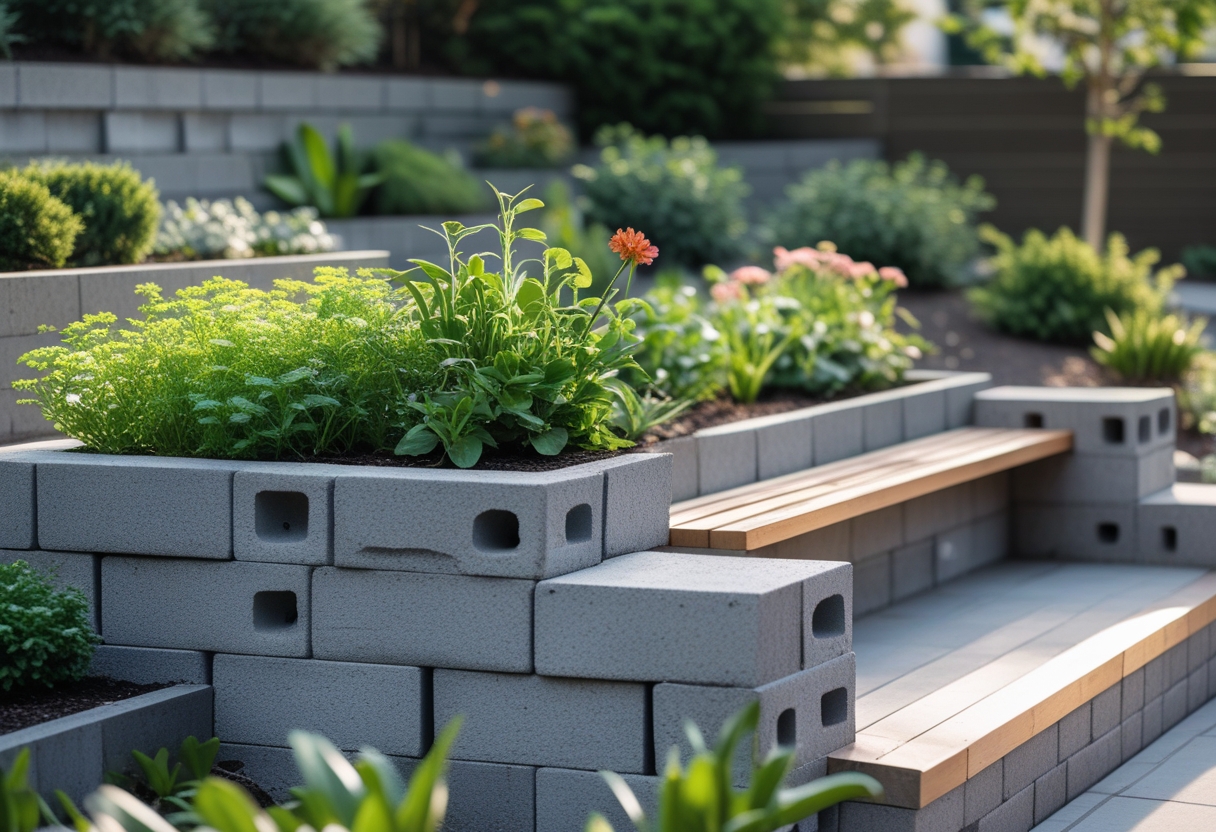
Build a raised bed wall from cinder blocks and leave a row of blocks open to form bench seats. You get planting space and a simple place to sit without extra furniture.
Fill bench cavities with wood or cushions for comfort and use blocks’ hollow cores for drainage or potting soil. This design saves space and gives a sturdy, low-maintenance seating area next to your plants.
5) Cinder block terraced slope wall with built-in drainage weep holes
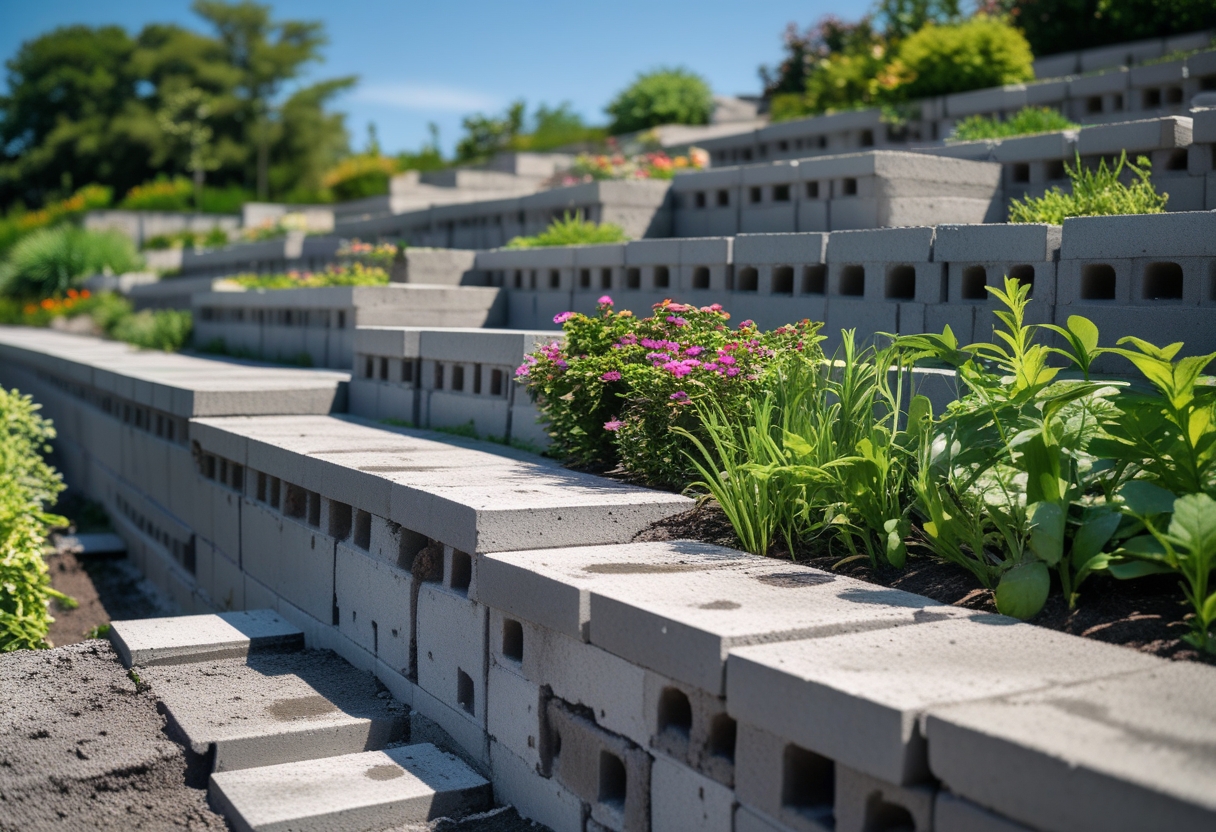
You can terrace a steep yard using staggered cinder block walls to create flat planting beds. Build a solid footing, stack blocks with staggered joints, and add backfill between tiers.
Include weep holes or perforated pipe behind each tier so water drains away and pressure stays low. Check holes after heavy rain and clear any blockages to keep the wall stable.
Incorporating Plants and Greenery
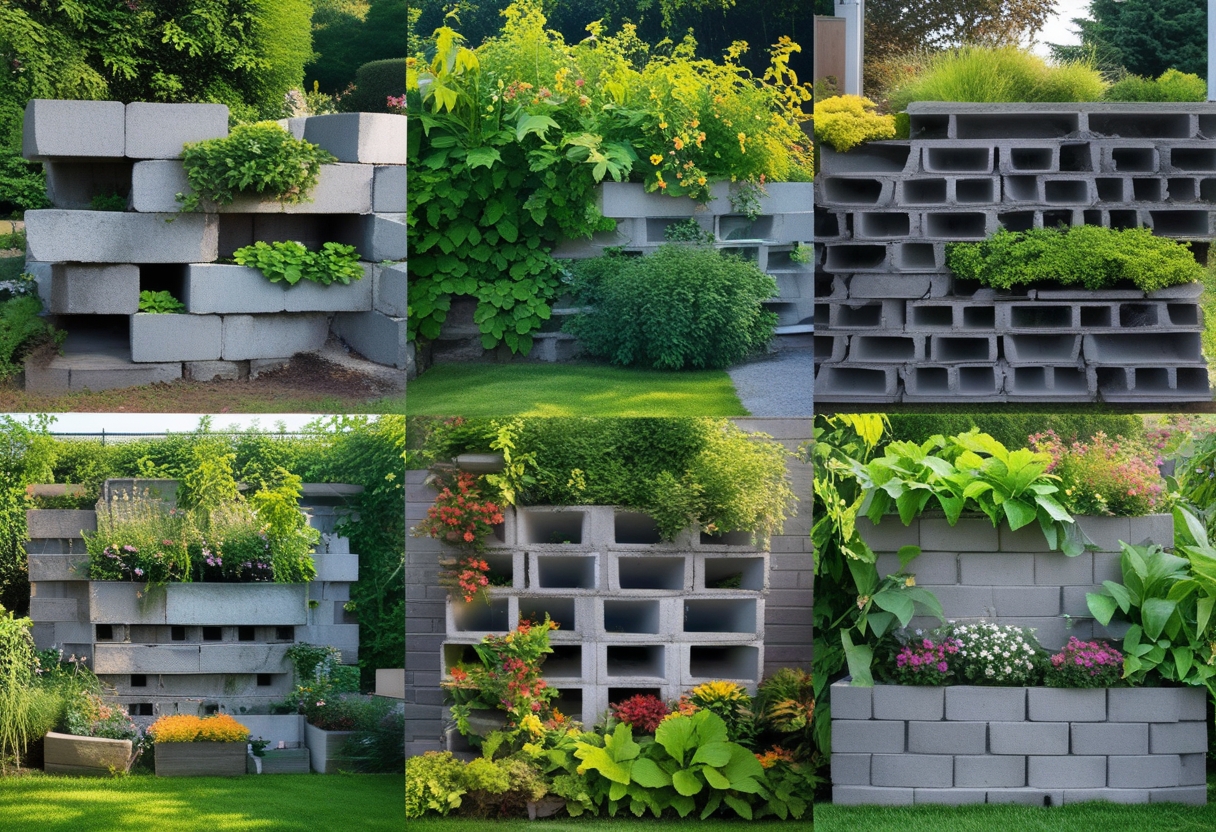
Use plants to soften the concrete, add color, and improve drainage. Choose plants that fit the wall’s sun, soil, and watering conditions to avoid constant upkeep.
Vertical Planting Techniques
Stack cinder blocks so the hollow cores face outward or upward to create pockets for soil. Line each cavity with landscape fabric to keep soil in but allow water to drain. Fill with a lightweight potting mix blended with perlite for good drainage and root aeration.
Pick plants by light exposure: succulents and sedums for full sun, ferns and ivy for shade, and herbs like thyme or oregano for sunny kitchen walls. Plant trailing species on top rows so they spill down and cover seams. Water from the top after planting; use a hose with a gentle spray or a drip line tucked into the top cavities for consistent moisture.
Anchor taller plants with a layer of gravel at the bottom of deep cores. Check for frost sensitivity in cold climates and swap plants seasonally in the removable blocks.
Integrated Planter Designs
Build raised beds by arranging blocks in a rectangle and filling the interior with soil, leaving the block cavities as individual planters. Cap the top row with pavers for a finished edge and a place to sit or set pots. Use staggered block patterns to create ledges for small pots or herb cups.
For living walls, screw a backer board to a solid surface, then attach blocks to it with masonry adhesive. Ensure each block has drainage holes and a shallow tray beneath to catch excess water if the wall is near walkways. Add climbing plants like clematis or jasmine at the base and train them with twine or a wire grid attached to the wall.
Label each cavity or use color-coded paint to track watering needs. That way you manage water use and plant health without guessing.
