
If you want to bring personality and style to your living room, a gallery wall is a fantastic choice. A well-designed gallery wall lets you showcase your favorite art, photos, and decor in a way that feels personal and stylish all at once. It’s more than just decoration—it turns a blank wall into a visual story of your tastes and memories.
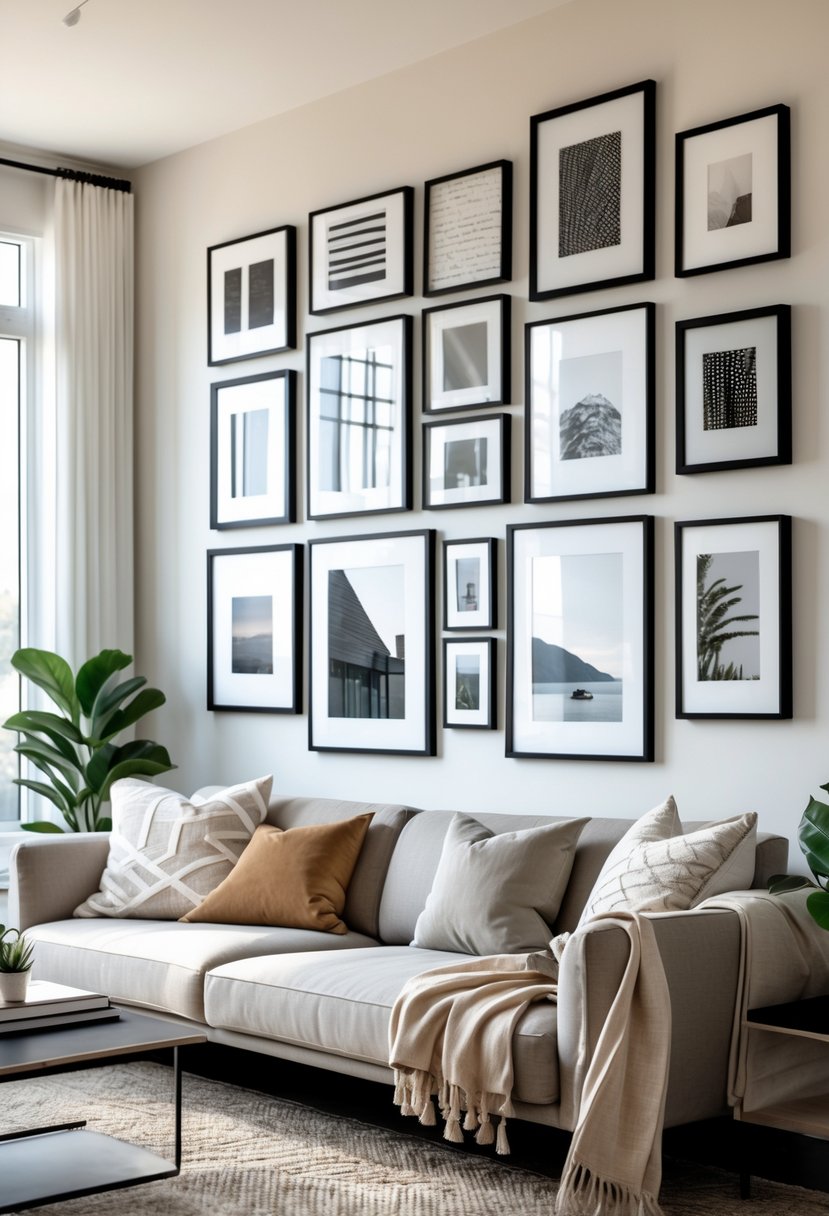
You can mix different frame styles, colors, and artwork to fit your space perfectly. Whether you like a tidy, minimalist look or a fun, eclectic mix, there’s a gallery wall idea that will make your living room stand out. Get ready to explore easy ways to create a wall that truly reflects you!
Choosing the Perfect Gallery Wall Layout
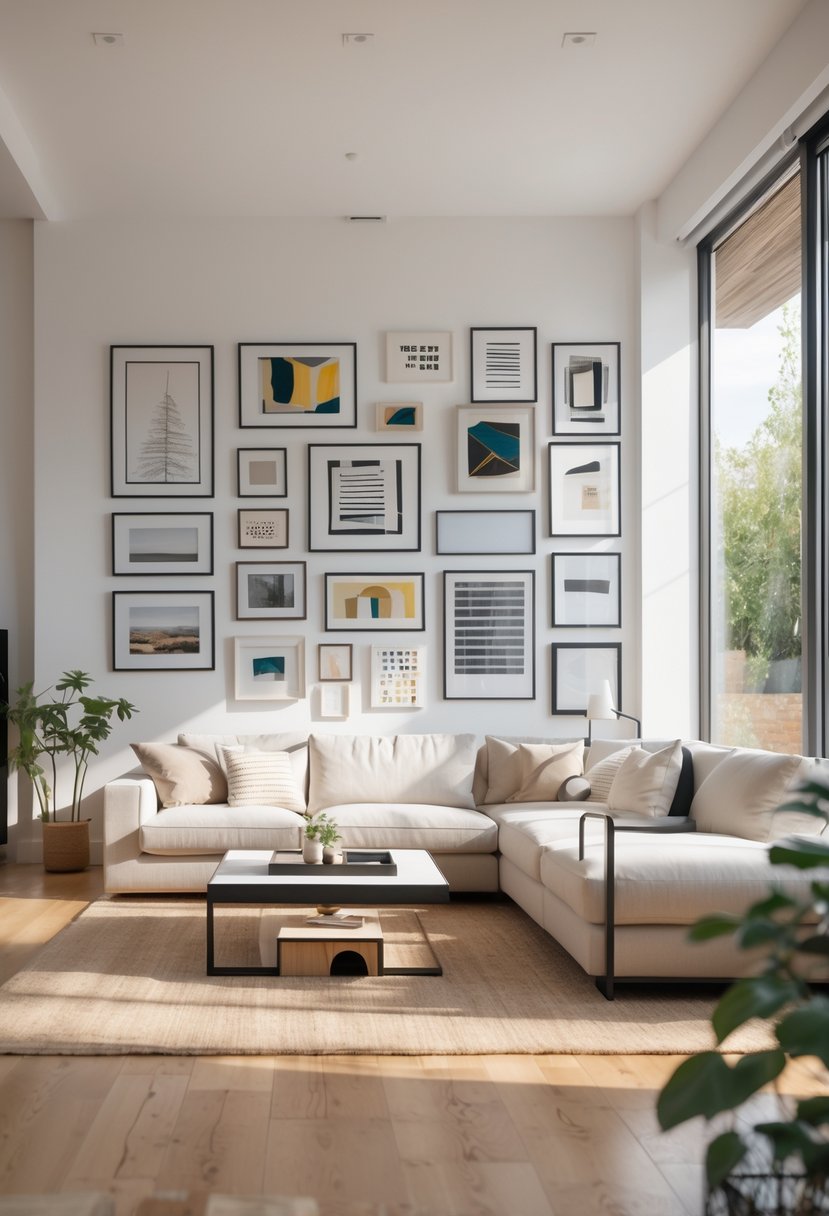
Picking the right layout is key to making your gallery wall stand out. You want a design that fits your space, shows off your art, and matches your style. The way you arrange your pieces can create balance, energy, or calm in your living room.
Popular Arrangements for Living Rooms
There are several layouts you can try, each bringing a different feel. The grid layout uses evenly spaced frames in rows and columns. It feels clean, classic, and works well if your art pieces are similar in size. If you want something more relaxed, try the asymmetrical cluster. This groups different frame sizes and shapes in a playful way. It gives your wall personality and energy but still stays balanced.
Another option is the linear layout, which lines up frames in a single row or two. This keeps things simple and works well over furniture like sofas or shelves. You can mix and match styles, but keeping frames in a common color helps them feel connected.
Balancing Symmetry and Asymmetry
When you create your gallery wall, think about how much symmetry you want. Symmetry helps make the space feel organized. It’s great if you like a tidy look and want to show off your art evenly. Placing similar-sized frames mirrored on both sides creates calm and focus.
If you prefer a more dynamic display, go for asymmetry. This means your frames won’t match exactly but will balance each other with different sizes and shapes. Use odd numbers of frames for better flow. To keep it from feeling messy, try grouping frames around a central piece or color theme.
Scaling Artwork to Fit Your Space
Make sure your art matches your wall size. If your living room wall is large, small frames can get lost. Group smaller pieces close together to make a bigger visual impact. For smaller walls, pick larger pieces or fewer frames to avoid crowding.
You should also think about the space between frames. Keeping about 2 to 4 inches apart helps your gallery wall breathe and prevents clutter. If your living room is tall, consider stacking frames vertically. This uses the height smartly and draws eyes upward. Adjust frame sizes and spacing until the arrangement feels right for your room’s shape.
Creative Gallery Wall Themes and Styles
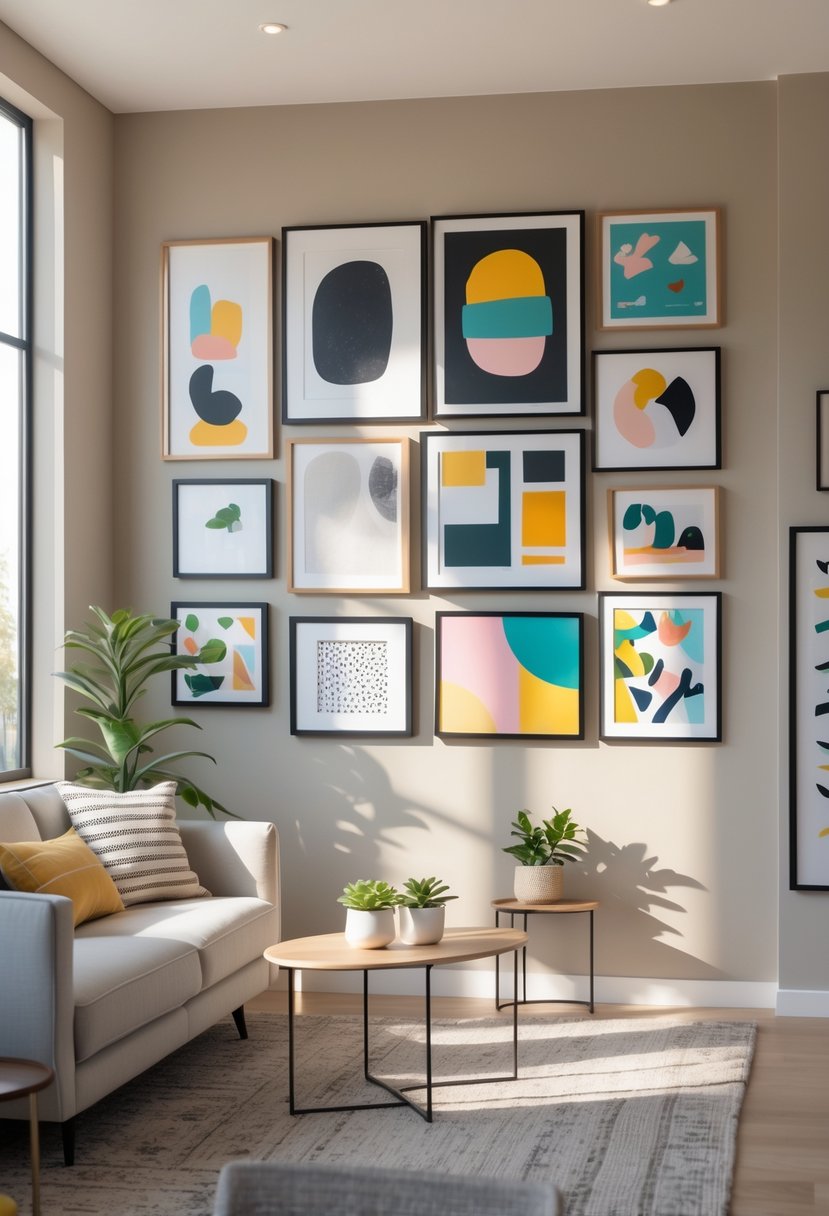
You can use different styles and themes to make your living room gallery wall truly stand out. Whether you prefer clean lines, a mix of old and new, or simple color schemes, there are ways to create a look that feels just right for your space.
Modern Gallery Wall Inspirations
If you like fresh and clean design, modern gallery walls are a great choice. Focus on using thin natural wood frames or simple black or white frames to keep everything looking neat. Include art with clear subjects like botanical prints, lemons, or serene photos, which add color without feeling too busy.
Try combining photos and art with text elements or simple shapes to add personality. Adding a few cozy touches like a brown pillow or soft throw nearby can help balance the cool look with warmth. Stick to a consistent color palette for a polished feel.
Eclectic and Vintage Combinations
For a more relaxed, personal style, mix vintage frames with bold colors and different textures. This look lets you use old family photos, kids’ art, or quirky prints alongside more modern items. You get a wall full of stories and memories that feels collected over time.
The key is to find balance between variety and harmony. You might choose frames that share one color or material so the wall feels connected, even though the pieces are very different. This style welcomes creativity—you can play with size, shape, and color for a fun and unique display.
Monochromatic and Minimalist Designs
If you prefer simplicity, go with a monochromatic palette, using different shades of one color. This helps your gallery wall blend easily with the room while still adding interest. Minimalist designs often use geometric shapes or abstract art in soft tones.
Keep frames all the same color, like black or white, to enhance the minimalist feel. Space between the pieces matters here—it should look clean and balanced, not crowded. This style is perfect if you want something modern but low-key that lets your room breathe.
Tips for Hanging and Curating Art Displays
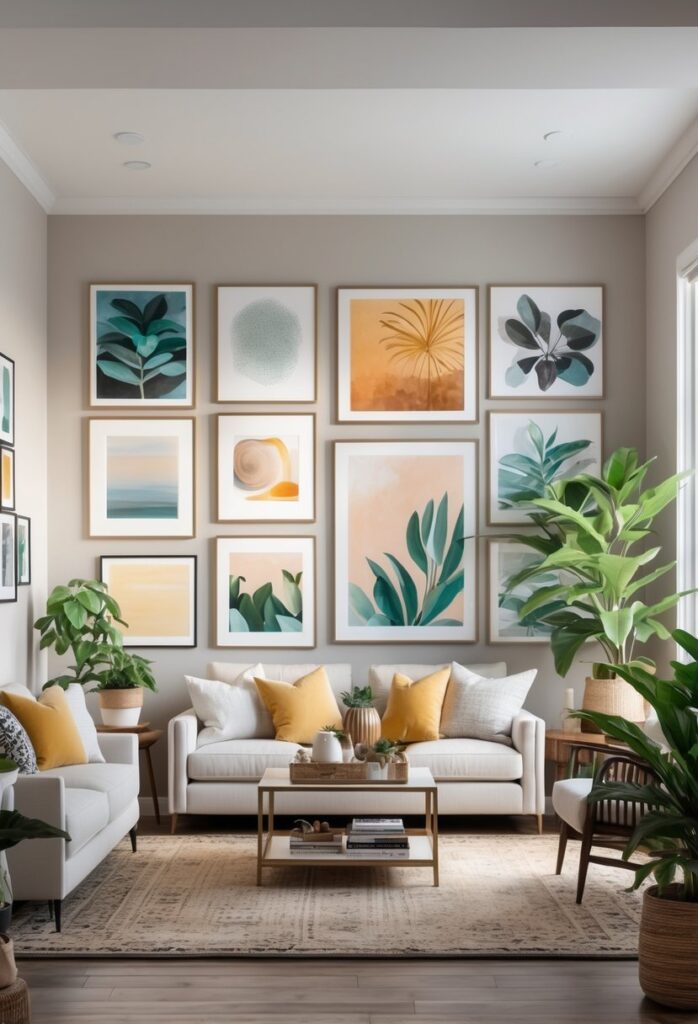
You want your gallery wall to look stylish and well-planned. Choosing frames that fit your space, hanging art at the right height, and balancing personal photos with prints will help you create a display you’ll love.
Selecting the Right Frames and Matting
Frames set the tone for your gallery wall. Pick frames that match your room’s style but don’t be afraid to mix finishes like wood and metal for extra interest. Using mats can give smaller pieces space to breathe and make your display look more polished.
Consider using neutral mats for bright or busy art to keep the focus on the image. White or off-white mats are popular because they work with almost everything. Make sure the frame size matches the artwork proportions to avoid awkward gaps.
If you want a cohesive look, try repeating the same frame style or color across your wall. You can also vary frame sizes but keep them balanced by spacing pieces evenly.
Hanging Techniques for Perfect Alignment
Place your gallery wall at eye level, about 57-60 inches from the floor to the center of your display. This height works well whether you’re sitting or standing.
Before you hammer nails, lay your art out on the floor or use paper templates taped to the wall. This helps you see the arrangement without committing to holes.
Use a level and measure carefully to keep spacing consistent. A good rule is to leave 2-4 inches between frames but adjust depending on your wall size.
If your wall has a main piece, hang it first, then build around it to create balance. Consider creating rows or grids for a neat look, or mix them up for a more dynamic style.
Mixing Personal Photos with Art Prints
Combining family photos with art prints creates a gallery wall that feels both personal and stylish. Start by choosing a theme—like black and white photos with abstract prints—or pick colors that link your pieces together.
Use frames that unify the collection but vary sizes and shapes to keep things interesting. For example, pair a large family portrait with smaller, colorful prints nearby.
Arrange photos and art to tell a story. Place personal photos where they’ll catch attention, then fill spaces with art that complements them. This mix keeps your gallery unique and full of meaning.
Don’t overcrowd. Give each piece enough space to stand out but stay connected to the group. This balance draws people in and invites them to explore your wall slowly.
Frequently Asked Questions
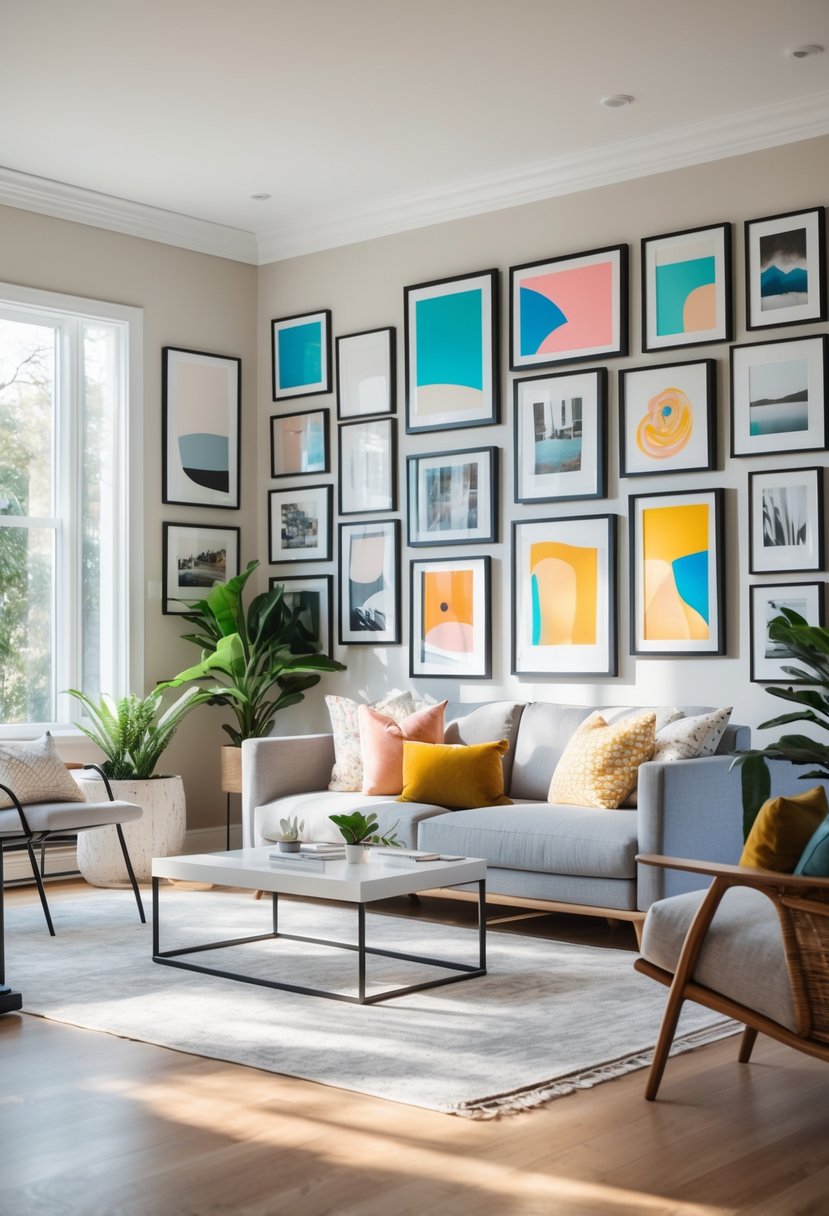
Creating a gallery wall that truly stands out takes some thought about layout, frame choices, and the vibe you want to bring to your living room. Using personal art, photos, and a mix of frame styles can add character and warmth to your space.
How can I create a stunning gallery wall in my living room?
Start by selecting a theme or color scheme that fits your style. Collect a mix of artwork, photos, and décor that tell your story. Lay everything out on the floor to arrange before hanging.
Spacing is key—leave some room between pieces but keep them close enough to feel connected. Use frames that match or complement your room’s look.
What are some creative layout ideas for a gallery wall?
Try a grid pattern for a clean, modern look. Or mix sizes for an eclectic feel. You can also create a centered focal point with larger art and surround it with smaller pieces.
Another idea is to arrange art around your TV or over furniture to make the wall more dynamic and balanced.
What are the best ways to incorporate different frame styles in a gallery wall?
Mix frames by color, material, or size for contrast, but keep a common element like style or color tone to avoid chaos. For example, blend black and wood frames or use all thin frames for a light feel.
Grouping similar frames together also helps create a neat flow while showing off different designs.
Can you suggest simple yet stylish gallery wall concepts for a cozy living space?
Use warm colors and natural materials like wood frames. Add photos or prints with soft, inviting themes. Keep the layout tight and balanced to avoid overwhelming a small space.
Include a few personal pieces like family photos or handmade art to add charm and comfort.
What should I avoid when designing a gallery wall to prevent common mistakes?
Don’t overcrowd the wall. Too many pieces or random spacing can feel messy. Avoid hanging art too high; eye level is best.
Also, avoid using only one style of frame or art, which can look boring. Mix things thoughtfully for more interest.
How do I make a gallery wall work in a small living room area?
Choose smaller artwork and keep frames slim to save space visually. Use light colors and minimalistic designs to make the wall feel open.
Arrange the pieces tightly but with enough space so the wall doesn’t feel cluttered. Vertical arrangements can add height without taking floor space.
