
Many people think small balconies are too limited for gardening. However, even tiny outdoor spaces can become green, inviting areas with the right ideas. Balconies offer a unique chance to enjoy nature without needing a large yard.
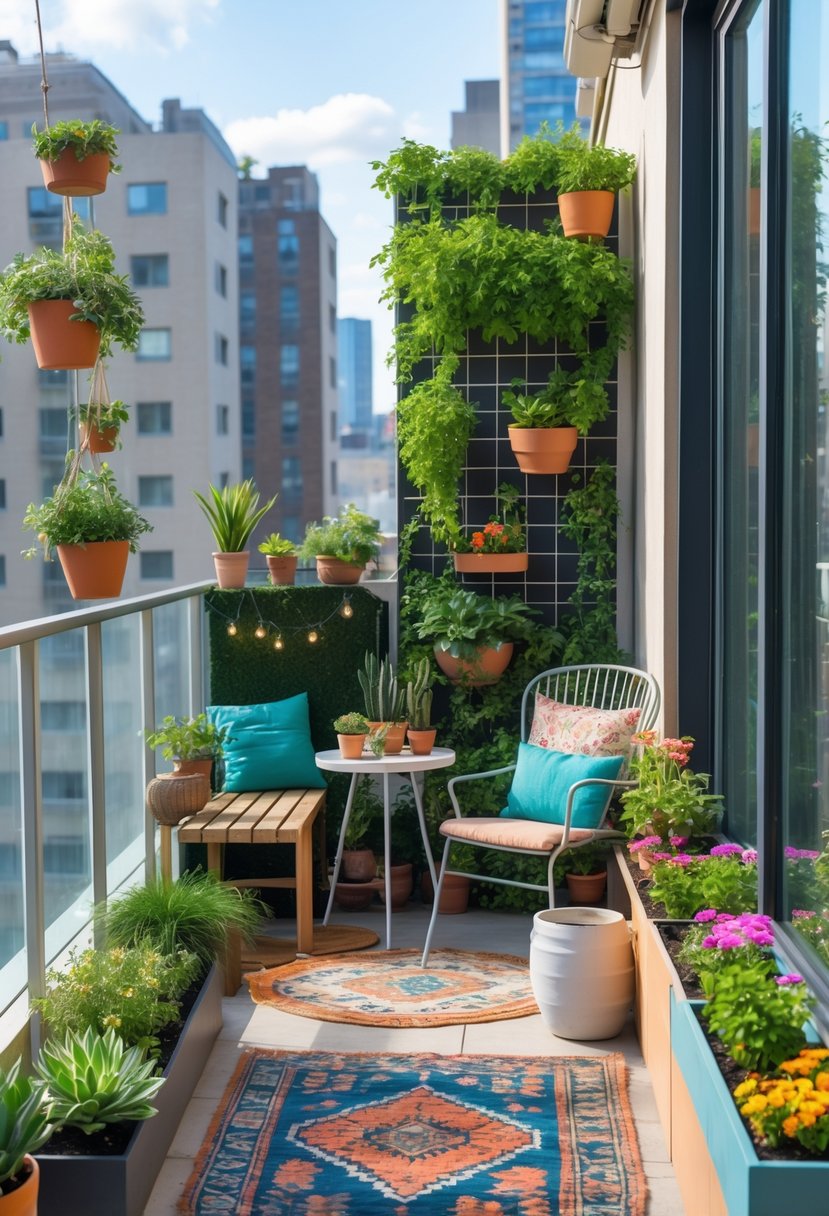
Small garden balcony ideas help people make the most of their space by using clever designs and smart plant choices. These ideas can fit plants, seating, and decorations into compact areas, turning balconies into peaceful retreats.
1) Vertical planter walls to maximize space
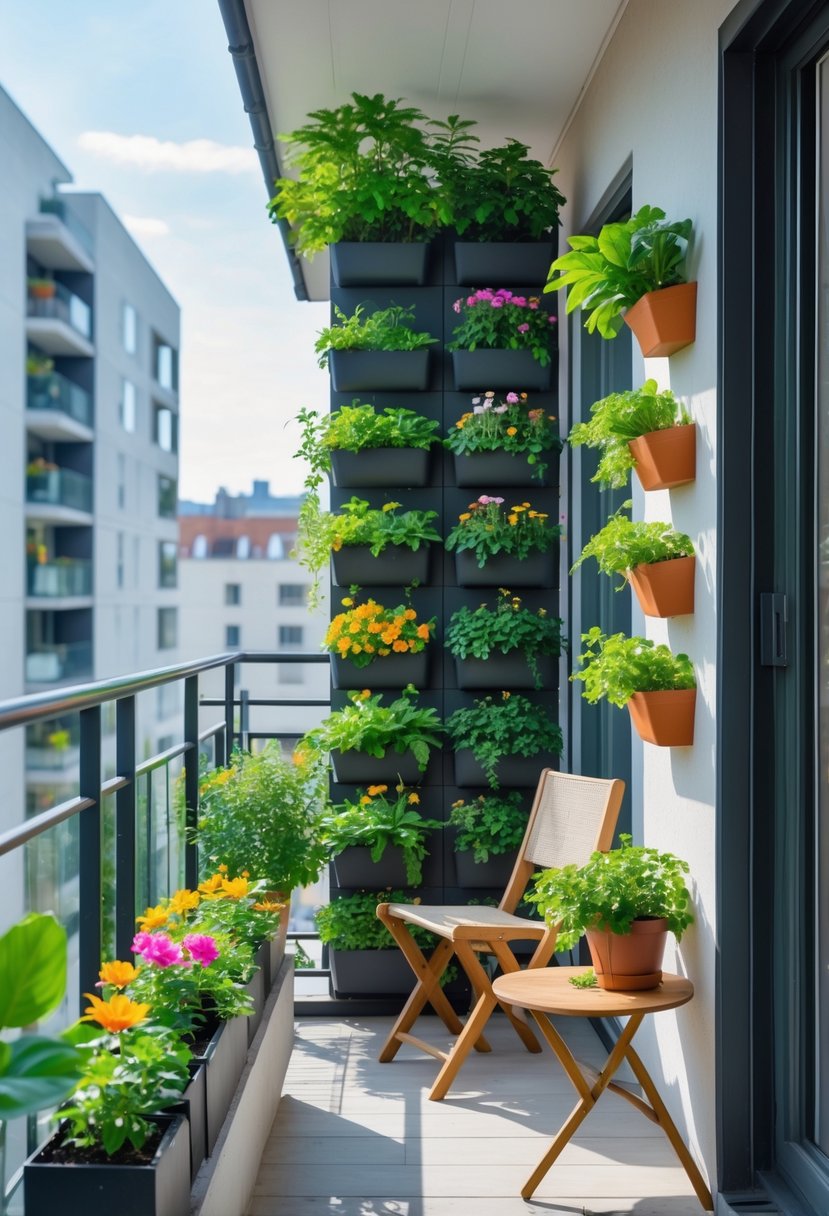
Vertical planter walls use the height of a balcony to grow plants without taking up much floor space. They can hold many pots or containers in a small area by stacking plants upward. This method works well for herbs, flowers, or small vegetables.
These planter walls can be attached to balcony walls, fences, or railings. They make the most of unused vertical surfaces and create a green wall that adds both beauty and privacy. People often use materials like wood, metal, or fabric pockets to hold the plants.
By growing plants vertically, gardeners increase their capacity by three to four times compared to placing pots on the floor. This approach keeps the balcony tidy and open for other uses. It also makes watering and caring for the plants easier since they are all within reach.
2) Compact herb garden with self-watering pots
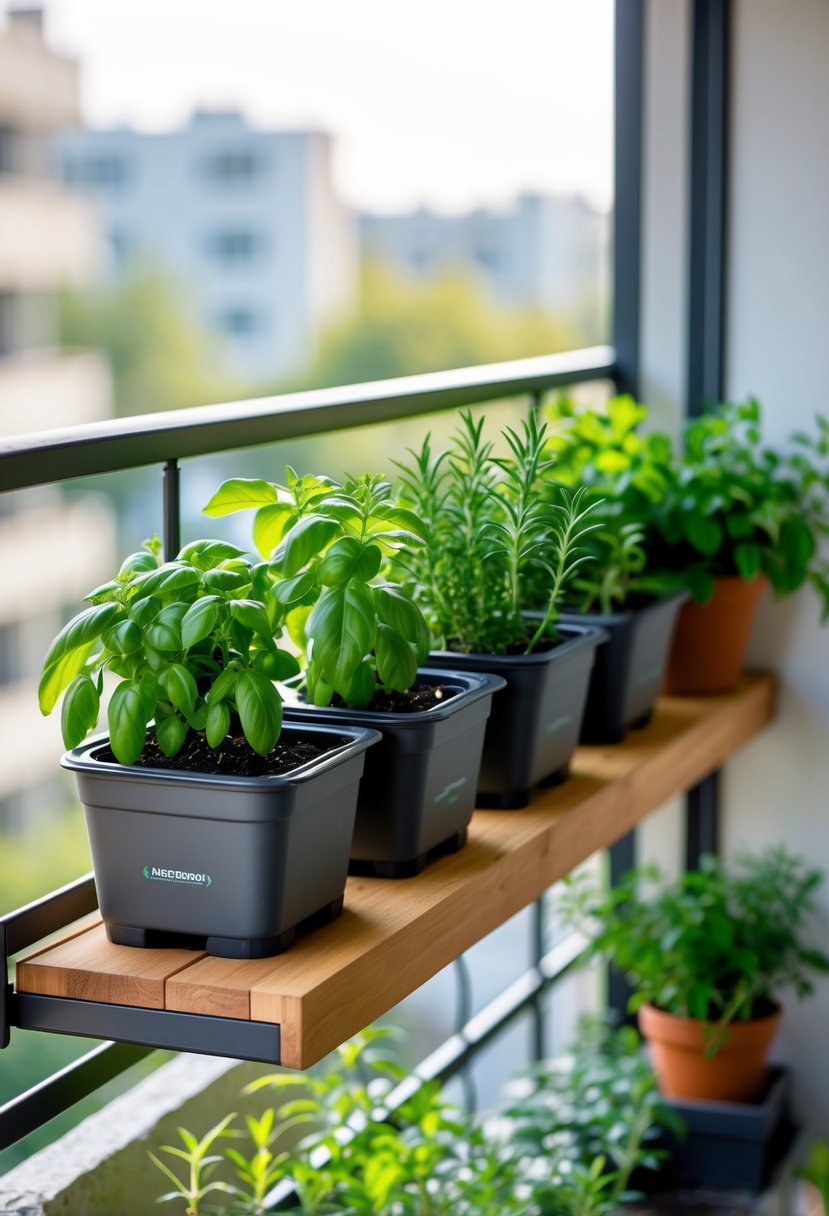
A compact herb garden with self-watering pots is a smart way to grow fresh herbs on a small balcony. These pots store water in a reservoir, so the plants get a steady supply without daily watering. This feature helps busy people keep their garden healthy with less effort.
Self-watering pots are great for herbs like basil, mint, and rosemary. They prevent overwatering and root rot while keeping soil moist. The design also saves space, which is important on a small balcony.
Using self-watering pots in a vertical or tiered setup can maximize limited space. They can be placed on shelves, hung from railings, or arranged in small clusters. This method creates an organized, neat look without crowding the balcony floor.
Overall, a small herb garden with self-watering pots combines convenience with efficiency. It allows fresh herbs to grow year-round and fits well in compact outdoor spaces.
3) Multi-tiered plant stands for layering
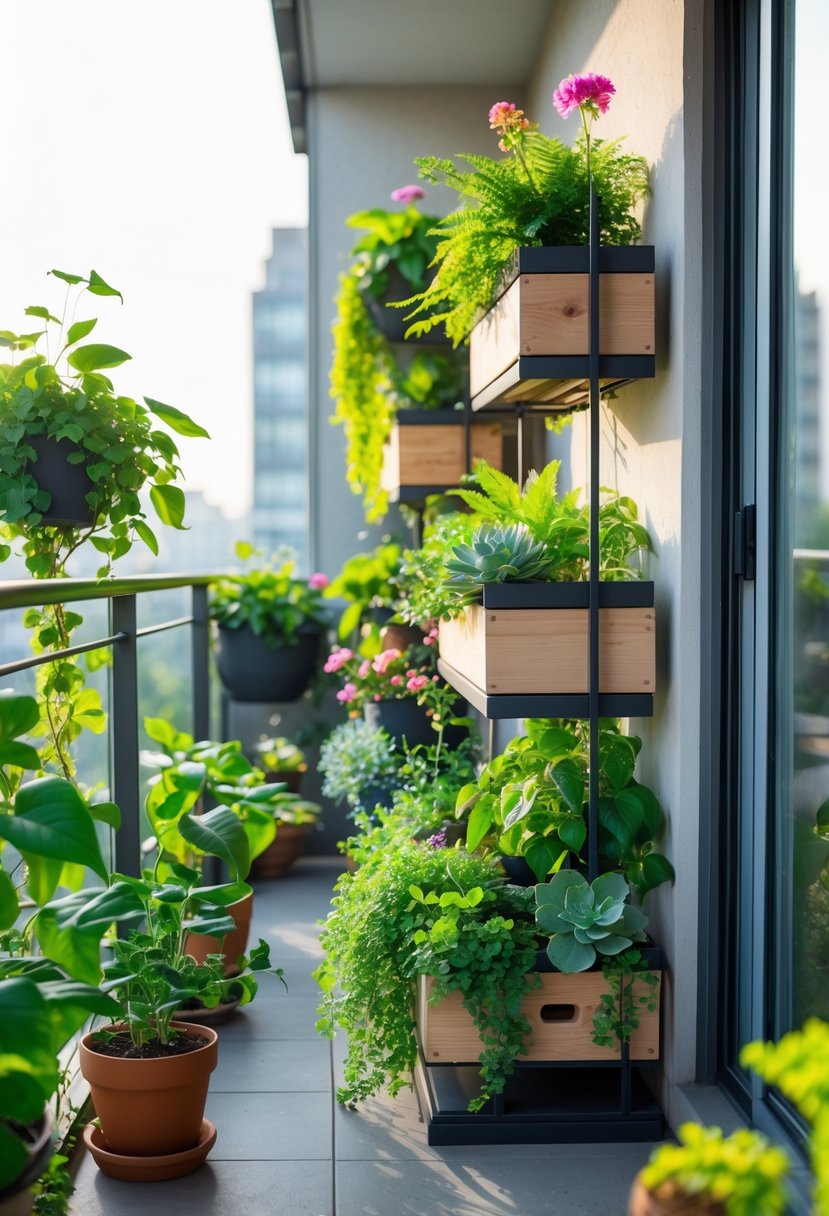
Multi-tiered plant stands are a smart way to add more greenery to a small balcony. They use vertical space, allowing several plants to fit in a limited area. This helps create a layered look, making the garden feel fuller without taking up too much floor space.
These stands come in different materials like wood, metal, and bamboo. Some have wheels or folding designs, making them easy to move or store when needed. A sturdy stand with anti-tip features is best for safety and stability.
Using multi-tiered stands also helps organize plants by size or sunlight needs. Taller plants can go on the top tiers while smaller ones sit below. This arrangement improves sunlight access and makes watering more efficient.
Multi-tiered plant stands are widely available, both ready-made and as DIY projects. They offer a flexible way to display plants stylishly and keep a small balcony garden neat and enjoyable.
4) Hanging baskets with trailing plants
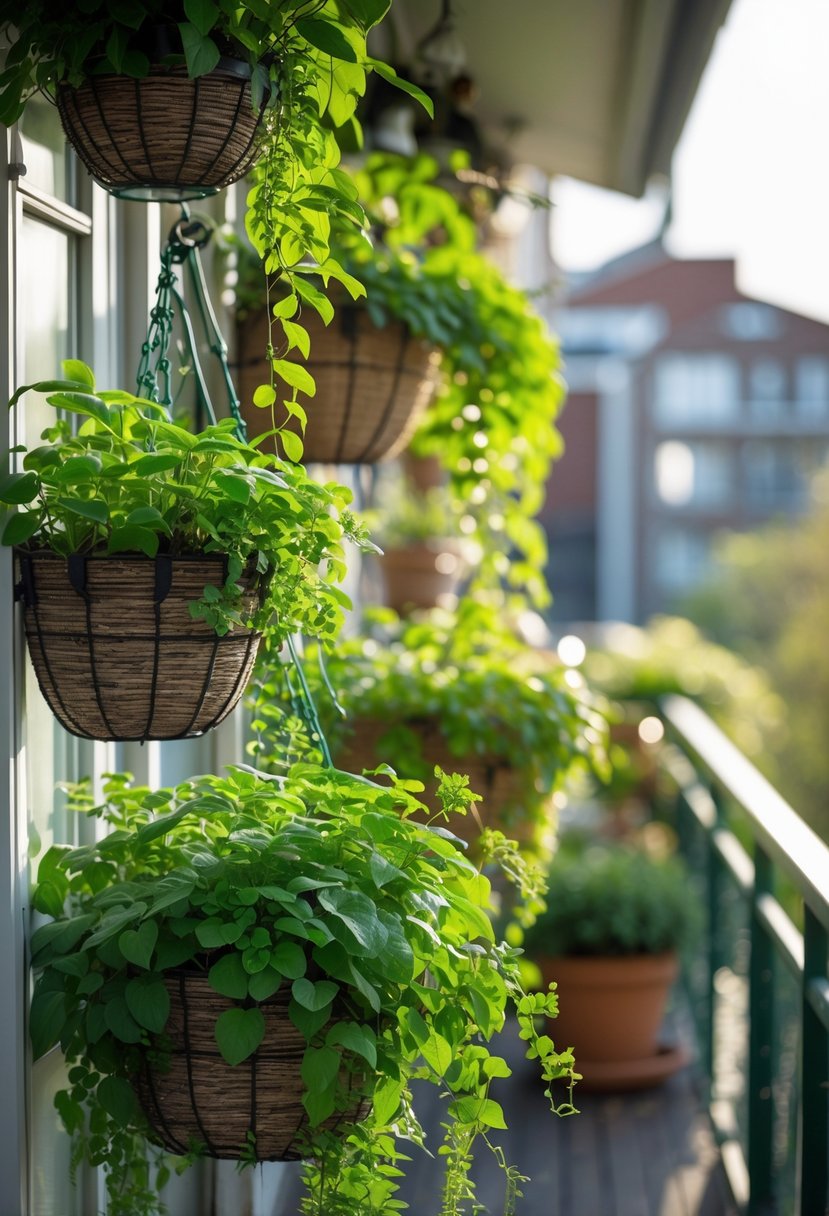
Hanging baskets are a smart way to add green space without taking up floor area. They work well on small balconies, using vertical space effectively. Trailing plants in these baskets create a natural, cascading look that softens the edges of the balcony.
Plants like petunias, ferns, and begonias thrive in hanging baskets. These species have a trailing habit, which means their stems hang down naturally. This creates a curtain of leaves and flowers that can add color and texture to the balcony.
Installing ceiling hooks or rails is simple and helps suspend the baskets safely. Light, well-draining baskets with coconut coir liners work best. Regular watering and pruning keep the plants healthy and looking neat.
Trailing plants also help improve air quality and can create a cooler environment. This makes the balcony feel more inviting and pleasant. Hanging baskets with trailing plants are a practical and attractive choice for small garden balconies.
5) Foldable seating with integrated planter boxes
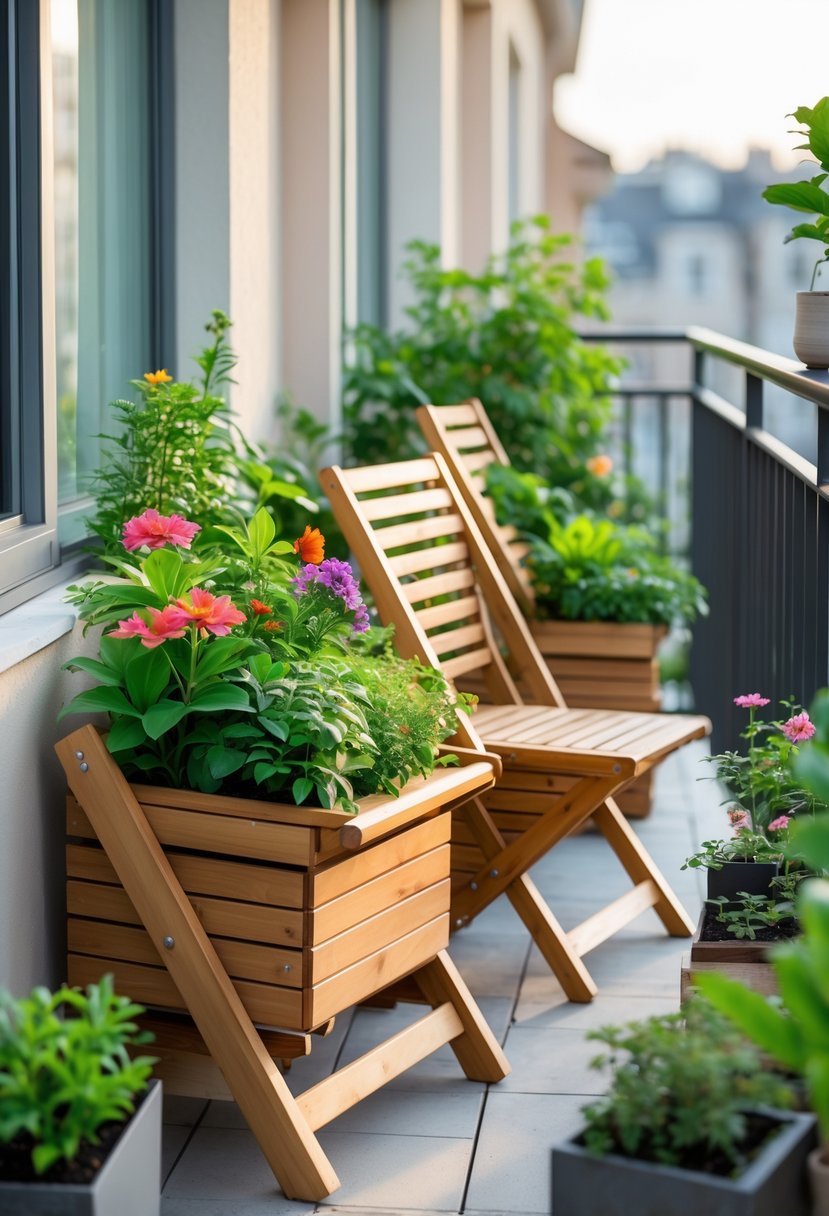
Foldable seating with built-in planter boxes is a smart choice for small balconies. This design saves space by combining seating and greenery in one unit. Users can enjoy a cozy spot to sit while surrounded by plants.
These seats often fold flat when not in use, making them easy to store. The planter boxes provide a place for flowers or herbs, adding color and life to the area. This setup turns a tight balcony into a comfortable outdoor room.
The integrated planters help bring nature closer without needing extra pots. They also free up floor space, which is important on small balconies. Because the seating folds, the balcony stays flexible for different uses. Overall, this idea is practical and stylish for compact outdoor spaces.
Design Principles for Small Balcony Gardens
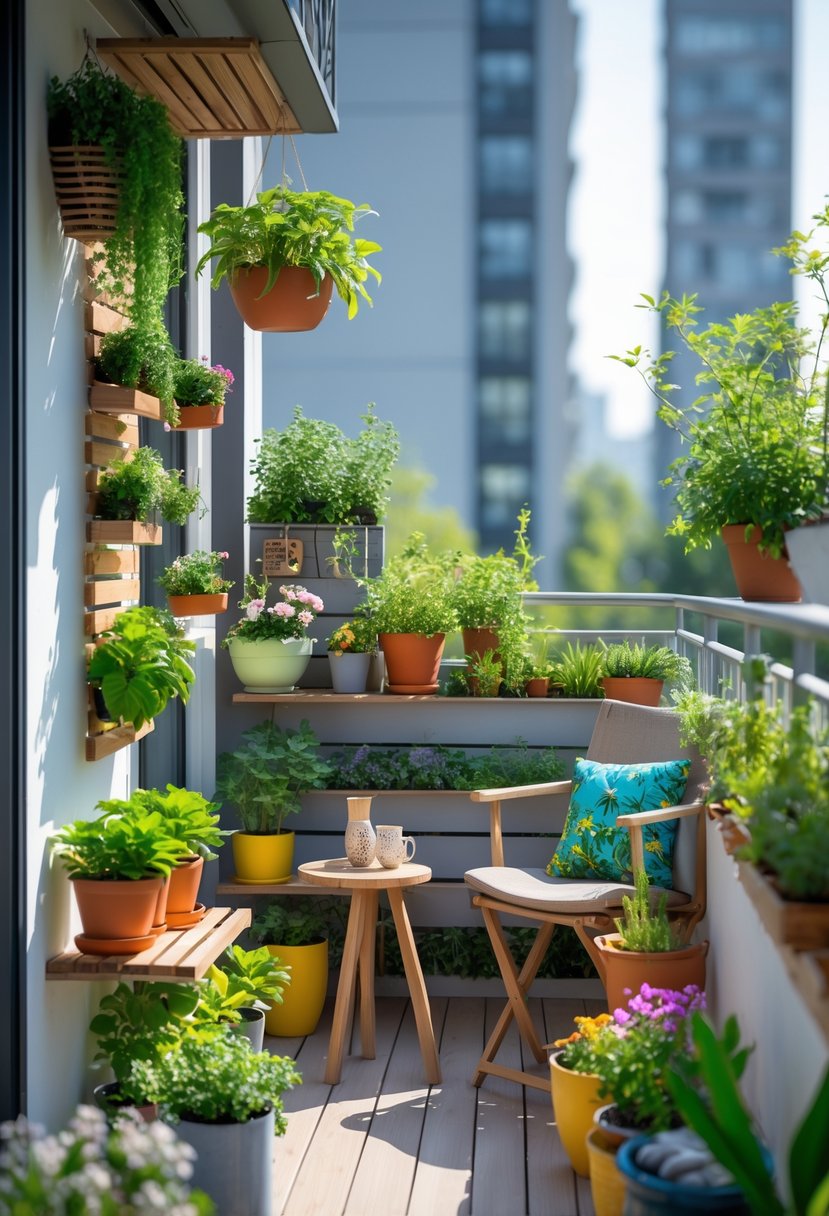
A successful small balcony garden relies on careful space use and selecting containers that fit both the plants and the area. Every choice should support functionality without overcrowding the limited outdoor space. Balance between plants, furniture, and decorative elements is key.
Maximizing Limited Space
Using vertical space is crucial on small balconies. Wall planters, hanging pots, and tiered shelves allow gardeners to stack plants rather than spreading out. This keeps the floor clear for seating or walking.
Multi-use furniture, like benches with storage or foldable tables, helps save space. Grouping plants by size or sunlight needs can improve growth and make maintenance easier.
Leaving enough open area to move freely prevents a cramped feeling. Plants placed close together but not overcrowded allow air circulation and reduce damage risk from wind or touch.
Choosing the Right Containers
Containers must fit the plant’s needs and the balcony’s size. Shallow pots work well for herbs or small flowers, while deeper pots are needed for larger roots or vegetables.
Lightweight materials like plastic or fiberglass reduce the risk of damage to the balcony floor and make moving plants easier. Self-watering containers help maintain moisture without daily attention.
Using containers in uniform colors or styles can create a neat, cohesive look. Grouping plants in clusters of three or five containers can also introduce visual order without clutter.
Maintaining a Functional Outdoor Retreat
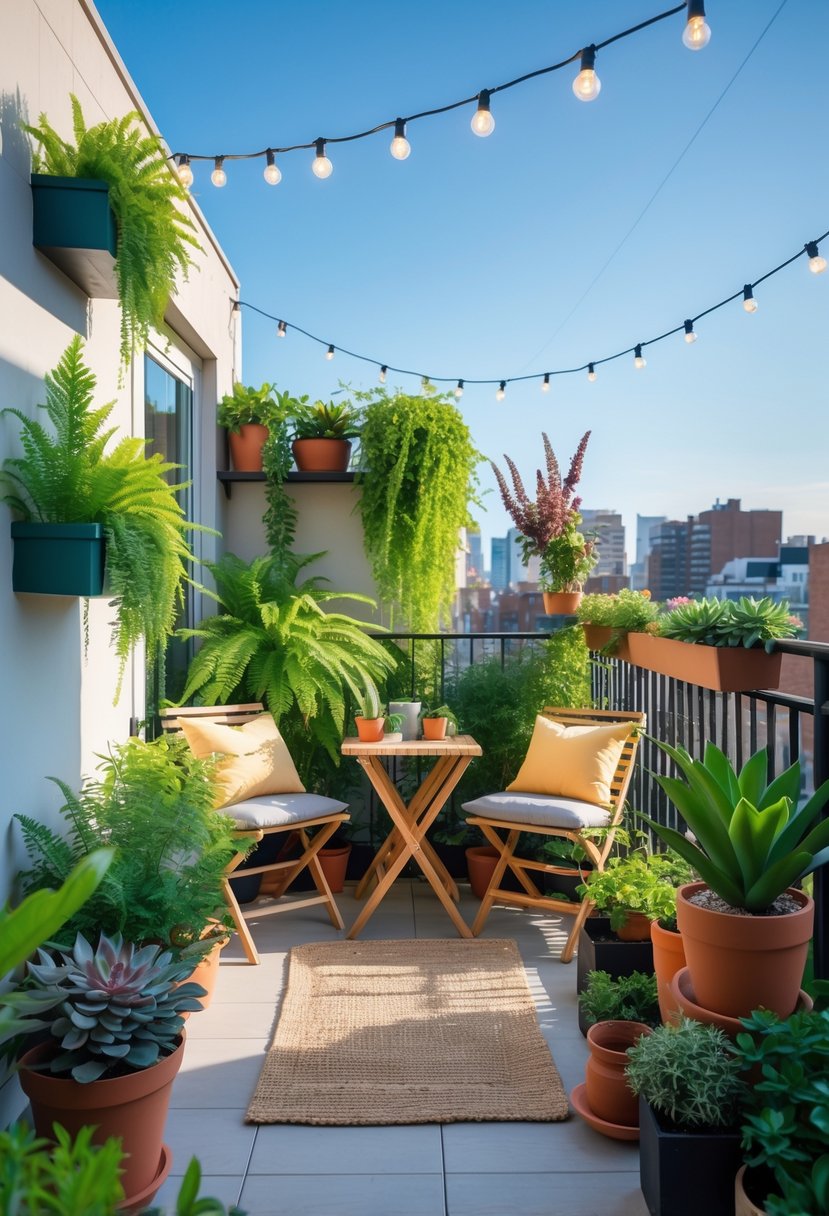
Keeping a small balcony garden workable means careful attention to watering and regular upkeep throughout the year. Proper strategies help plants thrive while saving time and resources.
Efficient Watering Solutions
Watering plants on a balcony requires methods that save water and prevent mess. Using self-watering containers or pots with built-in reservoirs reduces how often watering is needed. These containers provide a steady supply of water directly to the roots, cutting down on waste.
Drip irrigation systems are another efficient option. They deliver water slowly and evenly, which is perfect for small spaces and avoids runoff. For balconies without plumbing, battery-operated drip kits are easy to set up.
It’s important to water plants based on their needs. Grouping plants with similar water requirements together makes this easier. Using a moisture meter can help track soil moisture levels and prevent over- or under-watering.
Seasonal Care and Upkeep
A small balcony garden changes needs as the seasons shift. In spring and summer, regular pruning keeps plants healthy and encourages growth. Dead leaves and faded flowers should be removed promptly.
During colder months, plants may need extra protection. Using frost covers or moving sensitive pots indoors helps avoid damage. It’s also smart to reduce watering and stop fertilizing when growth slows.
Cleaning the balcony floor and furniture regularly prevents pests and keeps the retreat pleasant. Checking for signs of disease or pests early allows quick treatment, which protects the overall garden health.
Frequently Asked Questions
Small balcony gardens require smart use of space, the right plants, and practical furniture. Creative solutions like vertical planters and foldable seating help make these areas both functional and inviting.
What are innovative ways to maximize space in a small balcony garden?
Using vertical planter walls allows for more plants without taking up floor space. Multi-tiered plant stands can create layers, increasing the number of plants grown. Hanging baskets add greenery without cluttering the limited balcony floor.
Which plants are best suited for limited space on balcony gardens?
Compact herbs such as basil, thyme, and mint work well in small pots. Trailing plants fit nicely in hanging baskets. Small flowering plants like pansies or lavender add color without requiring large containers.
How can vertical gardening be implemented on a small balcony?
Vertical gardening can be done with wall-mounted planters or stacked pots. It saves space and creates a green wall effect. Using lightweight containers helps when mounting on railings or walls.
What are the ideal furniture pieces for a small balcony garden?
Foldable seating is practical and easy to store. Some foldable chairs or benches come with built-in planter boxes, combining seating and greenery. Compact tables or stools that can double as plant stands are useful.
What lighting ideas can enhance a small balcony garden’s ambiance?
String lights or fairy lights wrapped around railings or overhead create a warm glow. Solar-powered lanterns or small LED spotlights highlight key plants without needing extra wiring. Soft lighting can make the space inviting during evenings.
How can one create a low-maintenance balcony garden in a compact area?
Choosing drought-tolerant plants reduces watering needs. Self-watering pots or containers with water reservoirs help keep plants hydrated. Grouping plants with similar care needs also simplifies maintenance.
