
Balcony gardens offer a way to bring green space into small or urban living areas. They can turn a simple balcony into a peaceful and refreshing spot without needing much room.
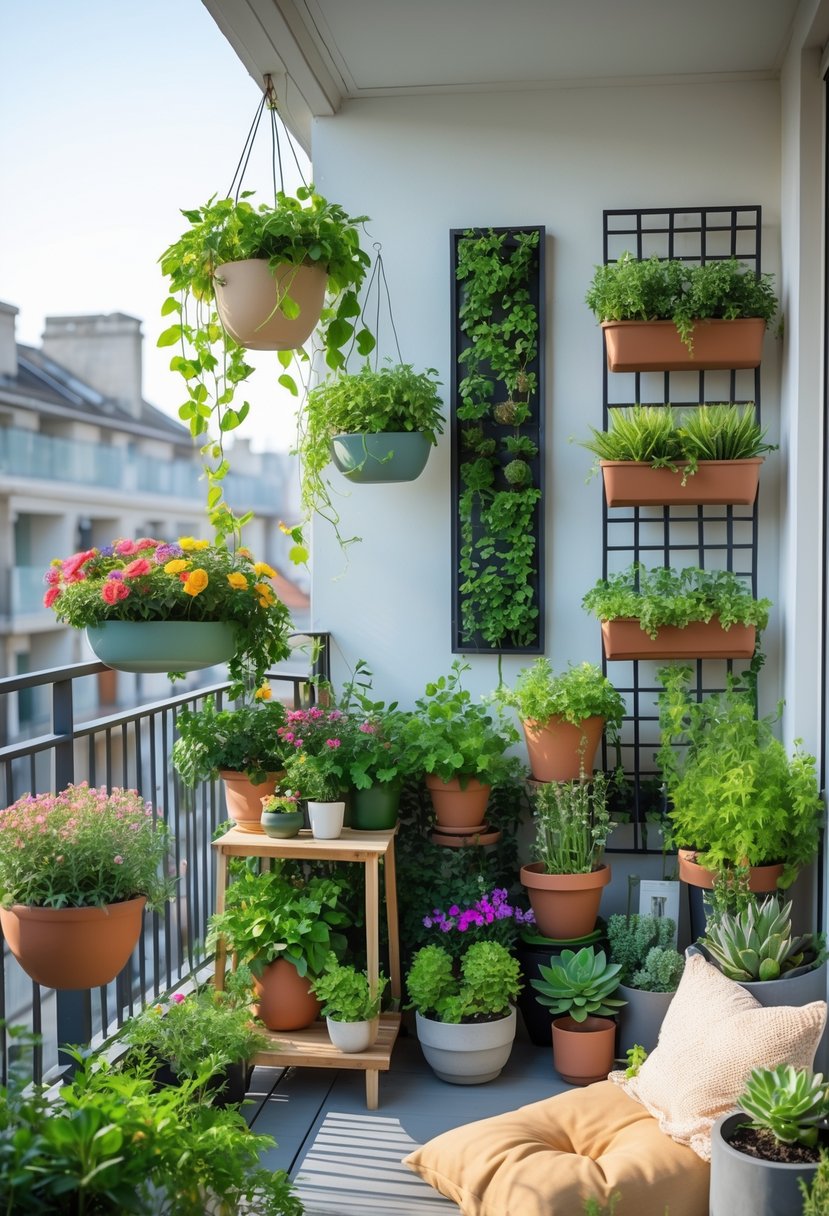
Seven garden ideas for balconies show how to make the most of limited space while adding beauty and function. These ideas help anyone create a pleasant outdoor area that suits their needs.
1) Vertical planters for maximizing space

Vertical planters are a smart way to use limited balcony space. They allow plants to grow upward instead of spreading out on the floor. This method increases the number of plants that fit in a small area.
These planters can be wall-mounted or free-standing. Wall-mounted options use unused wall space, which keeps the floor clear. Free-standing vertical planters often have multiple tiers, creating several layers for planting.
Using vertical planters also improves sunlight exposure. Plants at different heights can get more light than crowded pots on the ground. This setup works well for herbs, small vegetables, and flowers.
Built-in irrigation in some vertical systems helps keep plants healthy with less effort. It also reduces watering spills, making maintenance easier. Vertical planters are ideal for anyone wanting a neat, organized, and efficient balcony garden.
2) Herb garden with basil, mint, and thyme
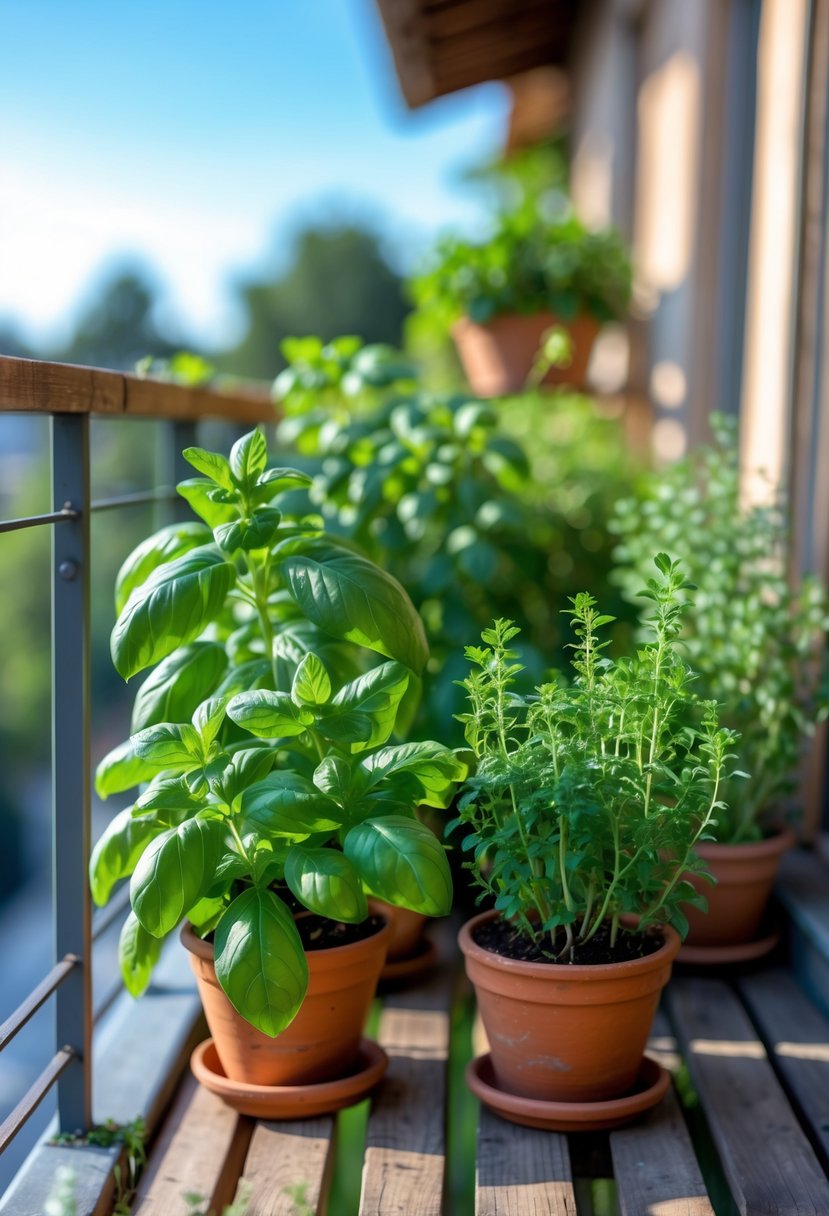
Creating an herb garden with basil, mint, and thyme is ideal for balcony spaces. These herbs are popular in many dishes and easy to grow in small containers. They do not need much space but do require enough sunlight, so placing them in a sunny spot is important.
Basil prefers warm temperatures and plenty of sun. It needs regular watering but should not have soggy soil. Mint grows well in partial shade and spreads quickly, so it is best grown in its own pot to keep it from overtaking other plants.
Thyme is a hardy herb that likes drier soil and full sun. It can tolerate less frequent watering compared to basil and mint. Planting these herbs together works well because their growing needs are slightly different, which helps keep each plant healthy.
Using pots or small containers with good drainage will support their growth. This simple herb combination offers fresh flavors right on the balcony and requires low maintenance for anyone familiar with basic gardening care.
3) Hanging pots with trailing ivy and petunias

Hanging pots filled with trailing ivy and petunias create a lively and attractive display on any balcony. Ivy adds rich green foliage that cascades down gracefully, while petunias bring bright colors and soft blooms. Together, they balance greenery and flowers well.
These plants are good choices for small spaces because they grow downwards, saving floor space. Ivy is hardy and thrives in partial shade, making it suitable for many balcony conditions. Petunias prefer more sunlight, so placing the pots where they get several hours of sun helps them bloom fully.
The combination also adds texture. The smooth leaves of ivy contrast with the colorful, delicate petals of petunias. This makes the arrangement visually interesting without much effort.
Regular watering and occasional feeding will keep the plants healthy. Hanging pots can be placed at different heights to add depth and charm. Trailing ivy and petunias are practical for creating a vibrant garden feel in a modest outdoor area.
4) Container garden with tomatoes and peppers

Growing tomatoes and peppers in containers is a popular choice for balcony gardens. These vegetables do well in pots because their roots don’t need lots of space. Choosing the right size containers is important. Larger buckets or pots allow the plants to grow strong and produce more fruit.
Tomatoes need plenty of sunlight, at least six hours a day, and well-drained soil. Peppers also prefer warm conditions and consistent watering. Both plants benefit from support, like stakes or small cages, to keep them upright as they grow. This helps prevent damage to stems and fruit.
Using containers lets gardeners control soil quality and moisture better than in-ground gardens. This control can reduce pests and diseases. Peppers and tomatoes can be grown side by side or mixed with other fast-growing plants to make the most of the balcony space.
Regular feeding with a balanced fertilizer supports healthy growth. Frequent harvesting encourages more fruit production during the season. Containers can be moved if needed to follow the sun or protect plants during bad weather.
5) Succulent arrangements for low maintenance
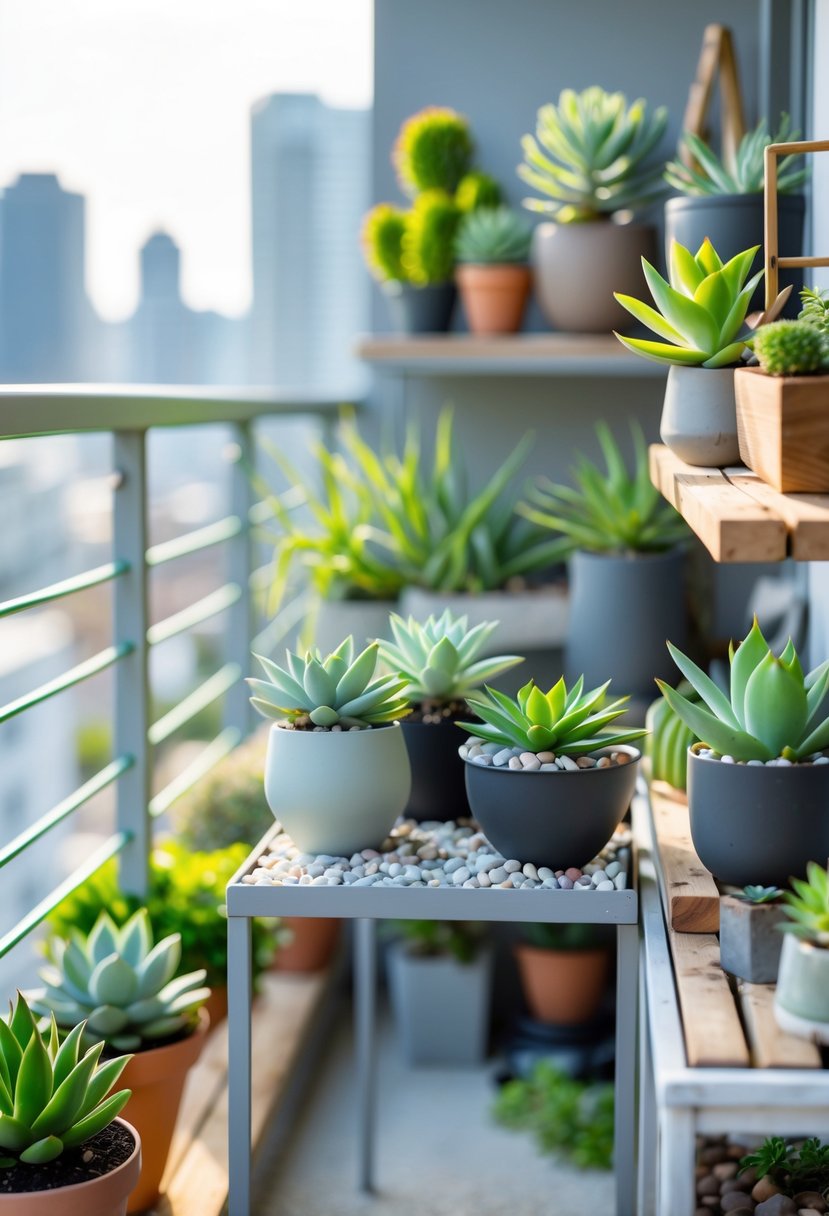
Succulent arrangements are ideal for balconies because they require little care. These plants store water in their leaves, which helps them survive dry conditions. This means they do not need frequent watering, making them perfect for busy people or those new to gardening.
Arranging succulents in containers allows for a variety of colors and shapes. They can be grouped in small pots or mixed in larger containers to create visual interest. The soft, thick leaves come in blue-green, purple, and red shades that add texture to any space.
Choosing the right soil and pots with good drainage is important. Succulents need soil that dries out quickly to avoid root rot. Placing them where they get enough sunlight, like a bright balcony corner, helps them thrive.
Succulent arrangements also work well for vertical gardens or stacked planters. These setups save floor space and bring greenery to small balconies. Overall, succulents provide a stylish and practical option for low-maintenance balcony gardens.
6) Compact raised beds for veggies
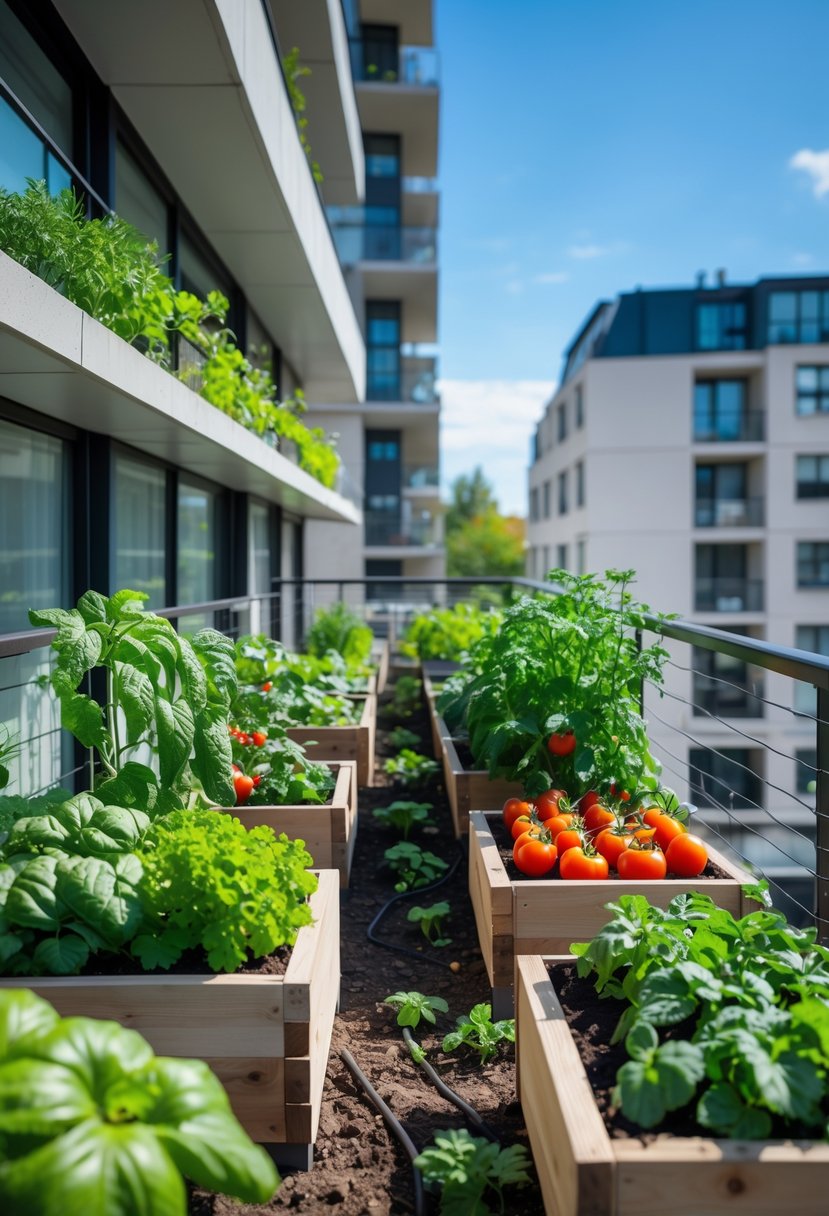
Compact raised beds are a smart choice for growing vegetables on a balcony. They save space by containing soil in a small, controlled area. This makes it easier to manage plants and keep soil quality high.
Raised beds allow for good drainage and prevent soil compaction. This helps vegetables grow healthier and stronger. They can also protect plants from pests and weeds commonly found in urban areas.
These beds come in various sizes and materials, making them easy to fit on different balcony types. A neat wooden box or a small planter can serve as a raised bed.
With compact raised beds, it is possible to grow leafy greens, herbs, and small root vegetables. They maximize the use of vertical and horizontal space without overcrowding. This is ideal for limited balcony areas where every inch counts.
7) Bamboo screens for privacy and shade
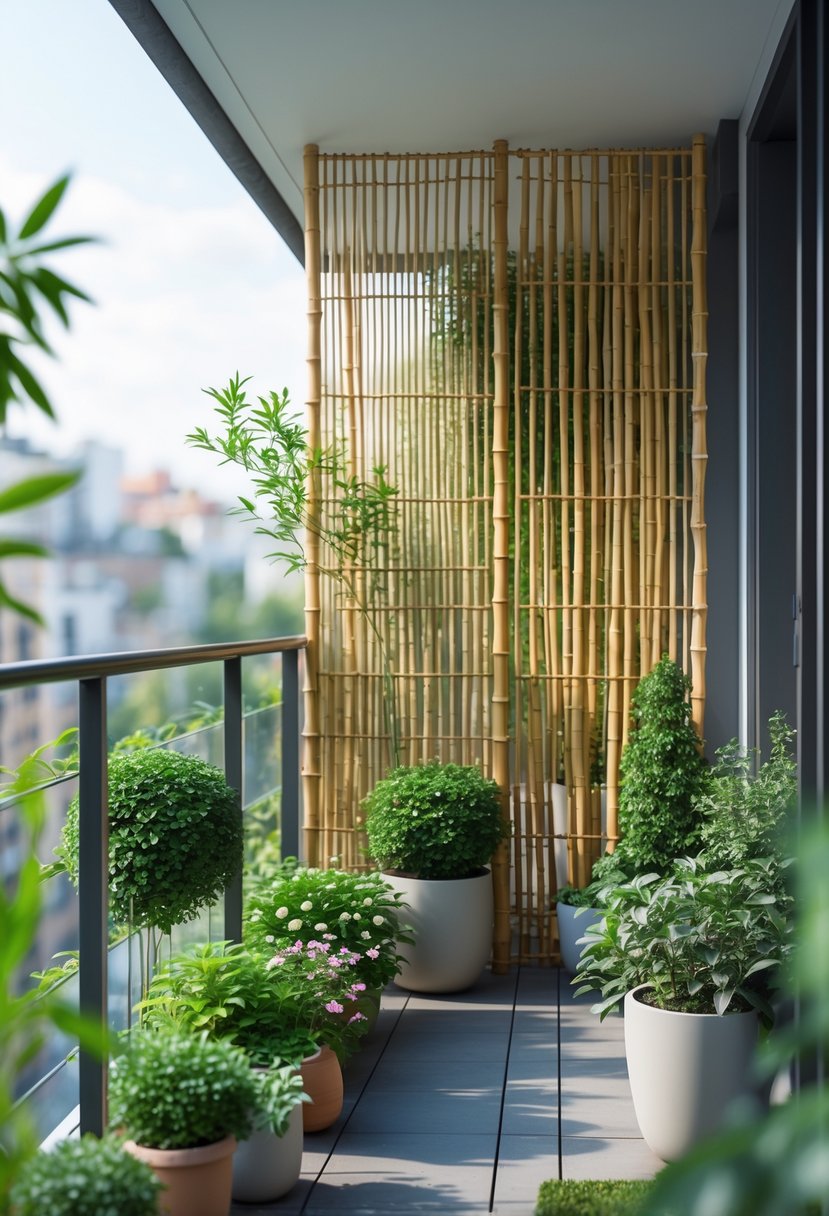
Bamboo screens are a practical way to add privacy to any balcony. They grow quickly and form a dense, natural barrier that blocks the view from neighbors or passersby. This makes them ideal for creating a quiet, private space outdoors.
Besides privacy, bamboo provides some shade. The tall, leafy stems can reduce sunlight, helping to keep the balcony cooler during hot days. This makes the area more comfortable for relaxing or growing other plants.
Bamboo is also low maintenance. It thrives in pots and needs little care once established. Different types of bamboo suit various climates, so it is important to choose the right variety for the local environment.
Using bamboo screens adds a natural look to the balcony. They are eco-friendly and can bring a calming green element to the space. This makes bamboo a popular choice for both privacy and shade in garden design on balconies.
Balcony Garden Fundamentals
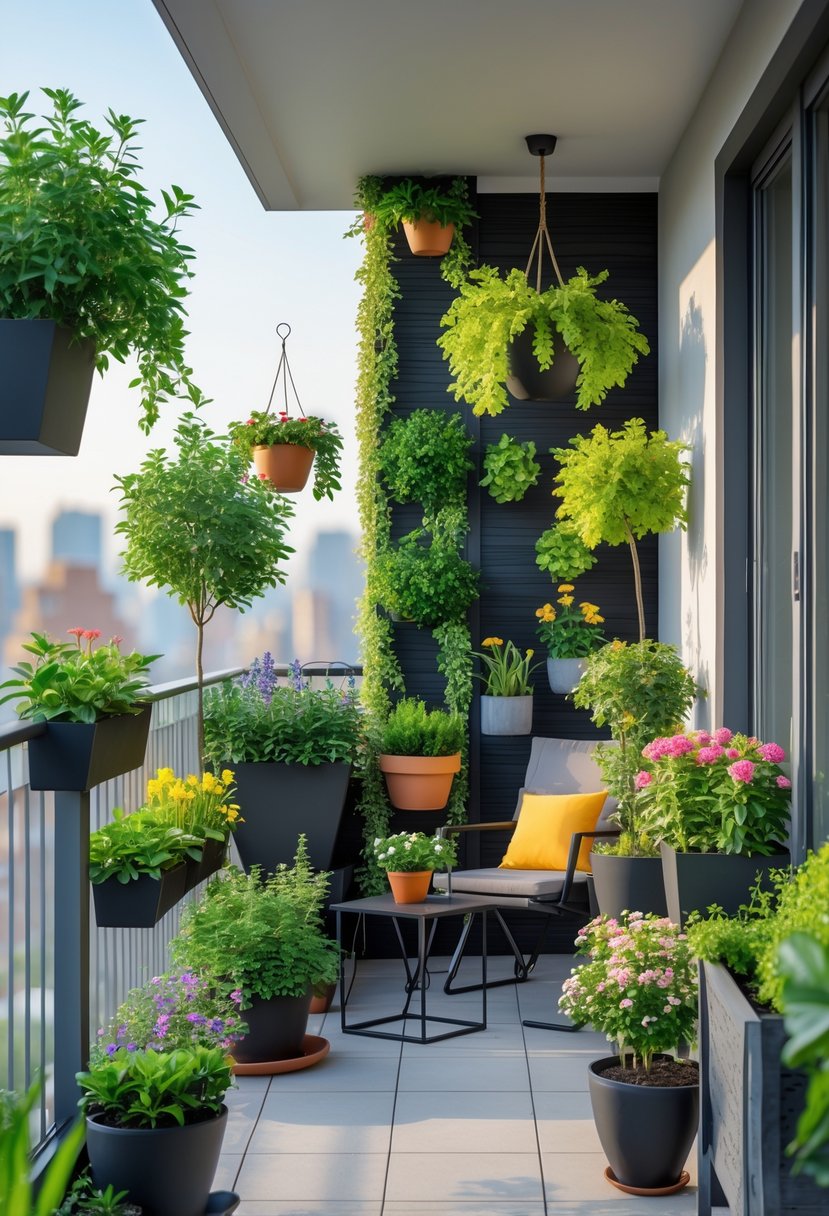
Creating a successful balcony garden depends on understanding the amount of light available, selecting the right containers, and managing watering and drainage well. These factors help maximize space and support healthy plant growth.
Light and Space Considerations
Light is one of the most critical factors for a balcony garden. The direction the balcony faces determines how much sun plants receive daily. South-facing balconies usually get full sun, suitable for sun-loving plants like tomatoes, peppers, and herbs such as basil. North-facing balconies get less light and are better for shade-tolerant plants like ferns or ivy.
Space is often limited on balconies, so vertical gardening or hanging containers can increase planting area. Measuring the balcony’s floor space and railing width helps choose containers that fit well without overcrowding. Balconies with narrow or deep layouts may benefit from long, slim containers or wall-mounted planters to maximize usable space.
Choosing Suitable Containers
Picking the right containers affects plant growth, water use, and maintenance. Containers should have enough depth and width for root development. For example, most herbs need pots at least 6-8 inches deep, while root vegetables require deeper ones.
Materials include plastic, ceramic, wood, and metal. Plastic pots retain moisture well and are lightweight but may look less natural. Ceramic and clay pots allow airflow but dry out faster. Wood containers offer good insulation but must be treated to avoid rot.
Containers need holes for drainage to prevent waterlogging. Using saucers beneath pots protects floors but should not hold standing water.
Watering and Drainage Tips
Watering frequency depends on container size, plant type, and weather. Small pots dry out faster and may need watering daily during hot weather. Using self-watering containers or adding water-retentive soil amendments helps maintain consistent moisture.
Drainage must be efficient to stop roots from sitting in water. Ensure containers have multiple drainage holes. Adding a layer of gravel or small stones at the bottom of pots can improve drainage but should not replace holes.
Water plants early in the day to reduce evaporation and avoid fungal diseases caused by wet leaves at night. Monitoring soil moisture by touch or using a moisture meter keeps watering on track.
Balcony Safety and Maintenance
Proper care is essential for a balcony garden to stay safe and healthy. Attention to the balcony’s structure and protection from pests and weather keeps plants thriving and prevents damage.
Weight Limits and Structural Checks
Balconies have specific weight limits that must not be exceeded. Before adding heavy pots, soil, or furniture, it is important to check the building’s guidelines or consult a professional. Overloading can weaken the structure or cause accidents.
Using lightweight containers such as plastic or fabric pots helps reduce weight. Grouping plants on sturdy shelves or hanging them vertically can spread the load evenly.
Regular inspections should look for cracks, loose railings, or water damage. Proper drainage is key to avoid pooling water that adds weight and may cause wood or concrete to rot.
Pest and Weather Protection
Balcony gardens are exposed to pests like aphids, spider mites, and snails. Prevent infestations by inspecting plants weekly and using natural repellents or insecticidal soap if needed. Cleaning fallen leaves and debris also reduces hiding spots for pests.
Weather protection is crucial as balconies face wind, sun, and rain. Shade cloths or umbrellas can shield plants from harsh sunlight. Wind barriers made from bamboo screens or netting protect delicate plants from strong gusts.
Self-watering containers and mulching help keep soil moist during hot, dry weather. Covers or moving pots indoors protect plants during frost or heavy storms.
Frequently Asked Questions
Balcony gardens can be created with limited funds by using simple, affordable materials. Smart use of space often involves vertical planters and hanging pots. Plant choices like herbs and succulents reduce care demands while adding beauty.
How can I create a balcony garden on a budget?
Using recycled containers or inexpensive pots helps save money. Vertical planters made from wood or plastic pallets increase planting area without extra cost. Growing herbs such as basil and mint from seeds is also budget-friendly.
What are some small balcony garden ideas that maximize space?
Vertical planters and hanging pots take advantage of unused walls and ceiling space. Combining container gardens with trailing plants like ivy allows for layering. Choosing compact veggies like tomatoes and peppers works well in tight spots.
What are the best plants to grow on a balcony for beginners?
Herbs like basil, mint, and thyme are easy to grow and maintain. Succulents require little water and tolerate different conditions. Petunias offer color without complex care routines.
How can I make my balcony garden look modern?
Using clean-lined containers and matching pots creates a uniform look. Incorporating metal or wooden vertical gardens adds a sleek touch. Choosing plants with complementary colors and shapes enhances style.
What are effective ways to create a low maintenance balcony garden?
Succulent arrangements need minimal watering and attention. Selecting hardy herbs and flowering plants reduces pruning. Using self-watering containers can also simplify care.
Which design tips can help make a small balcony garden appear larger?
Light-colored pots and planters reflect light and open up space visually. Vertical gardening draws the eye upward, giving a sense of height. Keeping the floor clear with hanging pots keeps the area tidy and spacious.
