
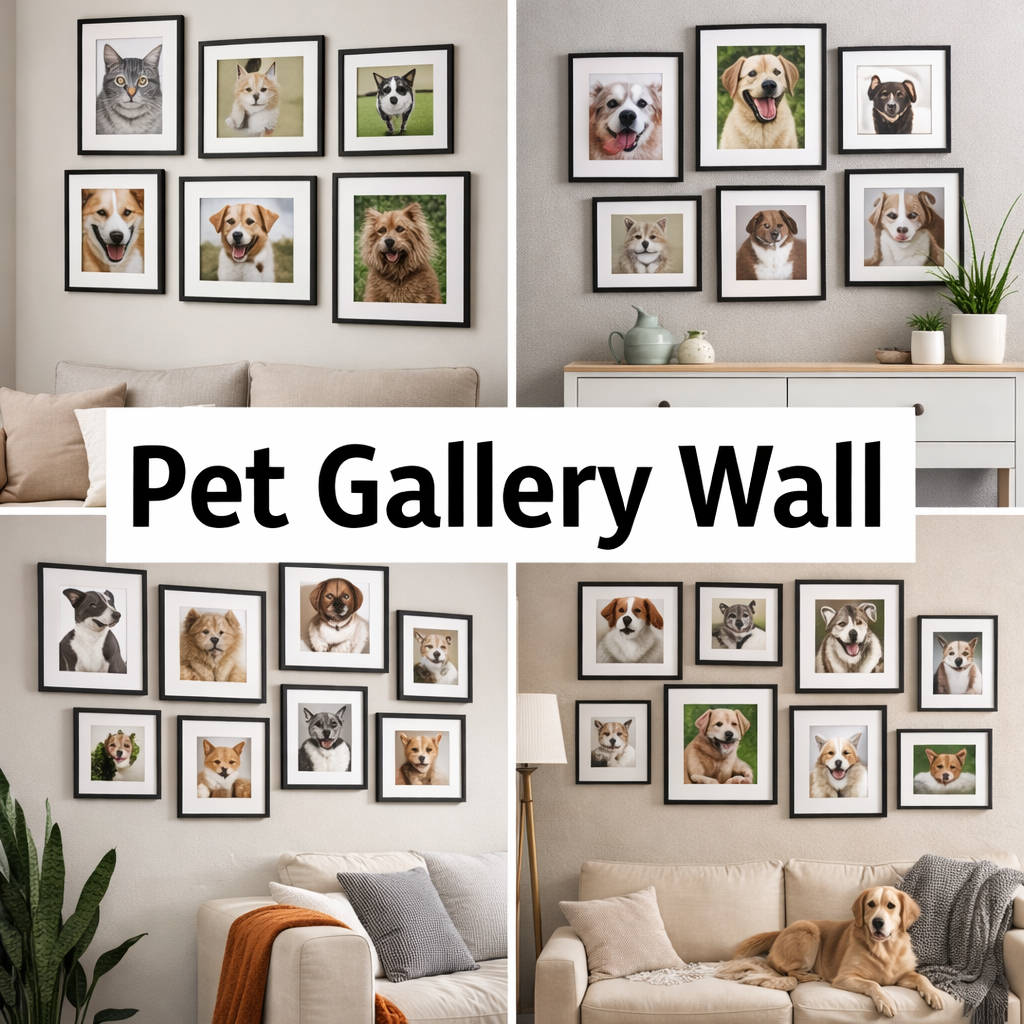
A pet gallery wall offers a personalized way to celebrate beloved animals while adding character to any living space. It focuses on realistic, high-quality artwork or photographs that capture the true essence of pets, avoiding cartoonish or exaggerated styles. This approach ensures the display feels genuine and respectful to the pet’s appearance and personality.
Creating a pet gallery wall with realistic portraits or photos highlights the unique features and expressions of pets, making the tribute both heartfelt and visually appealing. Using a variety of frames and carefully arranged layouts can enhance the overall aesthetic, allowing the wall to blend seamlessly with the home’s decor.
This style suits those who want to honor their pets with timeless art rather than playful caricatures. A thoughtfully designed gallery wall can transform any room into a warm, inviting space that tells a story about the furry companions who hold a special place in the home.
What Is a Pet Gallery Wall?
A pet gallery wall is a dedicated space where pet-related artwork, photos, and memorabilia are arranged to celebrate the pet’s presence and personality. It combines various visual elements that reflect the owner’s love and connection to their pet without relying on cartoonish or exaggerated imagery.
This concept focuses on display techniques, types of art styles, and the emotional value behind the collection to create a thoughtful and visually appealing presentation.
Definition and Purpose
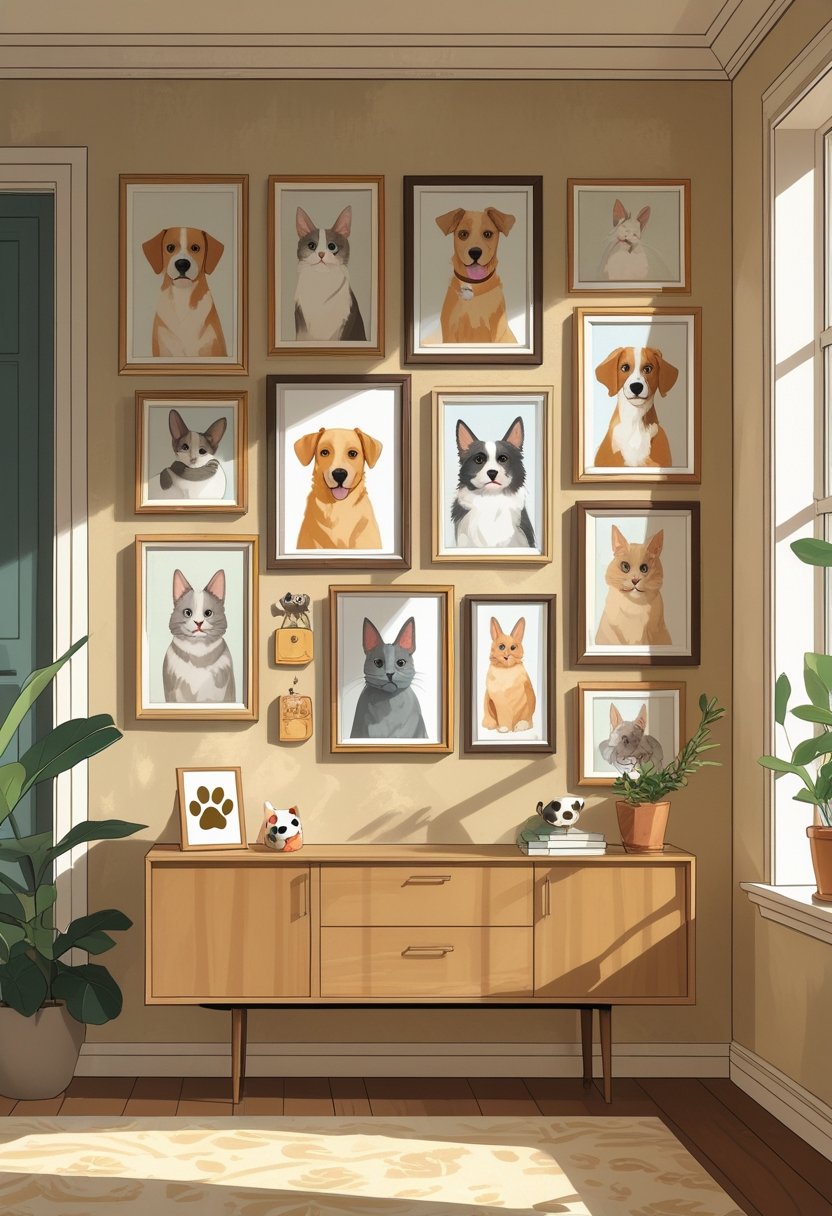
A pet gallery wall is an artful arrangement of framed images, portraits, and objects related to a pet or pets. It often includes photographs, realistic paintings, custom portraits, and sometimes personalized elements like name plaques or paw prints.
The purpose is to create a central location in a home that honors the pet’s unique identity and brings warmth to the living space. Unlike casual photo collections, a gallery wall is curated with deliberate layout and style choices to make it visually cohesive and meaningful.
This kind of display can be in various rooms, such as living areas, hallways, or home offices, where the pet’s presence is felt through art and keepsakes.
Benefits for Pet Owners
A pet gallery wall offers emotional comfort and strengthens the bond between owners and their pets. It serves as a daily reminder of the pet’s personality and the joy they bring, highlighting cherished memories through visually engaging art.
Beyond sentiment, it enhances interior design by introducing personalized decor that reflects the owner’s tastes and lifestyle. This can make a room feel more inviting and distinctive.
It also allows owners to showcase their pet with realism, avoiding cartoon styles, which can better capture the essence of the animal’s appearance and character.
Common Styles and Approaches
Most pet gallery walls favor realistic photography or finely detailed portraits that capture lifelike expressions and textures. Some pair these with subtle decorative elements like simple frames or natural wood to maintain a classic, elegant feel.
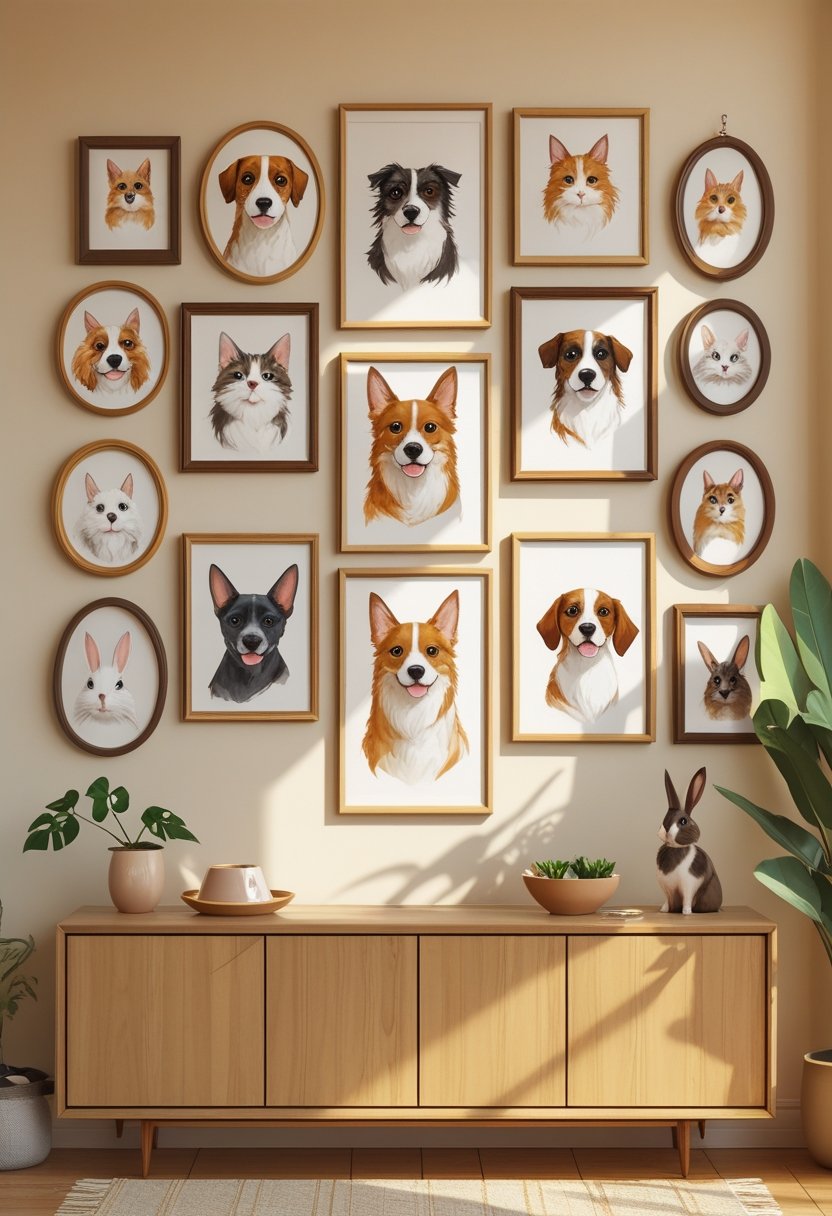
Approaches include symmetrical layouts that offer a clean, museum-like presentation, or eclectic arrangements that mix sizes and shapes while staying balanced. Color palettes often coordinate with a room’s decor, using muted or natural tones to avoid overwhelming the space.
Personal touches such as engraved nameplates or paw print art often refine the display, emphasizing the pet’s individuality in a tasteful, sophisticated way.
Selecting the Best Photos for Realistic Pet Gallery Walls
Creating a lifelike pet gallery wall depends on selecting photos that showcase genuine personality and detail. It requires attention to natural expressions, sharp image quality, effective lighting, and thoughtful backgrounds to keep the focus on the pet without distractions.
Capturing Natural Expressions
Photos that reflect a pet’s true character are central to a realistic gallery wall. The best images show pets in candid moments—relaxed, curious, or playful—rather than forced poses.
Patience is key to wait for these genuine expressions. Using treats or toys can help draw out natural behaviors. Photos where eyes are clear and expressive give life to the image and invite viewers to connect with the pet’s personality.
Avoid overly staged or stiff portraits, as they often appear less authentic. Aim for shots that capture subtle quirks or emotions, such as a slight head tilt or alert ears.
Image Quality and Resolution
High-resolution images are essential for crisp, detailed prints that maintain clarity when framed. Low-resolution photos can appear pixelated or blurry on larger formats, detracting from the realism.
A minimum of 300 DPI (dots per inch) is recommended for printing, especially for wall-sized displays. Using a quality DSLR or modern smartphone camera with good sensor capabilities will contribute to better results.
Avoid heavily compressed or low-light images that lose detail. If cropping is necessary, ensure the remaining area still has sufficient resolution to avoid distortion.
Lighting Techniques
Natural lighting creates the most flattering and realistic pet portraits. Soft, diffused daylight—such as on an overcast day or near a large window—minimizes harsh shadows and highlights fur texture.
Direct sunlight often causes uneven lighting and sharp shadows, which can mask details. When shooting indoors, using softbox lights or reflectors can simulate natural light without strong contrasts.
Balanced lighting ensures the true color of the pet’s coat is visible, and eyes catch light that adds dimension. Avoid flash, which can startle pets and create unnatural reflections.
Choosing Complementary Backgrounds
Backgrounds play a crucial role in highlighting the pet while maintaining realism. Simple, uncluttered backgrounds prevent distractions and keep the focus on the subject.
Neutral tones, such as soft grays, muted tans, or subtle greens, work well to complement most fur colors without clashing. Outdoor settings like grass or woodland can also provide natural, textural contrast.
Avoid busy patterns or overly vibrant colors that compete with the pet’s features. Backgrounds with enough depth and texture add interest without overwhelming the image’s realism.
Design Principles for a Realistic Look
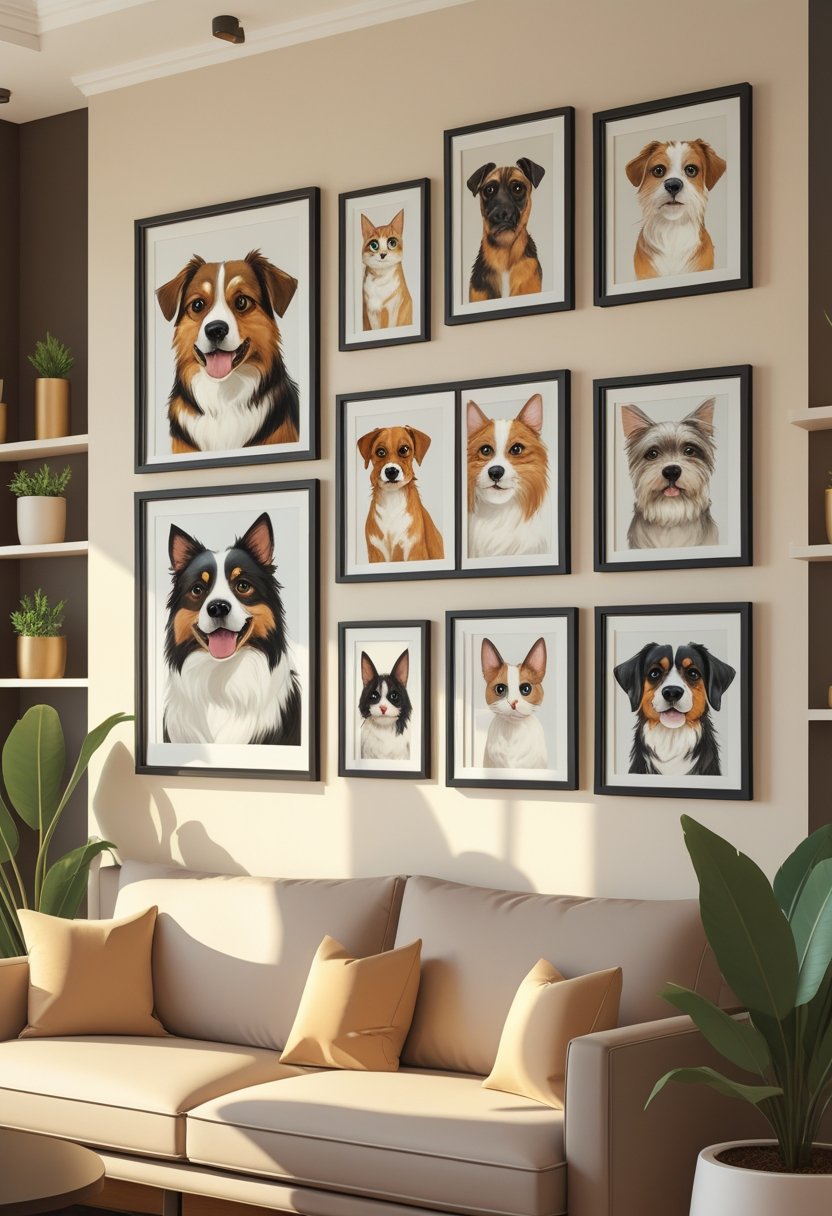
Achieving a realistic pet gallery wall requires thoughtful decisions in color, scale, and framing. These elements work together to create a cohesive and authentic display, avoiding cartoon-like impressions.
Color Coordination Strategies
A realistic pet gallery thrives on natural color tones. Choose artwork that reflects true pet fur hues, eye colors, and environments. Muted or subtle backgrounds help maintain focus on the subject and prevent distraction.
Using a consistent color palette across several pieces enhances harmony. For example, selecting shades of browns, creams, blacks, and soft blues found in pet portraits reinforces visual unity. Avoid overly saturated or neon colors, as they can make images appear unrealistic.
Incorporating wall colors that complement the artwork—such as soft grays or warm neutrals—also supports authenticity. This subtle contrast allows the pet portraits to stand out without clashing or overwhelming the space.
Balancing Scale and Proportion
Successful scale balances large and small pieces, ensuring the gallery feels intentional, not cluttered or sparse. Portraits should reflect realistic proportions of the pets portrayed.
Large portraits work well as focal points but must be balanced by smaller complementary pieces. Avoid placing oversized frames too close together, which compresses visual flow.
Spacing between items should be consistent to maintain proportion. Ideal gaps range from 2 to 4 inches, depending on wall size. This rhythm contributes to a natural, museum-quality look rather than an amateur collage.
Frame Selection for Authenticity
Frames significantly impact the realism of a pet gallery. Opt for classic materials such as wood, metal, or matte-finished frames that do not overpower the artwork.
Simple, clean lines support a sophisticated presentation, while ornate or overly decorative frames can distract from the pet’s image. Natural wood tones or neutral colors like black, white, or bronze enhance authenticity.
Custom framing tailored to each artwork size ensures well-fitted presentation. Adding a mat with neutral colors, such as off-white or light gray, further defines the artwork without adding visual noise.
Layout Planning and Arrangement Tips
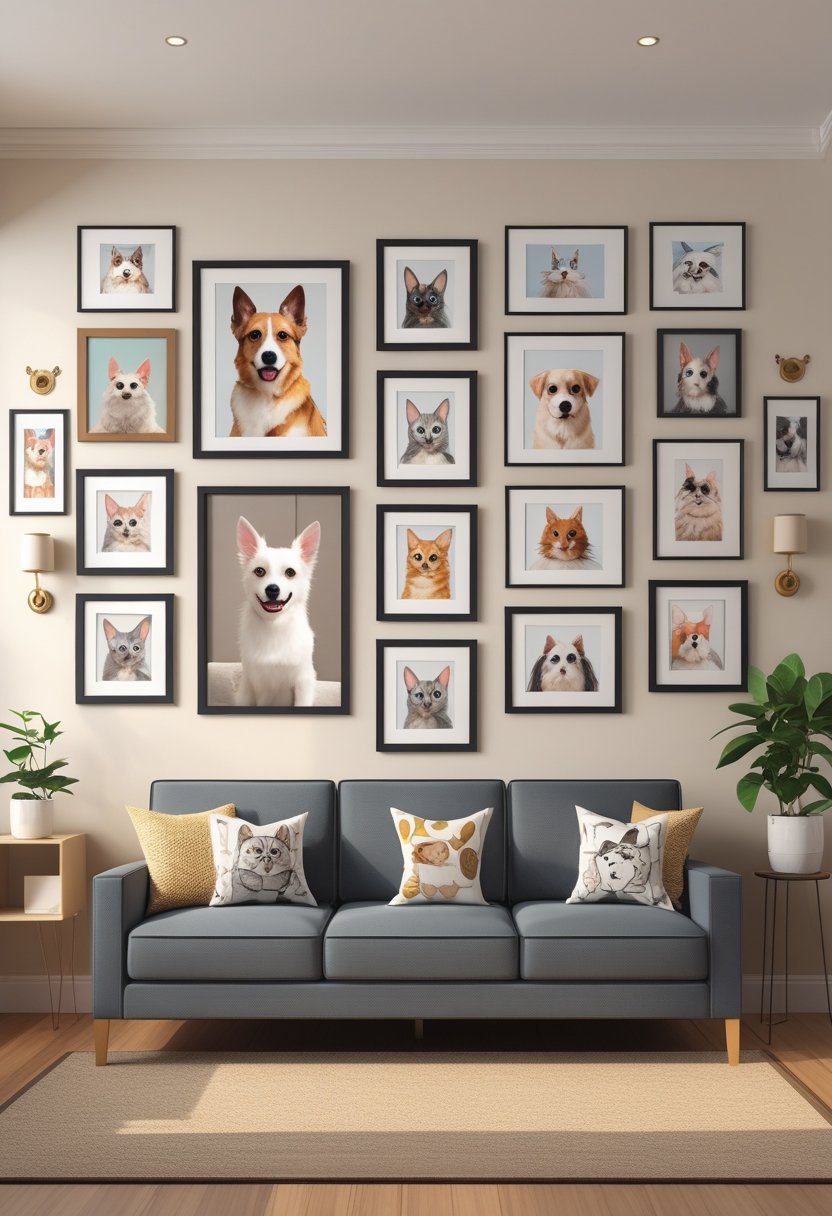
Careful planning ensures the pet gallery wall looks balanced and intentional. Decisions about symmetry, combining photos with art, and where to hang the display affect both the visual impact and how well it fits into the room’s design.
Symmetrical Versus Asymmetrical Layouts
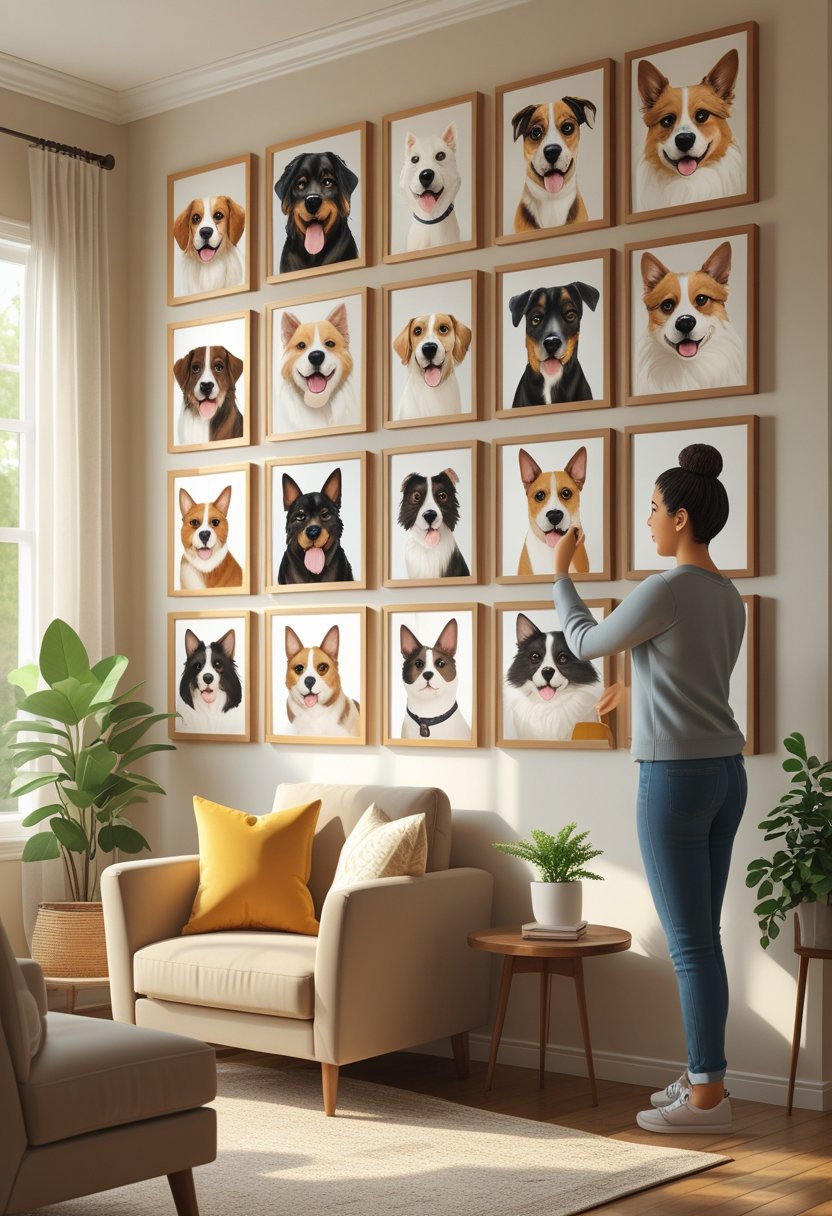
Symmetrical layouts use evenly spaced frames of equal size, creating a clean and structured look. This style works well for formal spaces or when the goal is to emphasize uniformity and order.
Asymmetrical arrangements allow for varying frame sizes and uneven spacing, offering a more casual, dynamic feel. This style suits eclectic interiors or when showcasing a mix of image styles and shapes without strict alignment.
The choice depends on the room’s mood and size. Symmetrical is easier to hang precisely, while asymmetrical requires more planning but enables creative expression. Painter’s tape or layout templates help test arrangements before committing.
Mixing Pet Photos with Art and Memorabilia
Combining photos with drawings, prints, or keepsakes adds depth and personal narrative. For cohesion, varying frame styles or colors should complement rather than clash. Using consistent frame color or material maintains harmony across diverse elements.
Placement matters: cluster similar media types or size frames together to avoid visual clutter. For instance, photos might anchor the center with art and memorabilia surrounding them. This guides viewers’ eyes and balances focal points.
Incorporating texture, such as shadow boxes for collars or small sculptures, enhances the gallery’s three-dimensional interest. Consistency in spacing between items keeps the wall orderly, even with varied content.
Optimal Wall Placement
Choose a wall that naturally draws attention but doesn’t overcrowd. Ideal locations include living rooms, hallways, or above a sofa or mantelpiece at eye level, roughly 57-60 inches from the floor to the center of the arrangement.
Consider lighting: natural or focused lighting highlights details and prevents shadows. Avoid placing the gallery where it may be exposed to direct sunlight, which can fade photos and art over time.
Measure the wall space first to ensure the arrangement fits well without crowding other décor. Leaving several inches of buffer around the gallery keeps it visually distinct from surrounding elements.
Printing and Material Choices
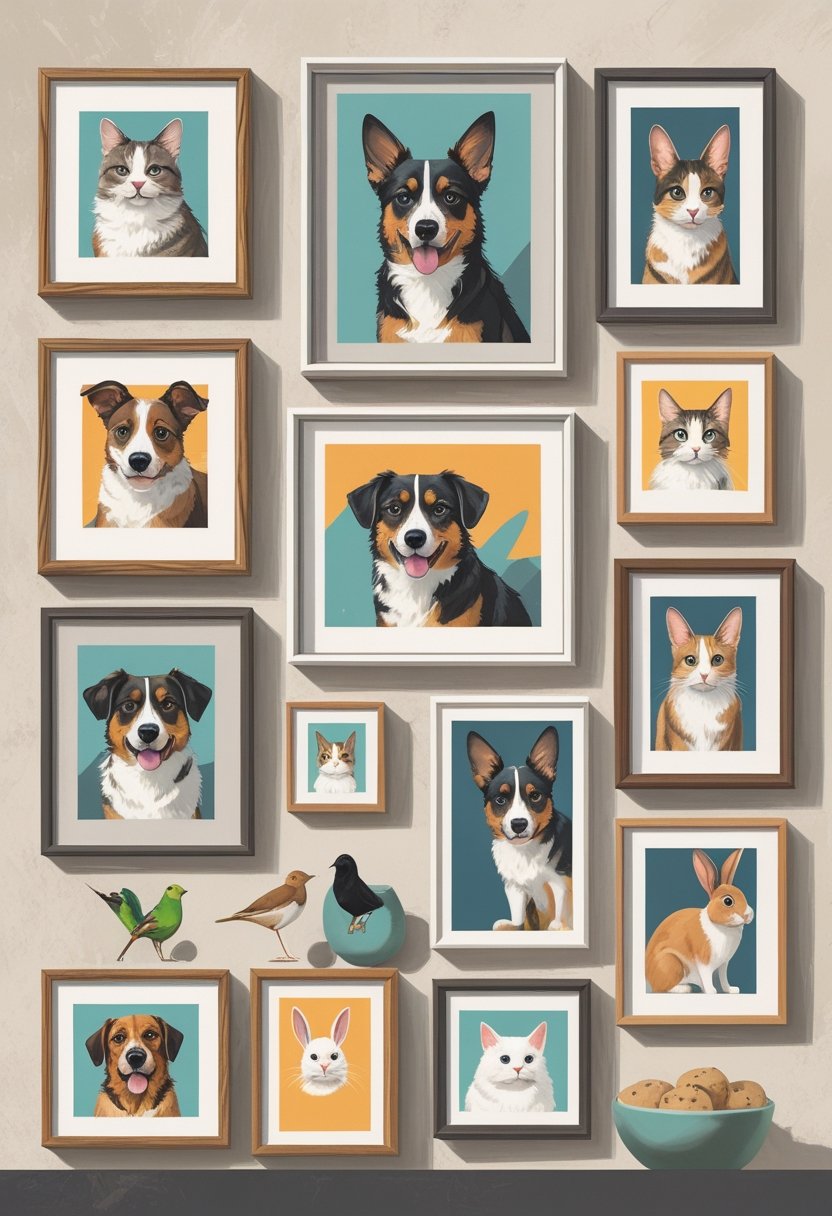
Choosing the right materials and printing methods is essential to achieve a realistic look for a pet gallery wall. Attention to detail in paper or canvas type, frame construction, and matting can enhance texture, color accuracy, and depth, avoiding a cartoonish appearance.
Paper and Canvas Options
Canvas is often preferred for realistic pet portraits due to its textured surface, which adds depth without appearing flat. High-quality canvas materials, like Platt canvas, retain fine details and vibrant colors while providing durability.
For paper prints, matte or satin finishes reduce glare, which helps maintain authenticity in lighting and shading. Glossy finishes can cause unwanted reflections, compromising visual realism. Archival-quality papers ensure color longevity, preventing fading over time.
Professional printing services using pigment-based inks reproduce true-to-life colors. This accuracy is critical to keep the fur tones and eye details natural and lifelike.
Frame Material Recommendations
Wood frames offer a timeless, warm aesthetic that complements the organic feel of pet portraits. They come in various finishes, from natural to painted, allowing customization that matches the home decor and the artwork style.
Metal frames provide a sleek, modern option with clean lines that focus attention on the image. Brushed or matte metals reduce shine and reinforce a sophisticated look without detracting from the realism.
It is important to select frames with sturdy construction and glass or acrylic glazing to protect prints while reducing glare and maintaining clarity.
Matting for Depth and Realism
Matting adds physical space between the artwork and frame, imparting a sense of dimension essential for lifelike presentation. Neutral-colored mats, such as white, cream, or soft gray, work best to avoid overpowering the portrait and support natural color balance.
Double or beveled mats can create layered effects, enhancing the three-dimensional feel. The choice of mat thickness should consider the size of the print to preserve proportion and prevent visual compression.
Using acid-free mat boards ensures long-term preservation by protecting against discoloration and deterioration, critical for maintaining the integrity of realistic pet portraits.
Installation Process for a Cohesive Gallery Wall
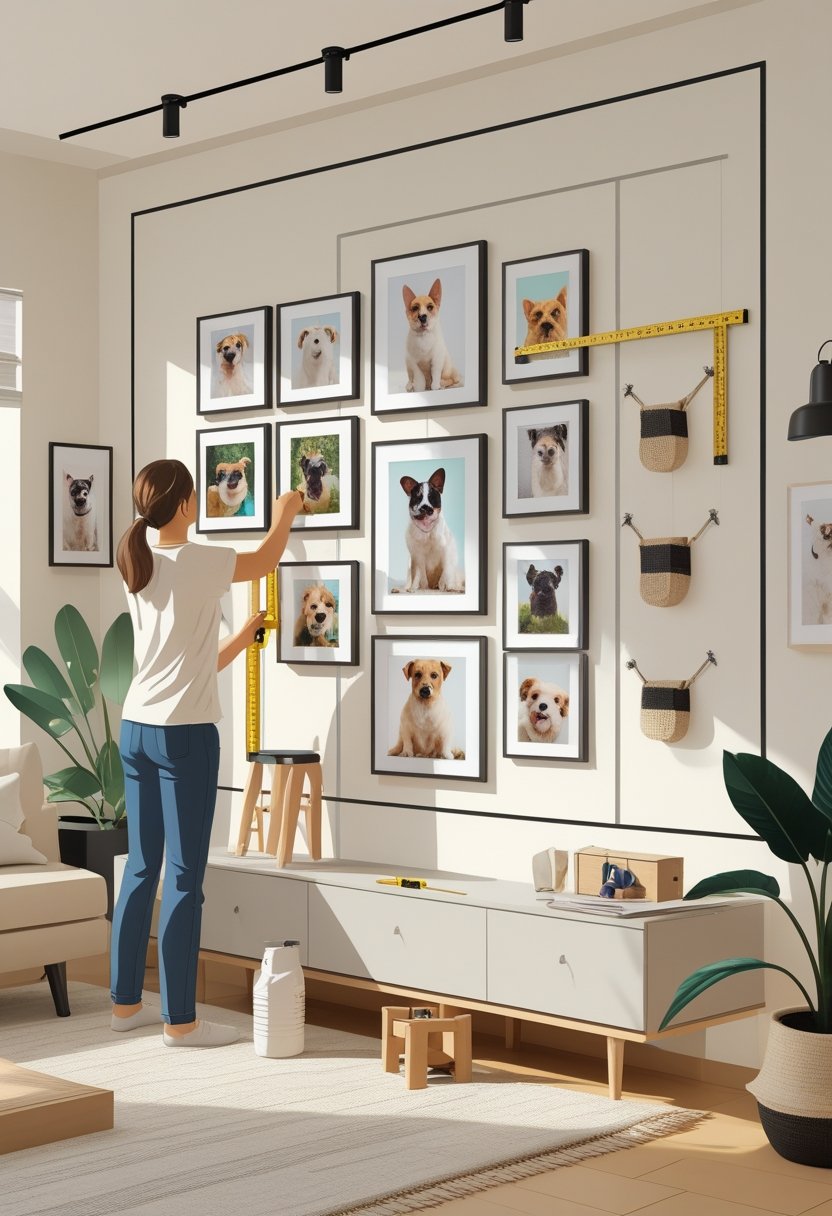
To create a balanced and lasting pet gallery wall, careful attention to layout, hardware choice, and durability is essential. Spacing must be precise to maintain visual harmony, while the right hanging systems protect both the wall and artwork. Ensuring longevity relies on quality materials and consistent care.
Measuring and Spacing Techniques
Accurate measurements are critical to avoid uneven gaps and crowded frames. Start by determining the overall wall space and calculating equal spacing between pieces, typically 2 to 4 inches apart.
Use a level and measuring tape to mark where each nail or hook will go. Arrange artwork on the floor first to finalize the layout. Consider frame size and shape to maintain balance, starting with the largest pieces centrally.
Using a paper template for each frame helps visualize placement and avoids unnecessary holes. Measure horizontally and vertically to ensure alignment, emphasizing symmetry and grouping related pet portraits closely to create thematic consistency.
Hanging Systems and Hardware
Selecting the right hanging system depends on wall type and artwork weight. For drywall, use picture hooks rated for the load rather than nails alone. Wall anchors or toggle bolts provide added support for heavier frames.
Wire hanging is preferred for flexibility; it allows slight adjustments and better weight distribution. D-rings or sawtooth hangers work well for small to medium pieces but may limit repositioning ease.
Ensure hardware is corrosion-resistant to protect both frames and walls over time. For a clean look, conceal hooks or nails behind frames. Use a level during installation to maintain straight lines across multiple frames.
Ensuring Longevity and Durability
Protect pet portraits by avoiding direct sunlight, which can fade colors and damage materials. Opt for UV-resistant glass or acrylic in frames to shield artwork.
Humidity control is crucial; excessive moisture can warp paper or canvas. Use silica gel packets in frame backs or place the gallery wall in a climate-stable room.
Regularly check hanging hardware and wall condition, tightening screws or replacing anchors as needed. Reinforce heavier pieces periodically to prevent loosening. Quality framing materials, such as acid-free mats and sturdy backing boards, extend artwork life and maintain a professional appearance.
Personalizing Your Pet Gallery Wall
Personal touches transform a pet gallery wall into a meaningful tribute rather than just a display. Elements like nameplates and three-dimensional accents can highlight a pet’s personality and history. These details make the wall uniquely yours while keeping the overall look polished and realistic.
Incorporating Nameplates and Dates
Nameplates provide clear identification and add a subtle layer of personalization. They can be made from metal, wood, or acrylic to match the frame style and maintain a cohesive look. Including important dates, such as birth or adoption day, adds context and emotional significance without clutter.
The plates should use simple, legible fonts to keep the focus on the portrait. Position them consistently, typically below or beside each image, to avoid distraction. Small, understated plaques maintain the realistic and elegant aesthetic, ensuring the wall feels sophisticated rather than gimmicky.
Adding Three-Dimensional Elements
Adding three-dimensional items brings texture and depth to the gallery. Items like paw prints in clay, small collars, or a favorite toy mounted subtly near a portrait can personalize the space without overwhelming it. These elements need to be carefully selected and sized to enhance, not overshadow, the artwork.
Mounting these elements in shadow boxes or on minimal shelves keeps the arrangement tidy. They act as tactile connections to the pet’s personality, adding interest while preserving a refined, lifelike presentation. Proper lighting enhances these features and integrates them naturally into the display.
Inspiration and Real-Life Examples
Pet gallery walls can be tailored to fit a variety of styles, balancing personal touches with cohesive design. Whether through clean lines, a mix of textures, or seasonal themes, each approach highlights different ways to celebrate pets realistically.
Modern Minimalist Gallery Walls
A modern minimalist pet gallery wall focuses on simplicity and calmness. It often uses neutral tones and consistent frame styles, such as thin black or white frames, to keep the attention on the pet portraits. Photos or art should be high-resolution and natural-looking, emphasizing real textures and expressions rather than exaggerated or cartoonish features.
Spacing is key. Evenly arranged grids or balanced asymmetry helps maintain order. Minimal decor elements, like a single plant nearby or soft lighting, can enhance the display without distraction. Adding subtle, personalized details—such as the pet’s name discreetly placed—keeps the design clean but intimate.
Eclectic and Vintage-Inspired Displays
Eclectic pet gallery walls combine different frame styles, materials, and colors to create depth and character. Mixing wood frames with metal or distressed finishes adds a vintage vibe. This style embraces varied photo sizes and formats, including candid shots and classic portraits, giving a lived-in, authentic look.
They often incorporate elements like old pet tags, paw prints, or vintage pet-related memorabilia alongside the pictures. This variety creates a textured, layered effect that invites viewers to explore the wall closely. The use of warm colors and soft fabrics nearby can boost the nostalgic feel, aligning with the vintage theme.
Seasonal and Themed Arrangements
Seasonal or themed pet gallery walls focus on moments and moods tied to specific times or events. For example, winter portraits might include cozy blankets or holiday accessories, while spring could highlight outdoor shots among flowers. Themes can also center on activities or milestones, such as “First Year” or “Best Adventures.”
Consistency in color palettes and props strengthens the theme without making it overwhelming. Using repeated motifs, like paw print icons or matching mats in frames, unifies the display. Seasonal rotations or thematic updates keep the gallery dynamic and relevant throughout the year, offering fresh ways to appreciate the pet’s personality.
Maintenance and Updates
A pet gallery wall needs regular attention to remain attractive and true to the pet’s personality. Proper cleaning protects the artwork and frames, while periodic updates keep the display current and meaningful.
Cleaning and Preserving Artworks
Dust and dirt accumulation can dull photos and frames, so gentle cleaning is essential. Use a soft microfiber cloth to wipe surfaces without scratching. For glass-covered frames, a non-ammonia glass cleaner applied to the cloth (never directly on the glass) reduces smudges.
Avoid exposing artworks to direct sunlight to prevent fading. Posters, prints, and photos benefit from being framed with UV-protective glass or acrylic. Regularly check for any signs of discoloration or damage to address issues before they worsen.
Maintaining stable room conditions also preserves the art. It is best to avoid high humidity or extreme temperatures, which can warp or degrade paper and frame materials.
Refreshing with New Photos Over Time
Updating a pet gallery wall seasonally or when new favorite photos emerge keeps it engaging. The rotation of images allows for celebrating different moments without overcrowding the space.
A practical method is to designate a specific number of frames that can be swapped out easily. Using uniform sizes and styles for frames facilitates rearrangement and gives the wall a cohesive look.
Including memorabilia like collars or small keepsakes can add variety alongside photos. Updating layout and frame arrangements also revitalizes the display without requiring extra wall space. This balance maintains visual interest and emotional connection.
