
The strategic application of outdoor wall lighting represents one of the most impactful yet frequently overlooked elements of residential design. Properly illuminated exteriors extend living spaces beyond the confines of interior walls, enhance architectural features, and provide essential safety and security after sunset. Whether you are undertaking a complete landscape renovation or simply seeking to refresh your home’s evening aesthetic, thoughtful outdoor lighting design can fundamentally transform how you experience your property.
Selecting appropriate fixtures requires consideration of architectural style, functional requirements, and the specific atmosphere you wish to cultivate. The following five outdoor wall lighting ideas offer diverse approaches to illuminating your home’s exterior, each addressing different design objectives and aesthetic preferences.
1. Classic Lantern-Style Fixtures for Timeless Appeal
Traditional lantern-style sconces remain perennially popular for good reason. These fixtures provide reliable illumination while contributing architectural interest that complements a wide range of home styles. Available in an extensive array of finishes including aged bronze, polished nickel, and matte black, lanterns can be specified to either match existing hardware or introduce a contrasting accent.
Placement considerations significantly impact both form and function. Install fixtures at eye level or slightly above, typically between 60 and 72 inches from the ground, to provide optimal illumination without creating harsh shadows. Entry doors benefit from flanking fixtures that frame the entrance, while garage areas may require single, larger-scale lanterns positioned near service doors.
The versatility of lantern-style fixtures makes them suitable for numerous architectural contexts. Colonial, Craftsman, and Tudor revivals appear particularly well-suited to period-appropriate lantern designs, while streamlined interpretations work effectively with contemporary structures seeking a nod to tradition.
2. Clean Lines and Minimalist Forms for Contemporary Homes
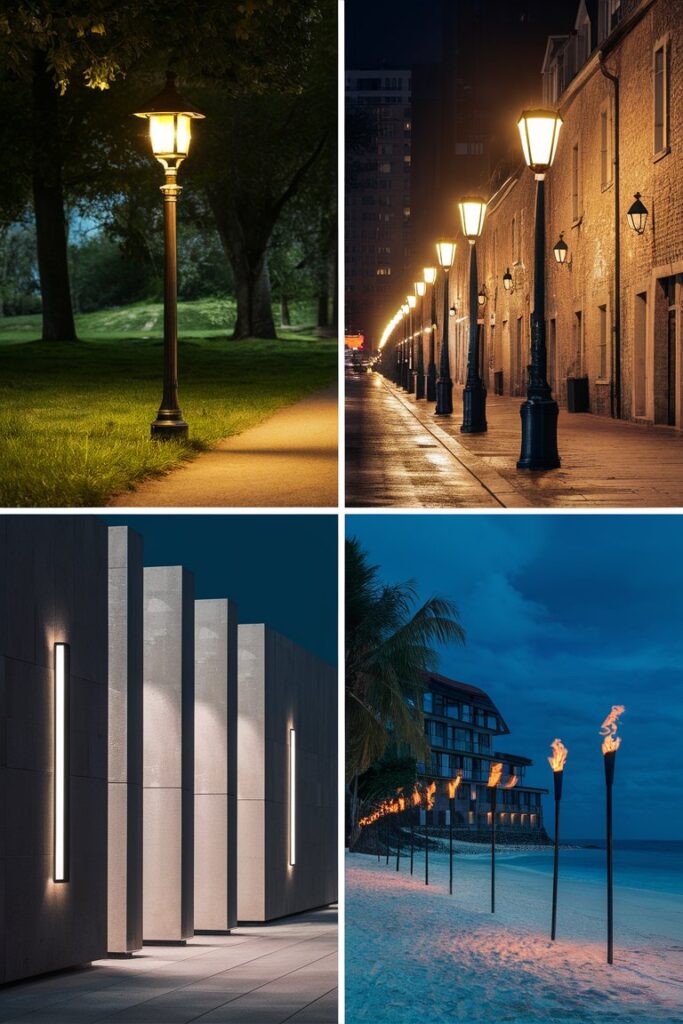
For residences featuring clean architectural lines and minimalist aesthetics, modern outdoor lighting fixtures offer sophisticated illumination without visual clutter. These designs emphasize geometric forms, subtle profiles, and often incorporate materials such as brushed aluminum, architectural concrete, or tempered glass.
Integrated LED technology frequently features in contemporary fixtures, providing energy efficiency and reduced maintenance requirements. Many modern designs direct light both upward and downward, creating dramatic grazing effects across textured surfaces such as stone, stucco, or wood siding.
Consider specifying fixtures with adjustable angles to fine-tune light distribution. This flexibility proves particularly valuable when illuminating specific architectural elements or artwork displayed on exterior walls. The restrained aesthetic of modern fixtures ensures they remain visually quiet during daylight hours while delivering purposeful illumination after dark.
3. Reclaimed Materials and Rustic Silhouettes
The popularity of agrarian aesthetics has extended naturally to exterior illumination, with farmhouse outdoor lighting emerging as a sought-after category. These fixtures typically incorporate materials such as weathered iron, galvanized metal, or seeded glass to evoke pastoral charm while providing functional illumination.
Gooseneck lights represent a particularly iconic expression of this style. Originally developed for industrial and agricultural applications, these fixtures feature curved arms supporting shaded light sources. Contemporary interpretations maintain the vintage silhouette while incorporating updated materials and energy-efficient light sources.
Scale considerations deserve careful attention when selecting farmhouse-style fixtures. Larger properties can accommodate substantial fixtures with prominent shades, while smaller exteriors benefit from more modest proportions. The key lies in selecting fixtures that reference rustic aesthetics without overwhelming the architectural composition.
4. Architectural Grazing and Washing Techniques
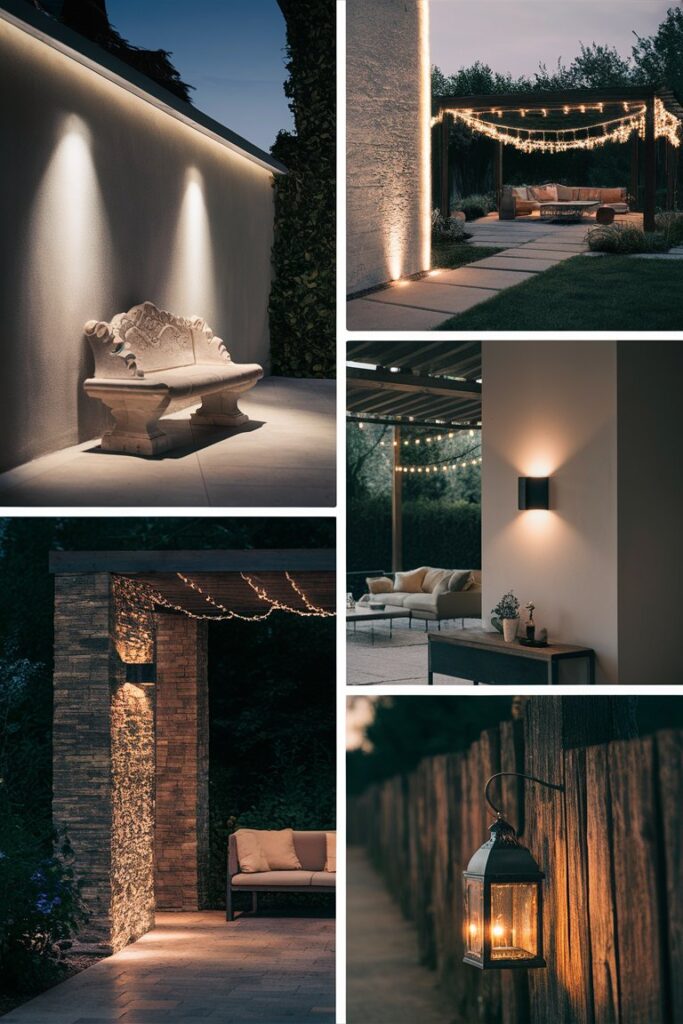
Moving beyond individual fixtures, consider how outdoor lighting design techniques can dramatically transform the perception of your home’s exterior. Grazing and washing represent two distinct approaches to illuminating vertical surfaces, each producing markedly different effects.
Wall grazing involves placing fixtures close to textured surfaces such as stone, brick, or rough-cut wood. The proximity creates dramatic shadows that emphasize texture and depth, adding visual interest to otherwise planar expanses. This technique proves particularly effective for highlighting quality materials and craftsmanship.
Wall washing positions fixtures further from the surface, producing even illumination that minimizes shadows. This approach works well for smooth finishes and creates an elegant backdrop for landscaping or architectural details. Combining both techniques throughout the property adds sophistication to your overall outdoor lighting ideas scheme.
5. Festive and Ambient String Lighting Applications
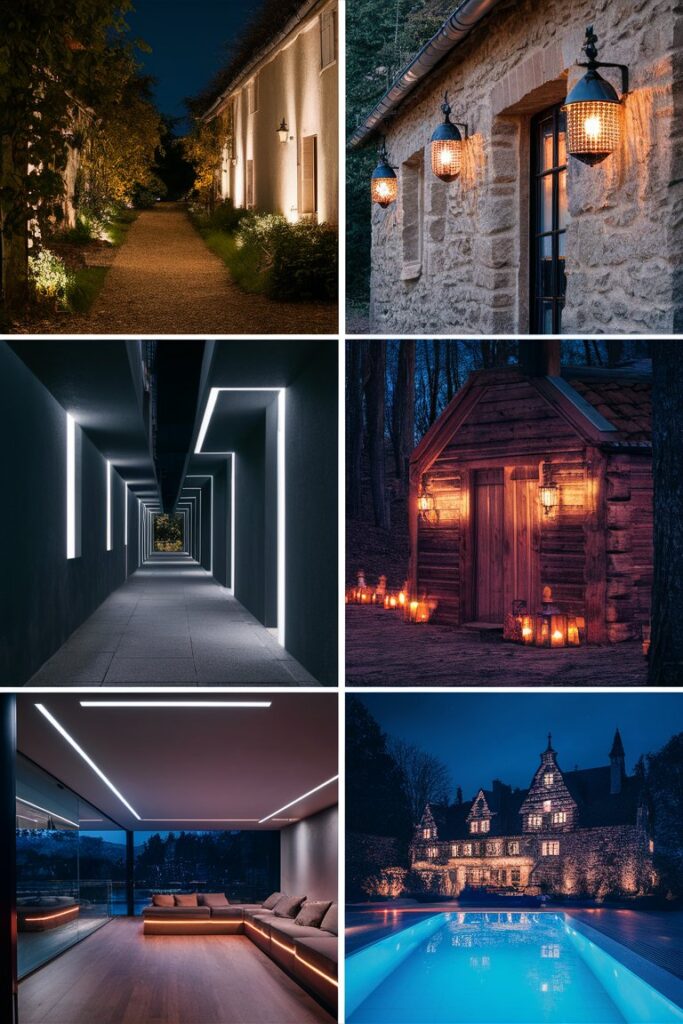
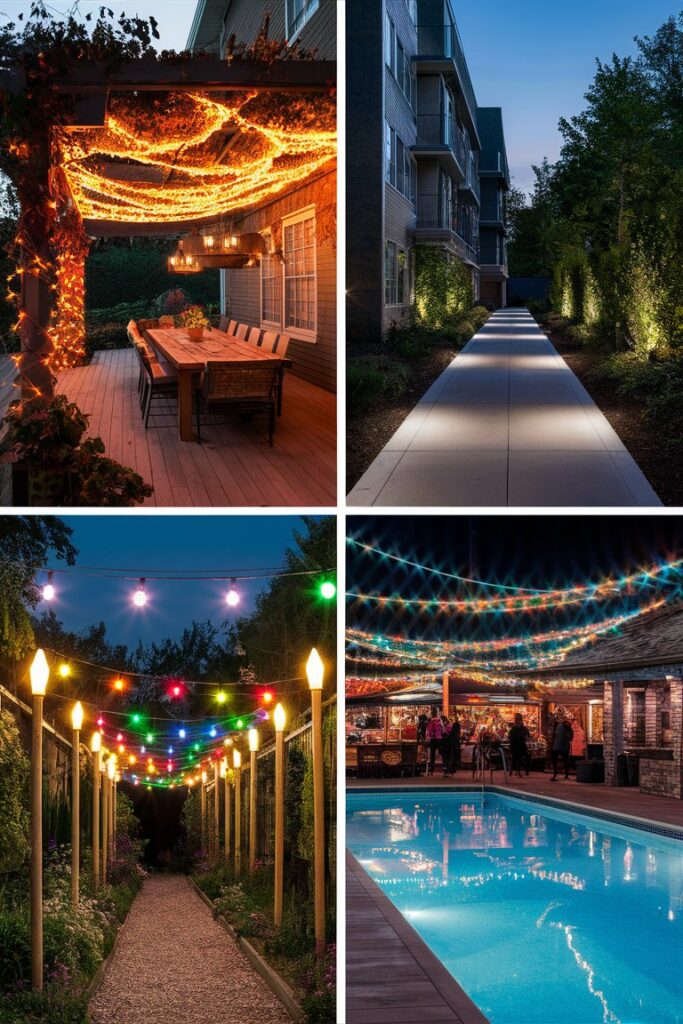
While hardwired fixtures provide foundational illumination, outdoor string lighting ideas offer versatility and immediate ambiance for entertaining spaces. String lights transform patios, pergolas, and garden areas into inviting retreats suitable for evening gatherings or quiet relaxation.
Installation approaches significantly influence the final effect. Overhead configurations create ceiling-like enclosure in outdoor rooms, while perimeter installations define space boundaries. Draping strings in swooping patterns adds visual interest compared to straight runs, and varying bulb spacing affects both illumination levels and aesthetic character.
Select string lights rated specifically for exterior use, with weatherproof connections and durable construction. LED options provide extended service life and reduced energy consumption, while vintage-style filament bulbs deliver warm, inviting light that flatters skin tones and creates welcoming atmospheres.
Selecting Appropriate Fixtures for Specific Applications
Different exterior areas present distinct lighting requirements that should inform fixture selection and placement.
Entry and Porch Illumination
Front entries warrant particular attention as they establish expectations for the entire property. Wall fixtures should provide sufficient illumination for safe passage and key operation while complementing architectural style. Consider fixtures with photocell sensors or integrated timers to ensure automatic operation at dusk.
Entertaining and Dining Areas
Outdoor kitchens, dining areas, and lounge spaces benefit from layered lighting approaches. Wall fixtures provide general illumination, while directional accents highlight specific features such as grilling stations or serving areas. Dimmers allow adjustment from bright preparation lighting to subdued dining ambiance.
Pathway and Stair Illumination
Safety considerations should guide lighting for circulation areas. Low-voltage fixtures integrated into walls adjacent to steps provide necessary illumination without producing glare. Consistent spacing maintains visual rhythm while ensuring adequate visibility for safe navigation.
Material Selection and Durability Considerations
Exterior fixtures must withstand exposure to sun, moisture, and temperature fluctuations. Material selection directly impacts both longevity and maintenance requirements.
Marine-grade finishes offer superior protection in coastal environments where salt air accelerates corrosion. Powder-coated aluminum provides excellent durability with minimal maintenance, while solid brass develops attractive patina over time and resists corrosion exceptionally well.
Glass types similarly affect performance. Clear glass maximizes light output but reveals bulbs directly, while frosted or seeded glass diffuses light for softer illumination and reduced glare. Impact-resistant options provide additional durability in areas prone to severe weather or accidental contact.
Integration with Landscape and Architectural Elements
Successful outdoor lighting design considers the relationship between wall fixtures and surrounding elements. Coordination with hardscape materials, planting schemes, and architectural details creates cohesive results that appear intentional rather than incidental.
Color temperature consistency across all exterior fixtures contributes to unified appearance. Warm white sources (2700K-3000K) complement traditional materials and create inviting atmospheres, while cooler temperatures (3500K-4000K) suit contemporary compositions and enhance crisp architectural lines.
Professional Installation Versus DIY Considerations
While individual fixture replacement may fall within capable DIY territory, comprehensive outdoor lighting schemes benefit from professional involvement. Licensed electricians ensure code compliance regarding placement heights, weatherproofing requirements, and circuit protection.
Low-voltage systems offer intermediate options for homeowners seeking to expand illumination gradually. These systems operate safely at reduced voltages, permitting installation by knowledgeable DIYers while providing flexibility for future modifications. Transformers convert standard household current to low-voltage power suitable for landscape and accent lighting.
Conclusion
Effective outdoor wall lighting ideas extend living spaces, enhance architectural character, and improve property safety while expressing personal aesthetic preferences. From classic lanterns that welcome guests to sophisticated grazing techniques that reveal material textures, thoughtfully selected fixtures transform how properties are experienced after dark.
Begin by assessing your home’s architectural style and identifying specific areas requiring illumination. Consider how different fixture types might address functional requirements while contributing to overall aesthetic goals. Whether pursuing the clean lines of modern outdoor lighting, the rustic charm of farmhouse outdoor lighting, or the festive ambiance of outdoor string lighting ideas, intentional selections yield results that reward investment through years of enhanced enjoyment.
The most successful exterior lighting schemes remain largely unnoticed during daylight hours while delivering purposeful, beautiful illumination precisely when needed. Achieving this balance requires attention to fixture quality, placement precision, and integration with surrounding elements—considerations that transform basic illumination into genuine design achievement.
