
A garden shed is like a secret hideout for all those things that tend to clutter up the yard—tools, pots, garden gnomes, maybe even a suspiciously quiet lawnmower. Instead of losing an hour every weekend hunting for a rake, a well-organized garden shed makes finding your gear quick and painless. It’s the difference between a heroic backyard adventure and a chaotic treasure hunt.

They say a tidy shed is a sign of a tidy mind, but even the messiest gardener can turn their shed into a calm, efficient storage space with just a little planning. From shelves to hooks and waterproof chests on wheels, there are plenty of clever ways to keep everything in order without spending all day digging through dusty boxes.
Whether it’s big sheds or small, fancy or plain, the right storage setup will save time, frustration, and maybe even a few fingers. After all, nobody wants to re-enact a slapstick comedy scene while looking for a wheelbarrow.
Garden Shed Storage Essentials
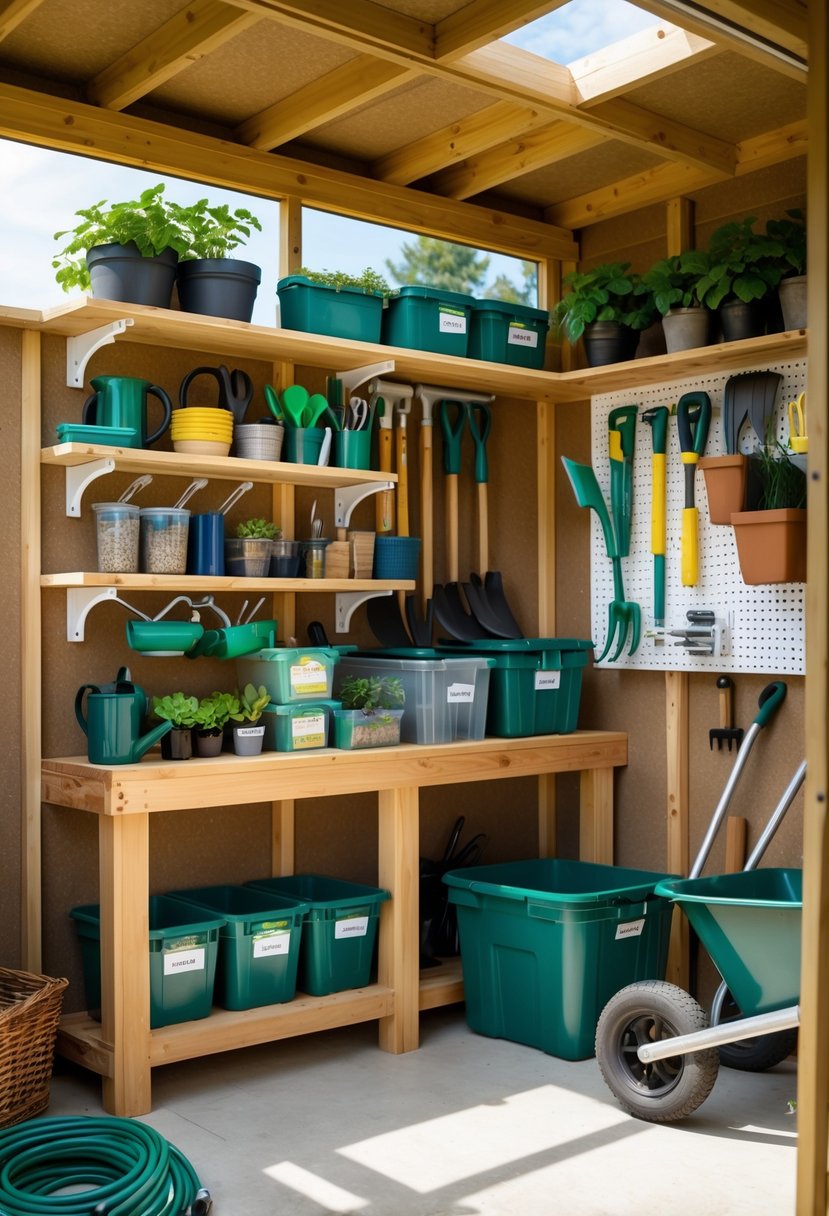
A well-organized garden shed is like a magician’s hat—tools and supplies appear right when needed, without the chaos. To pull this off, it’s all about making smart use of walls, keeping tools in their rightful places, and protecting everything from sneaky weather surprises.
Shelving and Racks
Shelves and racks are the backbone of any garden shed. Vertical storage saves a lot of floor space and keeps equipment off the ground, which is great for dodging mud and spiders. Wall-mounted racks and pegboards turn tools into art—well, at least well-organized collections. Shelves should be sturdy and adjustable, so moving a wild variety of pots and soil bags around is no big deal.
Using labeled bins or baskets on shelves helps keep tiny stuff like seeds and gloves from vanishing into an abyss. Pro tip: install hooks near the door for frequently used gear. It’s basically saying, “Come on in, grab me, and go!” without the mess.
Tool Organization
Nothing ruins gardening zen faster than a missing trowel. Tools deserve designated homes, and pegboards reign supreme here. Pegboards with hooks keep hand tools front and center, while magnetic strips can corral metal gadgets like shears. Longer tools like rakes and shovels live happily in vertical racks or corner holders, standing proud and ready for action.
Grouping tools by type saves time, and color-coded handles add a sprinkle of visual order. A small workbench with built-in compartments is a plus—it keeps screws, gloves, and seed packets from staging their own hide-and-seek game.
Weatherproof Storage Solutions
Garden sheds face the elements daily, so weatherproofing is non-negotiable for storage. Plastic bins with tight lids protect seeds, fertilizers, and potting mix from moisture and critters. Waterproof containers stack neatly on shelves, making cleanup painless.
For chemicals and fertilizers, a lockable metal cabinet is smart—keeps those hazardous materials safe and away from curious hands or paws. Using weather-resistant materials like treated wood or galvanized metal for racks and shelves extends their lifespan. Don’t forget vents or a small dehumidifier to keep dampness at bay—because soggy shelves are nobody’s friend.
Space-Saving Strategies
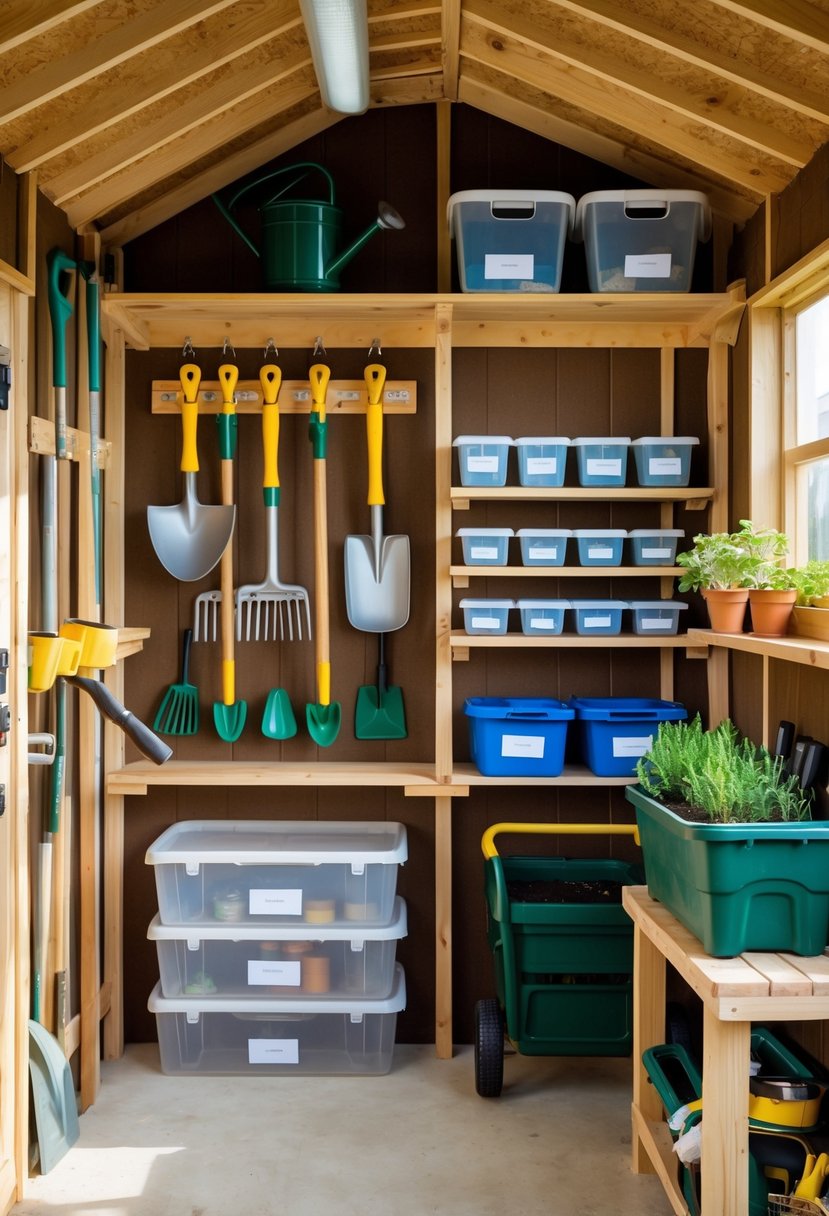
Making the most of every inch in a garden shed means thinking vertically and layering storage options. Clever use of walls and ceiling space can free up floor room for the bigger stuff. A few simple tools and containers can turn chaos into calm in no time.
Hanging Systems
Hanging things up is like magic for small spaces. Hooks and pegboards keep tools and gear off the floor and right where you can see them. Heavy items like shovels or hoses need sturdy hooks; flimsy ones won’t survive the garden battle.
Pegboards offer flexibility. You can move tool holders around based on what you use most. Plus, it’s easy to add baskets for smaller items like gloves or seed packets. The key is to group items logically—garden gloves don’t belong next to the lawn mower handle.
Chains, ropes, or pulleys can help hang bulky things like bikes or ladders from the ceiling. This method saves serious space but needs careful installation to avoid crashes. Once set, the shed feels much roomier, and it’s easier to dodge the random rake that always seems to be in your way.
Wall-Mounted Storage
Wall-mounted shelves or cabinets turn bare walls into storage goldmines. They keep everything raised off the floor, which means better cleanup and less tripping over mystery clutter.
Adjustable shelves are especially handy. They let the user swap shelf height to fit different-sized items, from seed trays to big plant pots. Closed cabinets protect fragile supplies from dust and pests, while open shelves keep everyday tools in plain sight.
Installing magnetic strips on walls is a nifty trick for holding metallic tools, keeping them aligned and easy to grab. The user should remember to measure first to avoid mounting too high or in awkward spots.
Stackable Bins
Stackable bins are the powerhouse of shed storage. They let users pile up different categories of gear without wasting floor space. Clear bins hit the jackpot since they reveal contents, saving the frustrating “what is in this box?” moments.
Bins with lids protect contents from moisture and bugs. Labeling them with easy-to-read tags speeds up finding things when time is tight. Heavy items belong in bottom bins, lighter ones on top for easy lifting.
Color coding bins adds a hint of personality and a splash of order. For example, green for gardening gloves, blue for paint supplies, and orange for fertilizers. This trick makes organizing almost fun—almost.
DIY Storage Projects
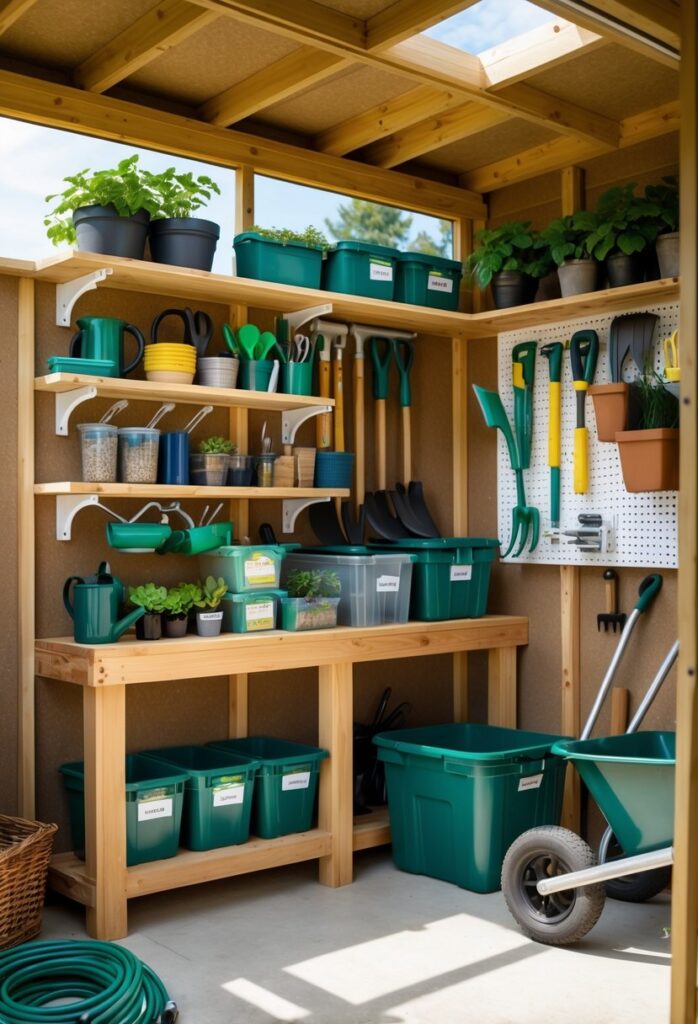
Getting a garden shed organized doesn’t have to involve expensive gadgets or fancy tools. With some creativity, everyday materials, and a bit of elbow grease, even the most chaotic shed can become a tidy haven. These projects focus on clever builds and smart uses of what he or she probably already has lying around.
Custom Shelving Ideas
Custom shelves are the heavyweight champions of shed storage. Unlike those wobbly, one-size-fits-none shelves, custom ones fit exactly where space is tight or oddly shaped. Starting with simple wooden planks and brackets, they can turn awkward corners and narrow walls into perfect spots for pots, fertilizer bags, or mystery garden gnomes.
Floating shelves or tiered racks can help keep frequently used tools at arm’s length. Adding hooks beneath the shelves turns dead space into handy hanging spots for gloves, trowels, or even watering cans. Proper measuring is key here. Nothing screams “DIY disaster” louder than a crooked shelf staring back at you.
Repurposed Furniture
Old furniture isn’t trash until it lives in the shed without a purpose. A small dresser? Instant seed organizer. An unused bookcase? Garden supply HQ. These pieces save money and add character, especially when a little sanding and a fresh coat of weatherproof paint bring them back to life.
Drawers from a repurposed cabinet are perfect for sorting seeds, twine, and plant markers without losing them to the dreaded “tool abyss.” An old crate or chest can double as a bench with hidden storage inside, making it a two-in-one for seating and stashing bulkier items. Recycling furniture cuts clutter and keeps that shed looking way less like a scrapyard.
Upcycled Storage Containers
Containers aren’t just for leftovers anymore. Old jars, tin cans, and plastic bins can take a starring role in shed storage. Paint cans or coffee tins become excellent holders for screws, nails, and tiny garden doodads.
Stackable plastic bins, especially clear ones, help with quick finding and keep dust away. Hanging baskets made from wire or reclaimed fruit crates can hold gloves or small tools, freeing up shelf space.
A tip: labeling containers adds bonus points. No one wants to open a dozen mystery bins just to find the right screwdriver—or worse, an old banana peel long forgotten.
Organizing Garden Tools and Equipment
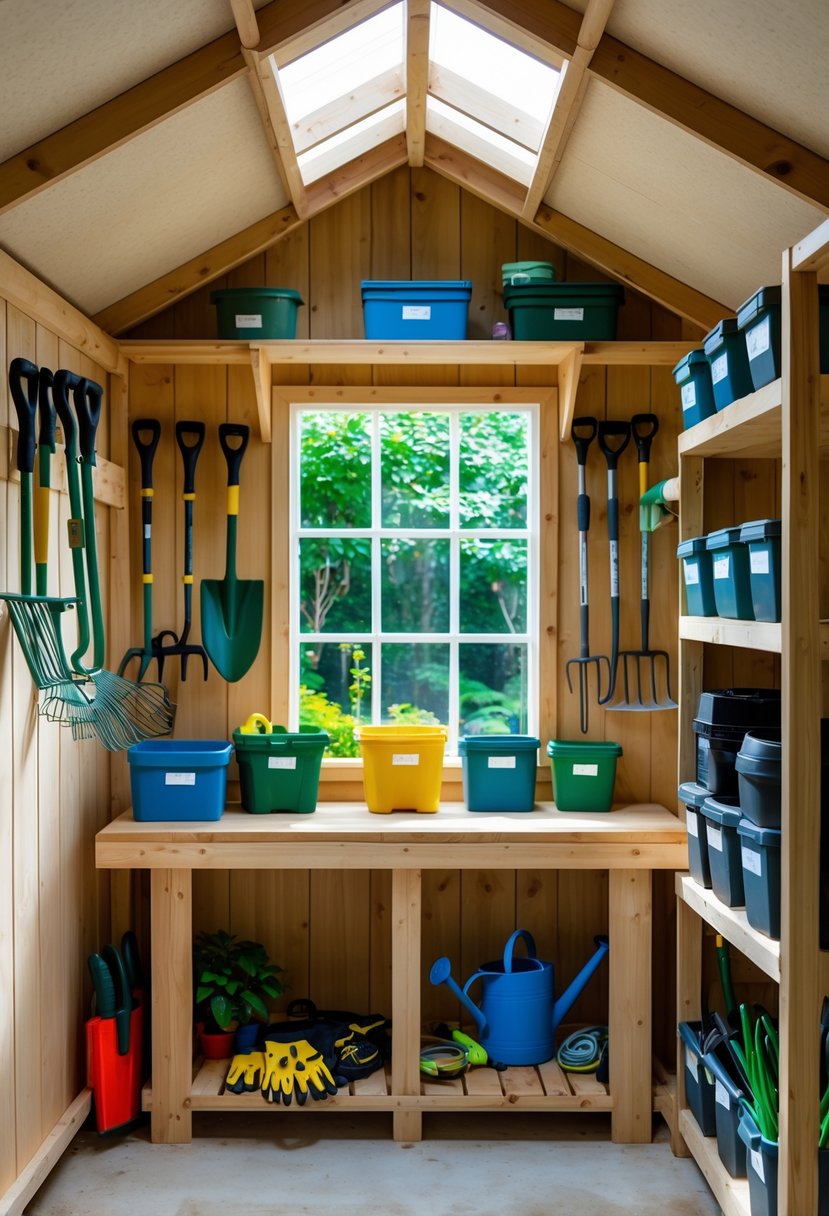
Keeping garden tools neat means knowing where everything fits without tripping over a rake or digging through a pile of mystery stuff. Tools that are big, small, or powered all need their own homes. Using hooks, bins, or shelves can save space and keep everything ready for gardening glory.
Long-Handled Tool Management
Long-handled tools like shovels, rakes, and hoes can quickly turn a shed into a poking hazard zone. The key is vertical storage. Hanging tools on sturdy wall hooks or a pegboard keeps them off the floor and easy to grab. Group tools by type to make finding the right one quicker and less like a scavenger hunt.
A simple rack made from a wooden board with evenly spaced nails or hooks can do the job. Alternatively, metal pipe racks or repurposed pallets work well for holding multiple tools upright. Just make sure tools are spaced so handles don’t tangle like spaghetti.
Small Tool Storage
Small tools like pruners, trowels, and gloves love containers. Using labeled bins, wooden crates, or wicker baskets on shelves keeps these bits from going rogue. Clear plastic boxes offer a double bonus: they’re stackable and let you see what’s inside without fishing around.
Magnetic strips mounted on a wall can also hold metal tools in easy reach. For extra organization, consider small jars or cups for nails, twine, or plant markers.
Power Equipment Placement
Power tools like lawn mowers, trimmers, and leaf blowers need space and easy access because no one wants to wrestle with heavy gear during mowing day. Placing them close to the shed door saves energy and time.
Using low shelves or sturdy floor areas dedicated to power equipment keeps cords untangled and parts from getting lost. Keeping battery chargers in a single spot nearby means no last-minute hunts for a power source. If space is tight, wall mounts for lighter tools like trimmers work well to keep the floor clear.
Maintenance Tips for Tidy Sheds

Keeping a garden shed in order means tackling mess before it becomes a disaster. A few smart habits can make a big difference, like clearing clutter at the right time and knowing exactly where every glove and shovel lives. The goal? A shed that feels more like a neat little workshop and less like a haunted tool graveyard.
Seasonal Cleanouts
Every season, the shed needs a little TLC. Spring and fall are perfect for a full sweep and sort. Pull everything out—yes, even that creepy spider web in the corner—and check what’s broken, rusty, or just plain useless.
Make three piles: Keep, Toss, and Fix. Be ruthless; you don’t need three rakes or eight empty pots. Wipe down shelves and clean dirt off tools. Also, check for moisture or signs of pests. This helps prevent rust and critters from turning your shed into their vacation home. A quick sweep or mop can save a headache later.
Labeling Hacks
Labels don’t have to be boring or look like school projects. Using clear, bold labels on bins, hooks, and shelves saves so much time hunting for that special pair of gloves or mini pruners.
Try color-coded labels—red for heavy tools, green for seeds, blue for pots. Or get creative with pictures for quick scanning. Waterproof stickers are perfect since sheds get damp. A label system means less mess because tools go back to their spots, not the “mystery pile.” Plus, it might stop the family from turning your shed into a junkyard.
Creative Shed Storage Inspiration
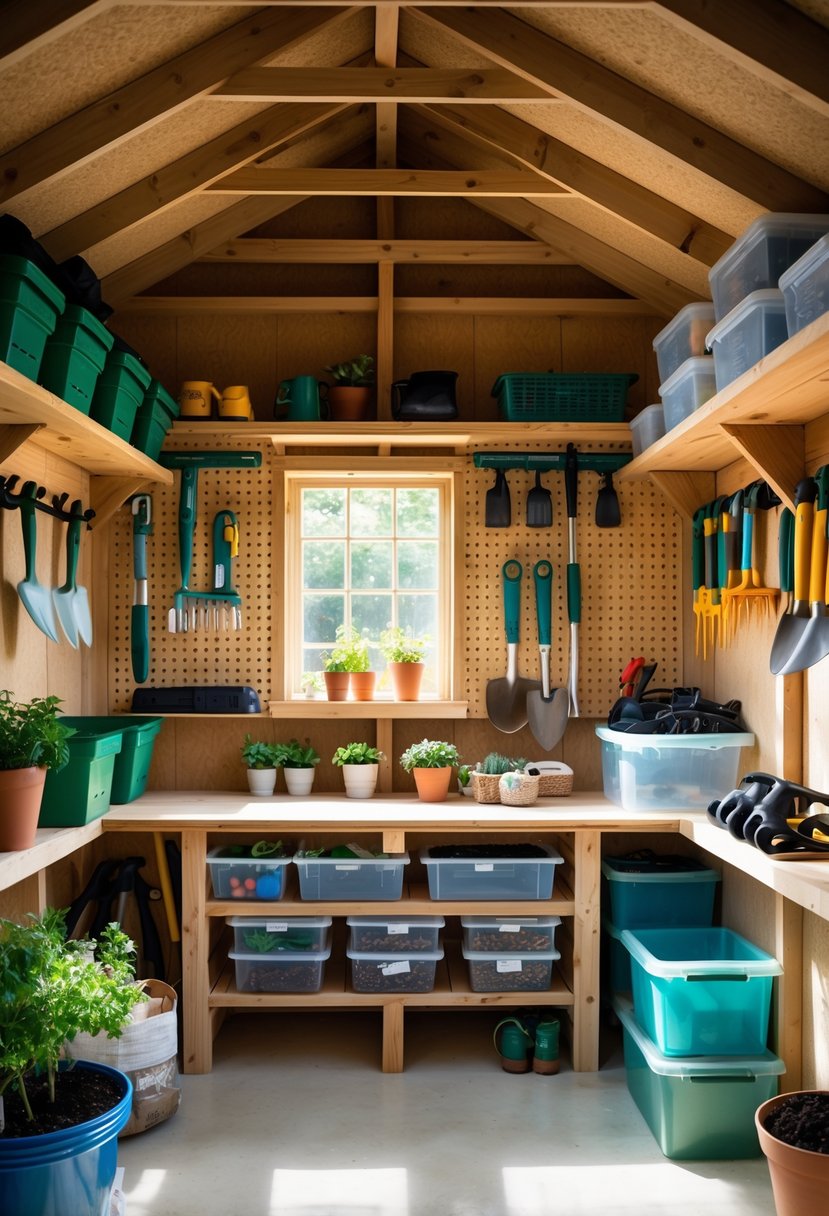
A garden shed can quickly become a wild jungle of tools and random stuff. To tame the chaos, clever storage ideas turn clutter into charm. Think beyond the usual shelves and hooks to add style and smart function.
Decorative Baskets and Crates
Using baskets and crates isn’t just for your farmhouse Pinterest board. They work great in sheds too! Sturdy wicker baskets can corral small tools, gloves, and seed packets. Crates stack easily, giving grab-and-go access to bigger gear like pots or fertilizers.
Pro tip: Label baskets with chalkboard tags or fun stickers to avoid the “mystery basket” guessing game.
Wooden crates can also double as rustic shelves or be mounted sideways on walls. They bring a cozy vibe while keeping everything visible and tidy. Plus, they’re easy to move around when spring fever hits and the garden demands a new layout.
Unusual Storage Hacks
When flat surfaces get crowded, it’s time to think vertical or sideways. Walls, ceilings, and even doors hide space gems. Pegboards with hooks can create instant tool walls, so shovels and trowels hang like art.
Magnetic strips are another sneaky trick, especially for metal tools like pruners or screwdrivers. Hanging old ladders or repurposed wooden pallets can hold pots or seed trays.
Finally, shoe organizers might seem out of place—but their little pockets are perfect for tiny items like twine, plant tags, or twine cutters. They make good use of door space you never knew you had.
Frequently Asked Questions
Keeping garden tools in line, juggling lawnmowers with bikes and holiday decorations, and deciding on floor options can feel like a backyard circus. But with some clever thinking and smart choices, storage chaos can become a thing of the past.
What is the fanciest way to keep my garden tools from staging a yard takeover?
They can invest in wall-mounted racks, pegboards, or magnetic strips inside the shed. Hanging tools keeps the floor clear and makes it easier to spot the rake before it tries to escape. Adding labeled bins or shelves for smaller items adds a touch of order without needing a butler.
Can I cram my lawnmower, bike, AND holiday decorations in a single shed, or is it time to Marie Kondo my outdoor stuff?
It depends on shed size and your spirit for austerity. Larger sheds can handle all three if organized well with shelves and hooks. If the shed is small, it might be time to thank some things politely and let them go—or upgrade to a bigger shed and pretend that’s a strategic choice.
Are pre-floored sheds the ‘in’ thing now, or should I keep my floorless shed and let the earthworms bunk with my tools?
Pre-floored sheds are popular because they protect tools from moisture and bugs, plus they’re easier to clean. Floorless sheds are cheaper but risk muddy shoes and worm roommates. It’s a bit like choosing between slippers and mud boots for your tools.
How can I level up from garden clutter collector to a backyard storage maestro?
Step one: dedicate zones for different types of items—mowers in one corner, pots in another. Add clear containers and labels to banish “What is this weird thing?” moments. Finally, schedule quick “tidy attacks” every few weeks before clutter becomes a full-blown garden invasion.
What’s the secret to finding a shed that won’t make my wallet weep during the off-season sales?
Timing and watchful eyes win the day. Sheds often go on sale in late fall or early winter when demand drops. Shopping then can save big bucks. Also, pay attention to mid-range options that balance price and quality—sometimes the fanciest shed isn’t the smartest buy.
