
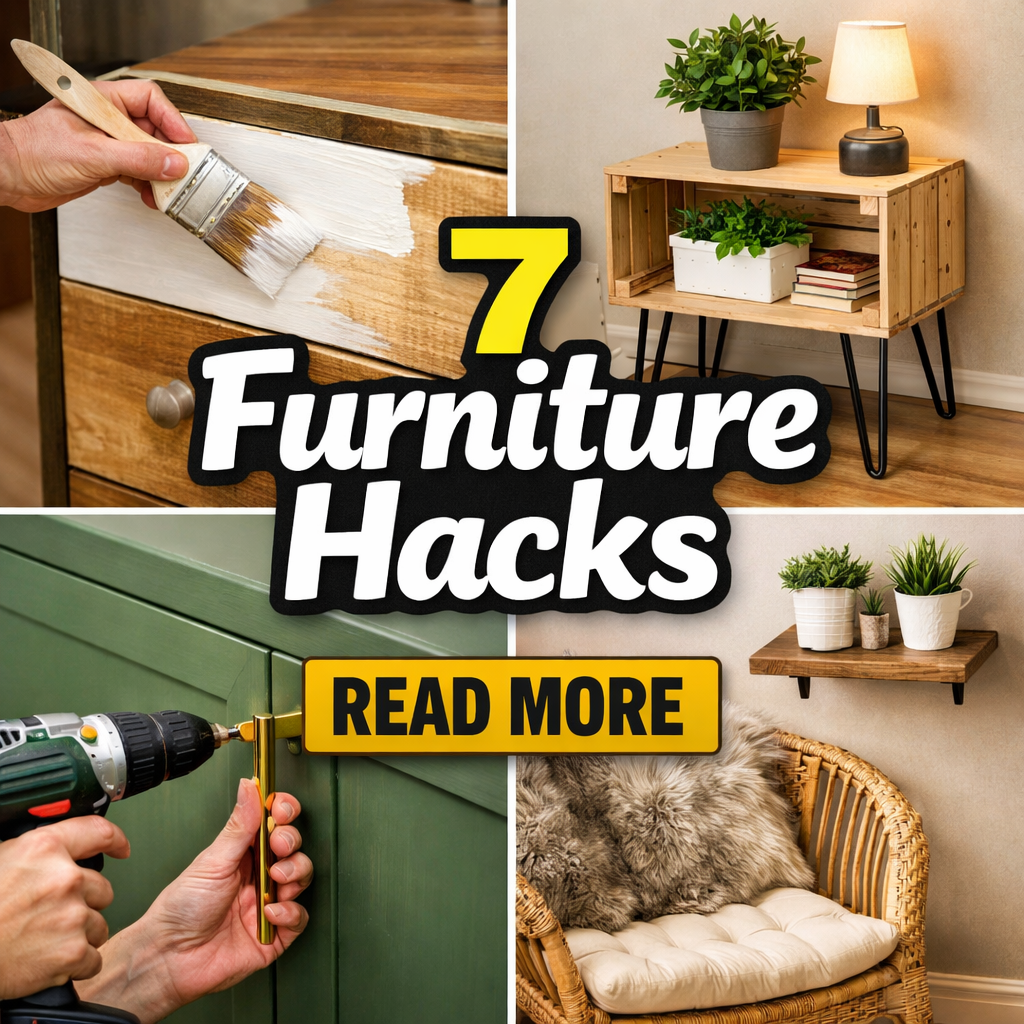
Furniture hacks can make a big difference in how a space feels and functions. Simple changes like switching to multi-functional pieces or upgrading old furniture with paint can create more room and add style. These seven furniture hacks help save space, improve organization, and refresh a home without needing a full makeover.
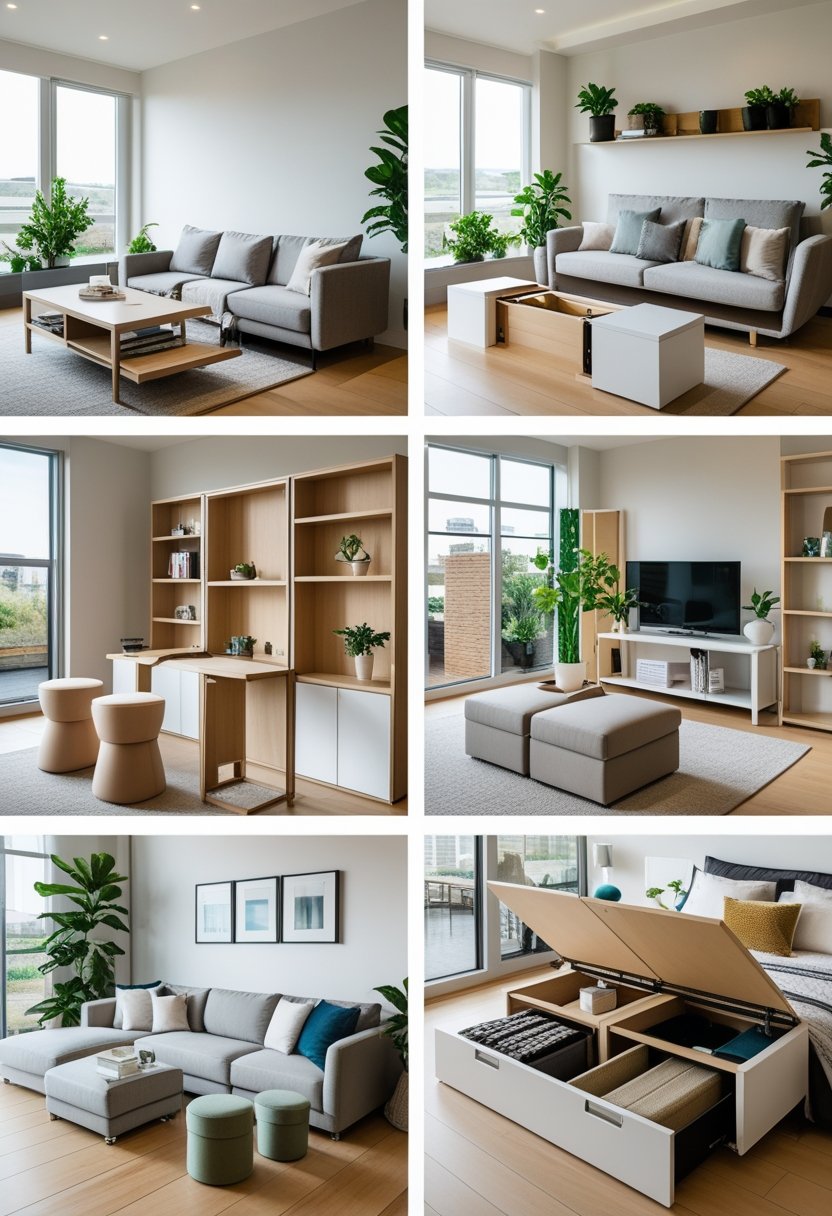
Many of these tips focus on reusing what you already have or choosing smart, space-saving furniture. For example, a sofa bed provides seating by day and a bed by night. Matching furniture can also create a clean, organized look that makes any room feel larger and more intentional.
By using practical ideas like these, anyone can transform their living space into something that fits their needs better and looks more polished. These hacks offer simple, affordable ways to get more from your furniture.
Quick and Easy Furniture Hacks
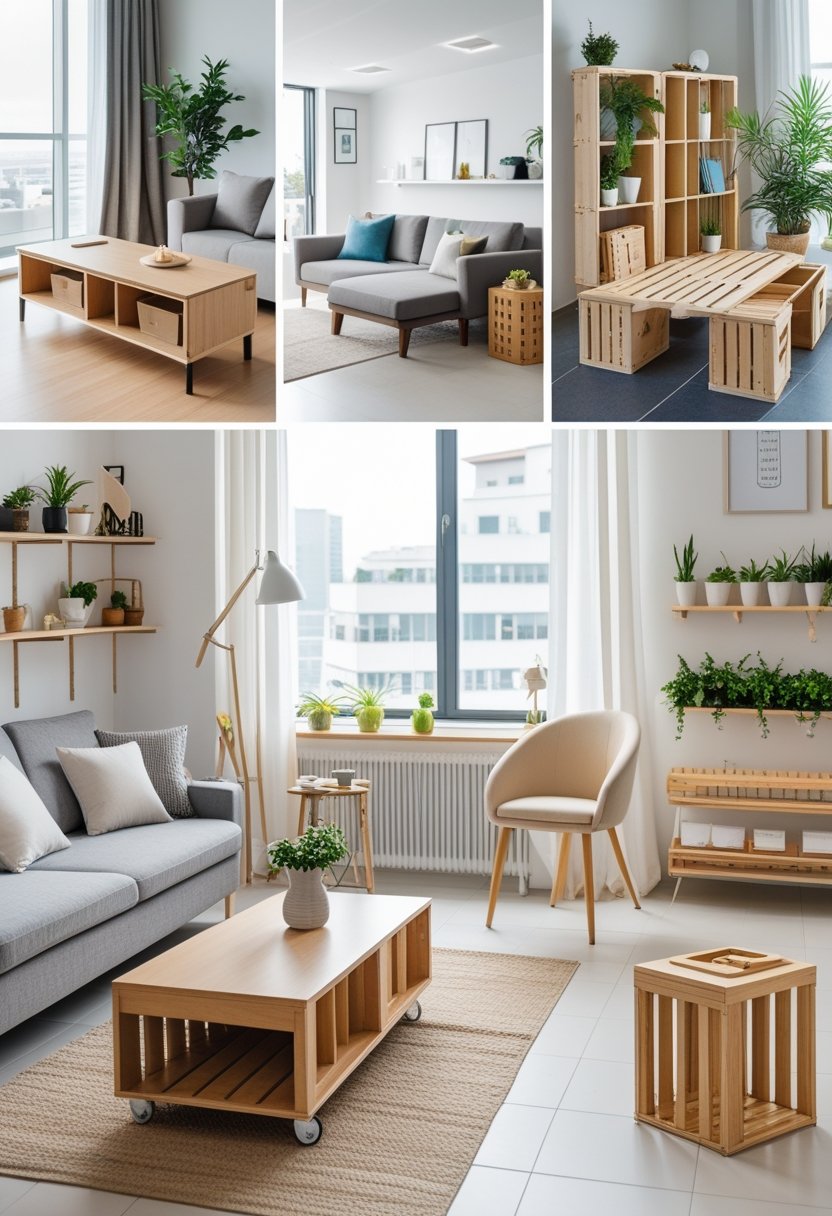
Small changes can make old furniture look fresh and useful again. Simple tools like paint, new hardware, or clever rearrangements can quickly update pieces without much effort. These ideas focus on practical updates that improve both style and function.
Transforming Old Chairs
Old chairs often lose their appeal but can be revived with a few simple steps. Sanding down rough spots and applying a fresh coat of paint instantly renews their look. Using bold or pastel colors can give the chair a modern or cozy feel, depending on the room’s style.
Changing the seat cushion or adding a new fabric cover also adds comfort and freshness. For wooden seats, attaching a cushion with Velcro or ties makes for an easy change later on. Swapping out old knobs or adding stencils can add personality without complex work.
Revamping Coffee Tables
Coffee tables can be updated simply by changing their surface or legs. Adding a coat of varnish or paint protects the wood and gives a polished look. Applying contact paper or decals on the tabletop creates a new pattern or texture quickly.
Replacing the legs with metal or hairpin-style legs can give the table a more modern appearance. For extra function, attaching small baskets beneath adds storage without altering the design. These upgrades require just a few tools and a clear workspace.
Instant Storage Solutions
Adding storage to furniture can be done without building new pieces. Use baskets or boxes under tables or chairs to store items out of sight. Attaching hooks to the sides of furniture provides spots for bags or keys.
Swapping cabinet knobs for ones with built-in hooks or small racks can add hidden storage options. Also, floating shelves mounted near furniture offer extra space without touching existing pieces. These solutions increase storage without complex work or major changes.
Budget-Friendly Upgrade Ideas
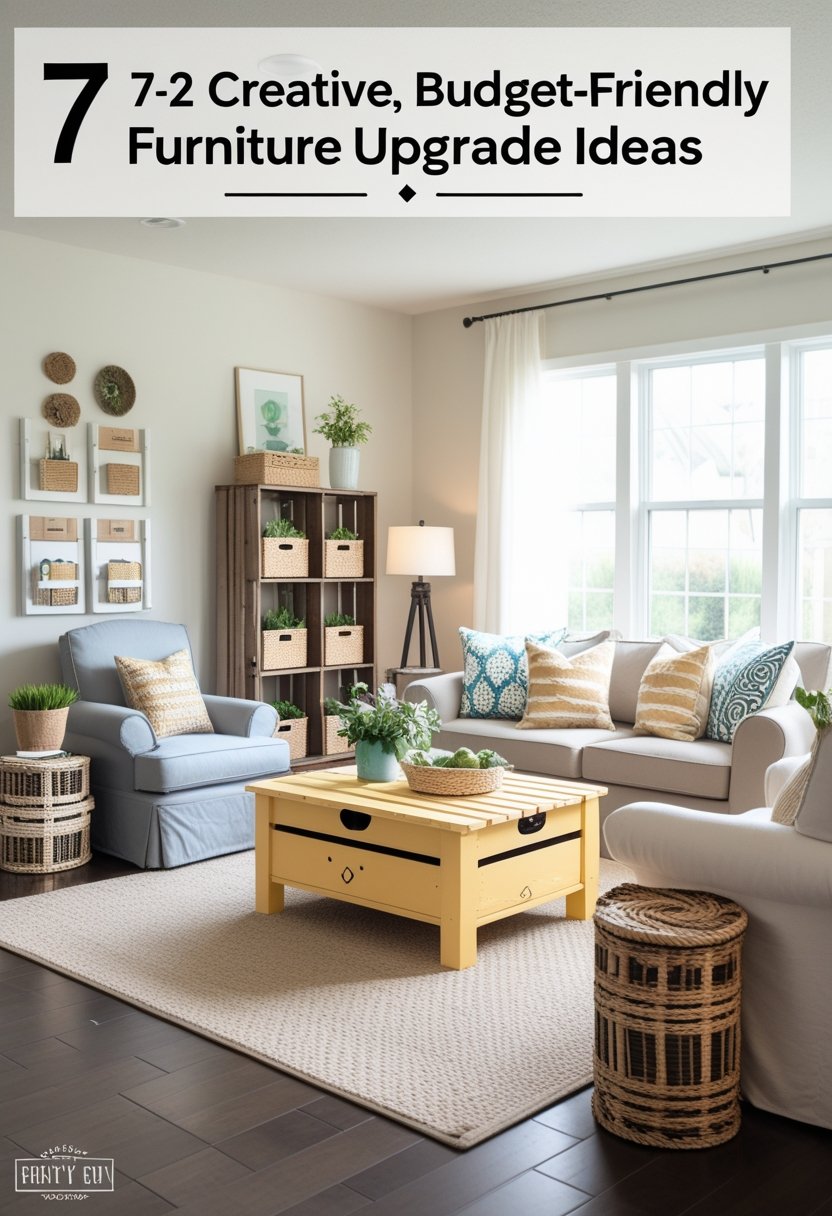
Small changes can refresh the look of old furniture without spending much money. Painting, updating small parts, and reusing pieces give a new style while saving costs. These ideas focus on simple steps anyone can do.
DIY Furniture Painting
Painting is a low-cost way to change furniture’s appearance. It can make worn-out pieces look fresh and modern. Before painting, cleaning and sanding the surface helps the paint stick better.
Using chalk paint or spray paint speeds up the process and requires less prep work than traditional paint. Choosing light or neutral colors can brighten a room, while bold colors create a statement piece.
Applying a clear topcoat protects the finish and makes the paint last longer. Painting knobs or legs instead of the whole piece provides a quick update with minimal effort.
Furniture Upcycling Techniques
Upcycling is about giving old furniture new use or meaning. Adding shelves, changing legs, or re-covering cushions can make old items functional again.
For example, attaching pre-cut wooden legs to a coffee table can lift it and improve style. Adding floating shelves to outdated furniture creates extra space and interest without buying new items.
Reupholstering cushions with affordable fabric is another way to refresh chairs or sofas. These changes reuse existing pieces, which cuts cost and waste.
Affordable Hardware Swaps
Swapping old hardware like knobs, handles, or hinges updates furniture instantly. New hardware changes the style from plain to modern, rustic, or vintage depending on the choice.
Hardware can be found in many styles and prices at stores or online. Choosing metals like brushed nickel, black, or brass can give a current look without rebuilding furniture.
This upgrade requires only basic tools like screwdrivers. It is quick and often reversible, making it a low-risk way to improve furniture’s look.
Space-Saving Furniture Hacks
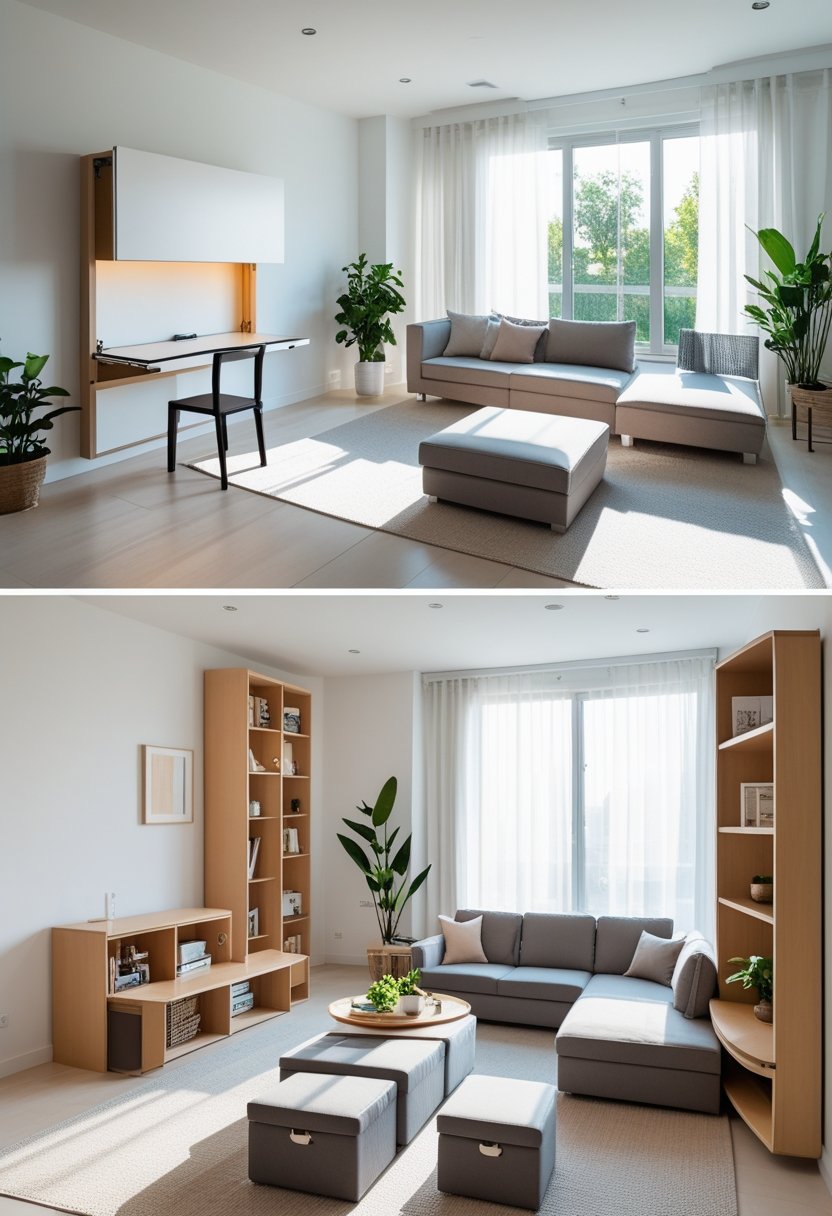
Smart furniture choices make a small space work better. These ideas focus on furniture that serves more than one purpose, folds away neatly, or hides storage where it is not seen. This approach helps keep a home organized and functional without crowding.
Multi-Functional Furniture
Multi-functional furniture combines two or more uses in one piece. Examples include sofa beds that serve as a couch by day and a bed at night. Storage ottomans provide seating and a place to store blankets or magazines.
Other pieces include coffee tables with built-in shelves or compartments, which can hold books or remote controls. This type of furniture reduces clutter and makes every inch count. It is important that these items are sturdy and easy to use, so they fit smoothly into daily routines.
Clever Folding Mechanisms
Furniture with folding parts can be tucked away to save space. Wall-mounted fold-down desks free up floor area when not in use. Folding chairs and tables can be stored flat against a wall or inside a closet.
These mechanisms work best when they are easy to fold and unfold without strain. Smooth hinges and safety locks add convenience and security. Folding designs allow rooms to change function quickly, such as turning a living room into a workspace or dining area.
Hidden Storage Features
Hidden storage is a great way to keep things tidy without extra cabinets or shelves. Look for beds with drawers underneath or headboards that open for storing bedding or clothes.
Other examples include stairs with built-in cupboards or sofas with pull-out compartments. These areas are out of sight but easy to access. Hidden storage helps reduce visible clutter and makes cleaning simpler by keeping items in designated places.
Personalizing Furniture for Unique Style
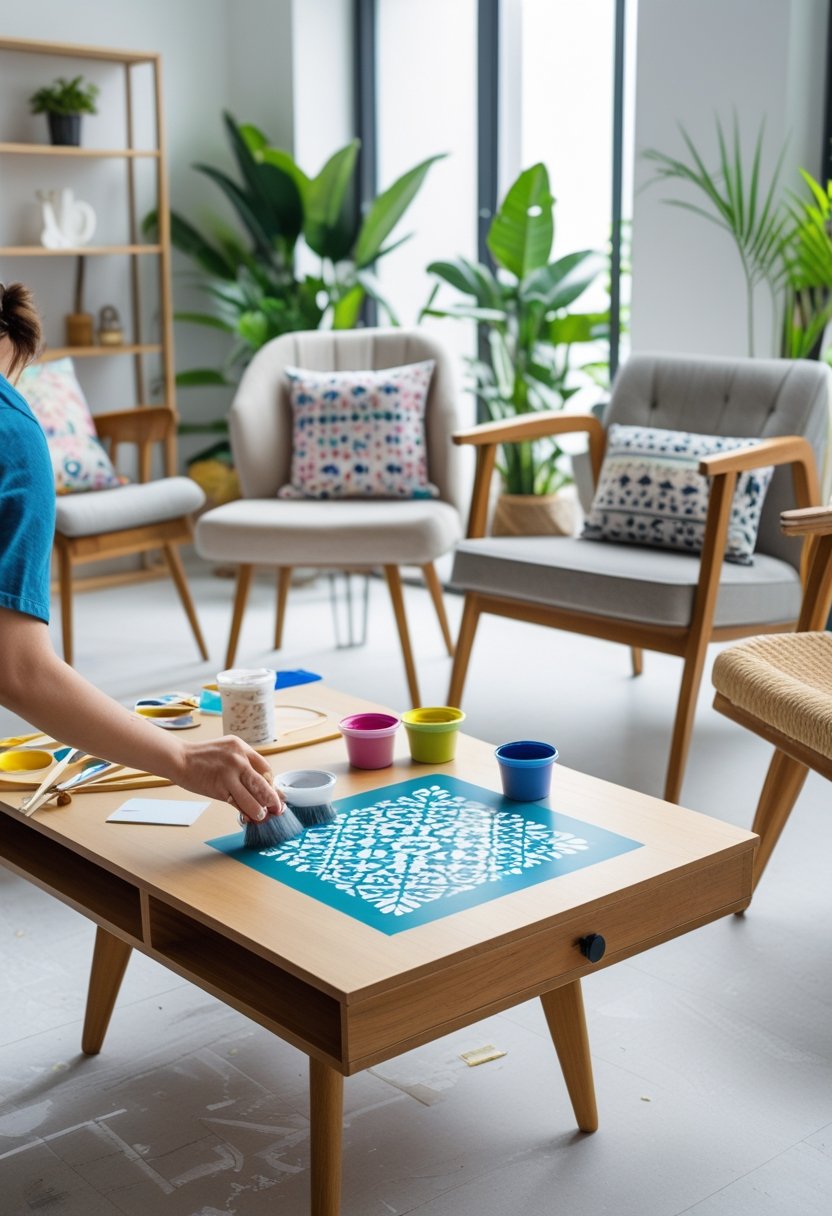
Personalizing furniture gives a room a special touch that reflects the owner’s taste. Small changes can make furniture stand out and feel more personal. Using fabric and decorative paper can change the look without major work.
Custom Cushion Covers
Custom cushion covers add both style and comfort. Choosing fabrics in colors and patterns that match a room’s theme immediately updates plain furniture. People can sew their own covers or buy pre-made ones that fit their cushions.
Using materials like cotton, linen, or velvet provides different textures and durability. Removable covers are practical because they are easy to wash and swap out for a new look. Adding details like buttons, piping, or embroidery can also enhance the design.
Creative Decoupage Designs
Decoupage lets furniture owners apply decorative paper or fabric to surfaces, creating unique patterns and images. It requires adhesive glue and a protective finish like varnish to keep the design strong and lasting.
Popular materials include scrapbook paper, wrapping paper, or even photos. Pieces like drawers, tabletops, or cabinet doors work well for this technique. Decoupage allows for personal style without needing painting skills and can turn old furniture into something striking.
Applying multiple layers and sanding between coats ensures a smooth surface. This approach can refresh worn pieces while reflecting creativity clearly and affordably.
Sustainable Furniture Transformations
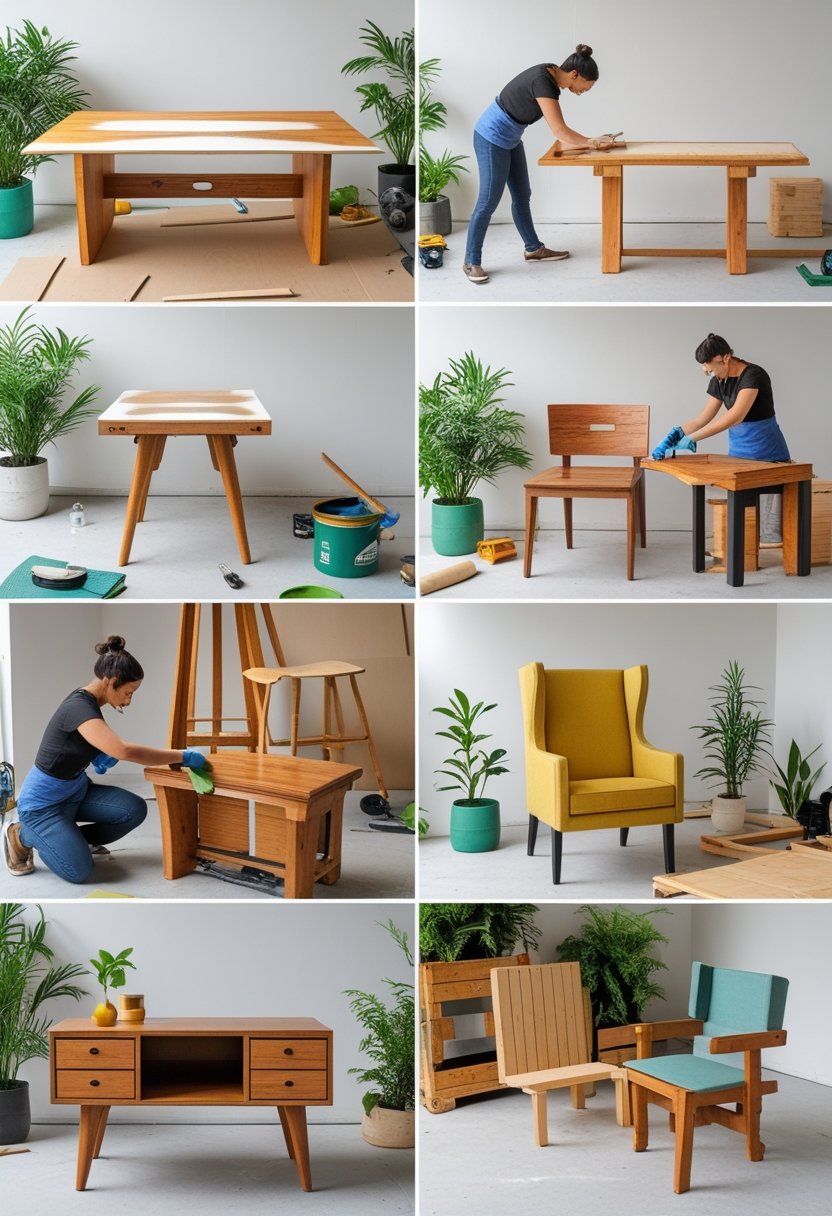
Sustainable furniture transformations focus on giving old or unused pieces new purpose while reducing waste and environmental impact. Key methods include finding quality secondhand items and choosing materials that have low harm to the planet. These approaches balance style, function, and responsibility.
Thrifting and Secondhand Finds
Thrifting allows people to discover unique furniture pieces at affordable prices. Secondhand stores, online marketplaces, and estate sales are common sources. These options prevent furniture from going to landfill and extend the life of sturdy items.
Shoppers should look for solid wood frames, intact joints, and quality hardware. Even worn finishes can be refreshed with sanding, staining, or painting. Prioritizing durability over flashiness ensures the piece can last for years after its makeover.
Some transformations combine functionality with character, such as turning an old dresser into bathroom storage or a vintage desk into a workspace. This repurposing saves money while creating something both practical and stylish.
Eco-Friendly Materials
Using eco-friendly materials supports a healthy home and planet. Finishes like natural oils, waxes, or water-based paints reduce harmful chemicals indoors. These materials also break down more easily in waste management systems.
Wood reclaimed from deconstructed furniture or buildings offers a sustainable raw material for DIY projects. Bamboo and cork are renewable wood alternatives prized for their quick growth and durability.
Choosing non-toxic glues and hardware made from recycled metals adds to the sustainability of furniture makeovers. By combining these materials, individuals can create safe, long-lasting pieces that lower environmental impact without sacrificing quality.
Tips for Maintaining DIY Furniture Projects
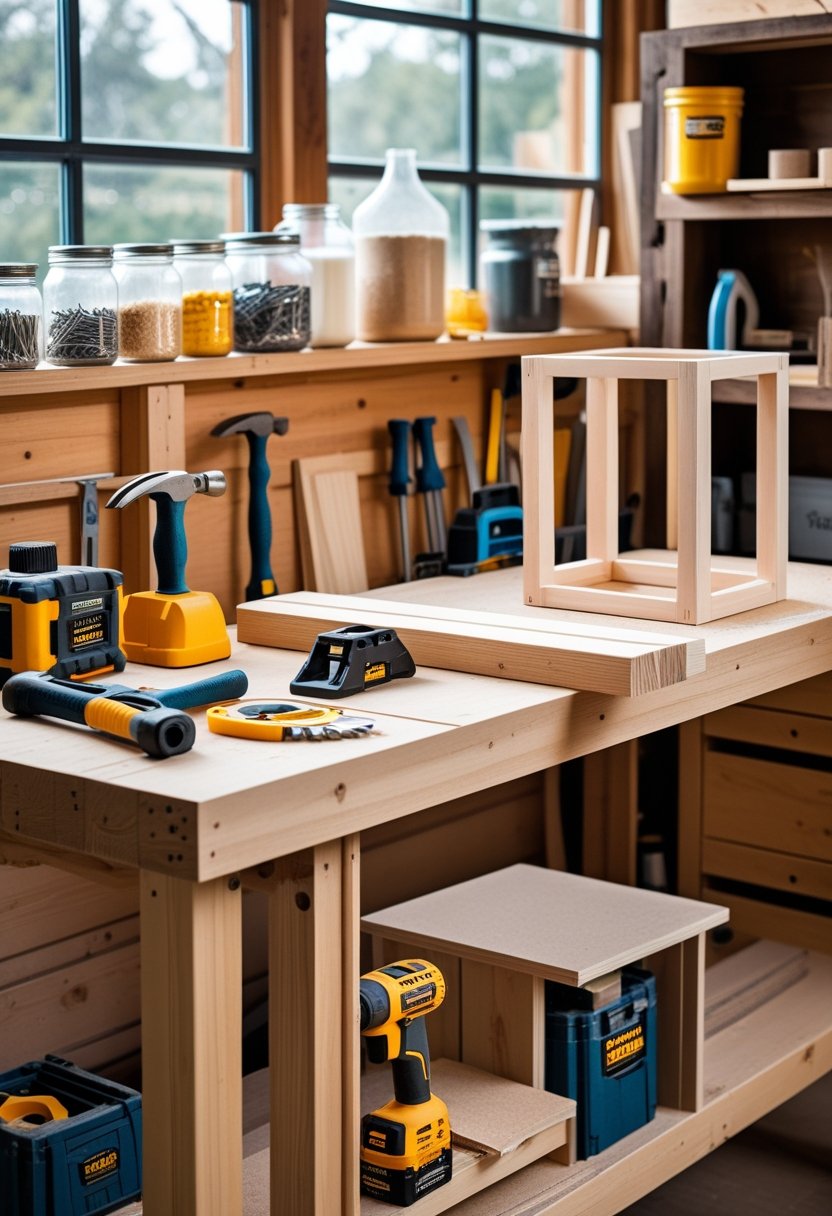
Maintaining DIY furniture requires consistent care and the right protective measures to keep pieces looking good and lasting longer. Proper finishes guard against damage, while regular cleaning prevents buildup that can wear down surfaces.
Protective Finishes
Applying a protective finish is key to extending the life of a DIY furniture project. Common finishes include polyurethane, wax, and varnish.
Polyurethane provides a strong, clear coat resistant to scratches and liquids. It’s ideal for tabletops or frequently used surfaces. Wax offers a softer finish that enhances natural wood grain but needs reapplication every few months.
Varnish adds both protection and a sheen, making it good for sealed wood surfaces. Always apply finishes in thin, even layers and allow full drying time between coats. This avoids sticky or uneven surfaces.
Using the right finish helps prevent water damage, stains, and fading caused by sunlight or wear.
Routine Care and Cleaning
Regular cleaning keeps furniture free from dust, dirt, and oils that can degrade surfaces over time. Use a soft, dry cloth to dust weekly.
For deeper cleaning, slightly dampen a cloth with mild soap and water. Avoid harsh chemicals or abrasive pads that can strip finishes or scratch wood.
Furniture should be kept away from direct sunlight and heat sources to avoid warping or discoloration. Placing felt pads under legs can prevent floor scratches and reduce furniture wear.
Periodic inspections help catch small issues like loose screws or chipped finishes early before they become bigger problems.
Common Mistakes to Avoid With Furniture Hacks
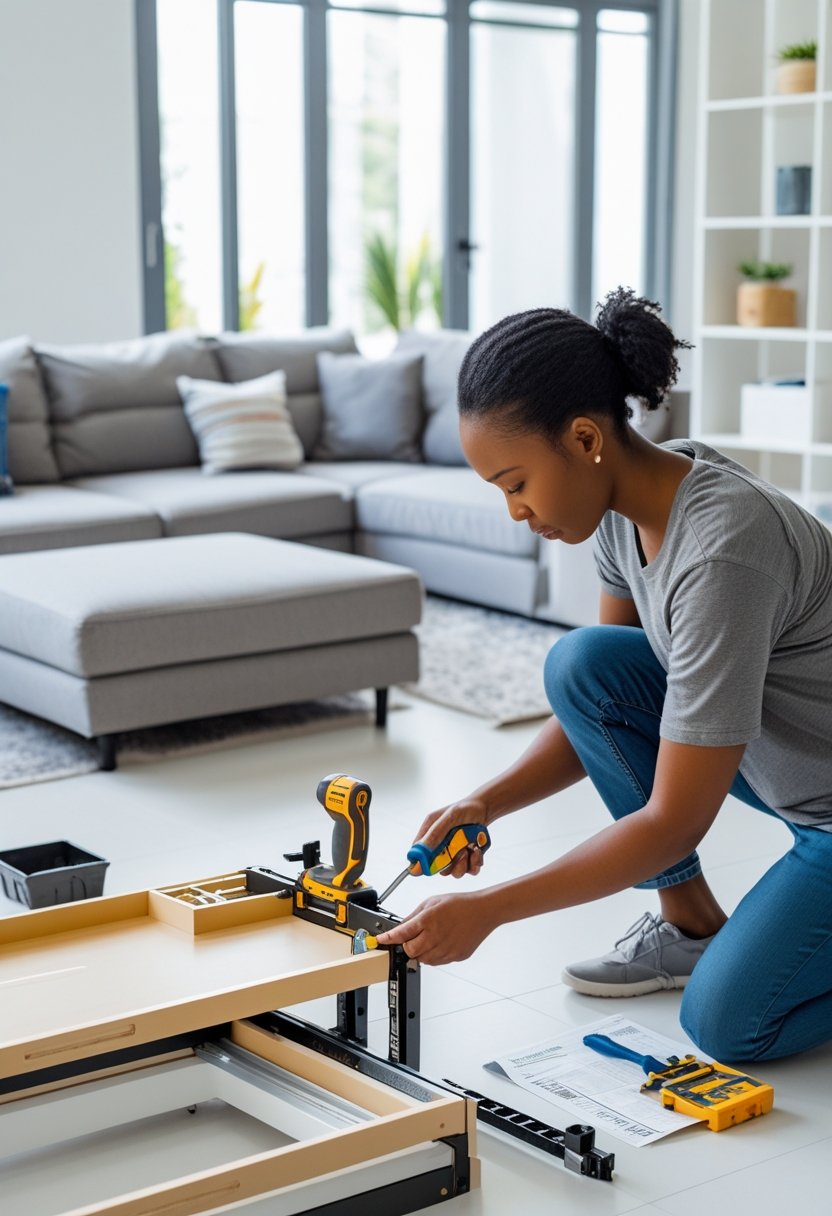
Many furniture hacks fail because of overlooked details. The right materials and solid preparation are key to avoiding wasted time and poor results.
Choosing the Wrong Materials
Using unsuitable materials can ruin a project before it starts. For example, choosing low-quality wood or weak fasteners may cause instability or damage over time. It is important to select materials that match the furniture’s intended use and weight.
Avoid cheap glue or tape that won’t hold up. Instead, pick adhesives and hardware rated for the weight and type of furniture. If refinishing, test paint or stain on a hidden spot first to check compatibility.
Materials should also suit the environment. For outdoor furniture, moisture-resistant wood or rust-proof screws prevent early decay. Selecting the right materials ensures the hack lasts longer and stays safe.
Skipping Proper Preparation
Preparation is often the most overlooked step. Not organizing parts or reading instructions leads to avoidable errors and frustration. Before starting, lay out all components and check them against the parts list.
Measuring spaces and furniture pieces prevents surprises during assembly. Adjustments made early save time later by avoiding misfits or repeated work.
Proper workspace setup also matters. Clear a clean, flat surface with good lighting to avoid lost pieces or damage. Gather necessary tools ahead of time to keep the process smooth and efficient.
Taking these steps before assembly reduces mistakes and helps the project move faster.
