
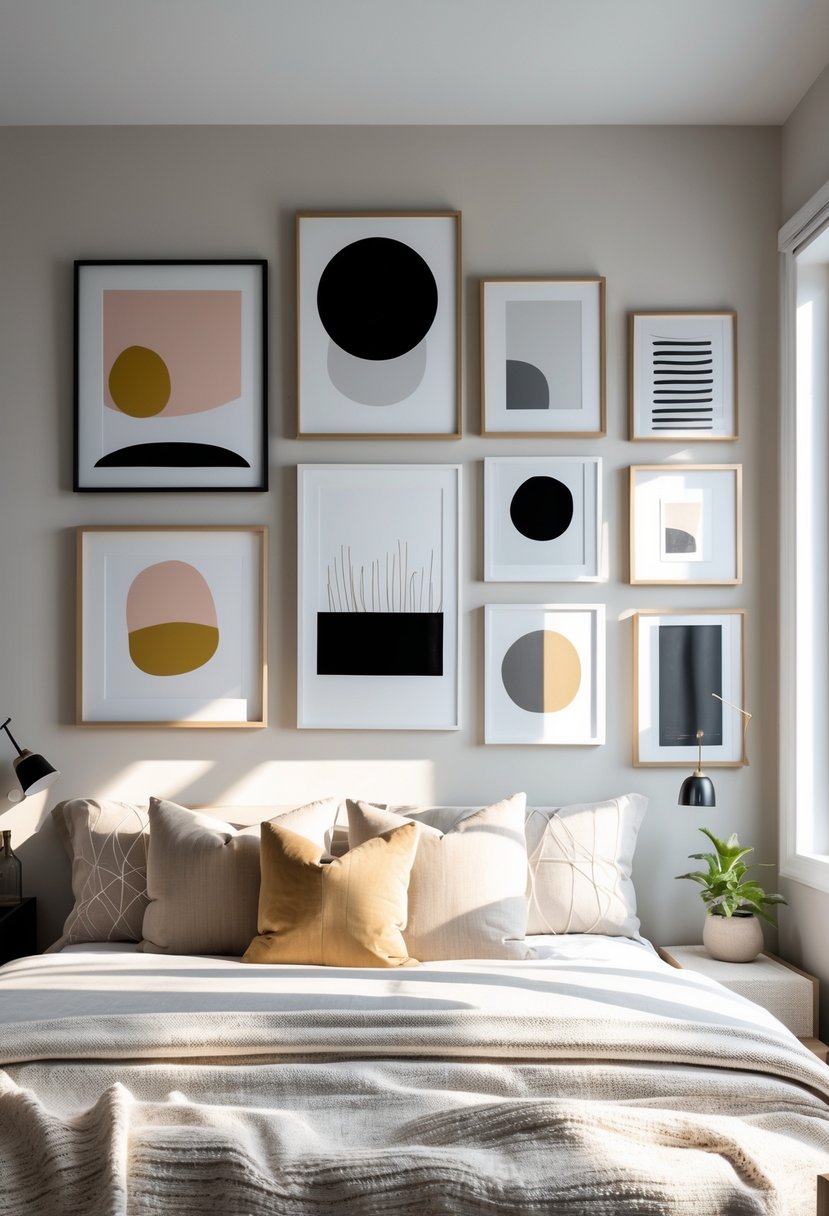
Want a bedroom that feels personal and polished? A gallery wall can do that by turning empty wall space into a clear focal point that reflects your taste. Choose a layout that suits your room size and mood, mix frames and art types for interest, and keep colors or spacing consistent so the display looks intentional, not cluttered.
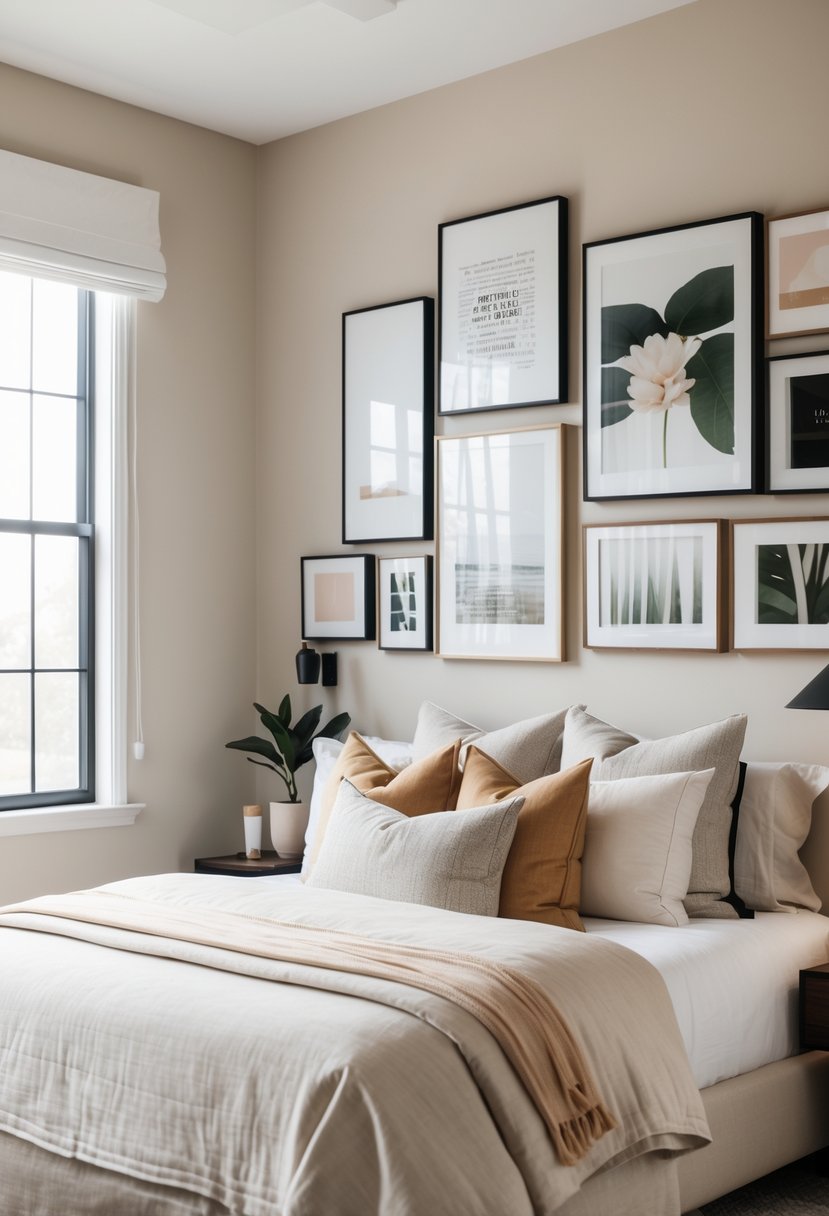
You’ll find ideas for tight grids, relaxed collected layouts, and single-piece focal arrangements, plus simple styling tips to tie the wall into your bedding, lighting, and room palette. Follow practical steps to plan, hang, and style a gallery wall that fits your space and makes mornings feel more curated.
Essential Gallery Wall Layouts for Bedrooms
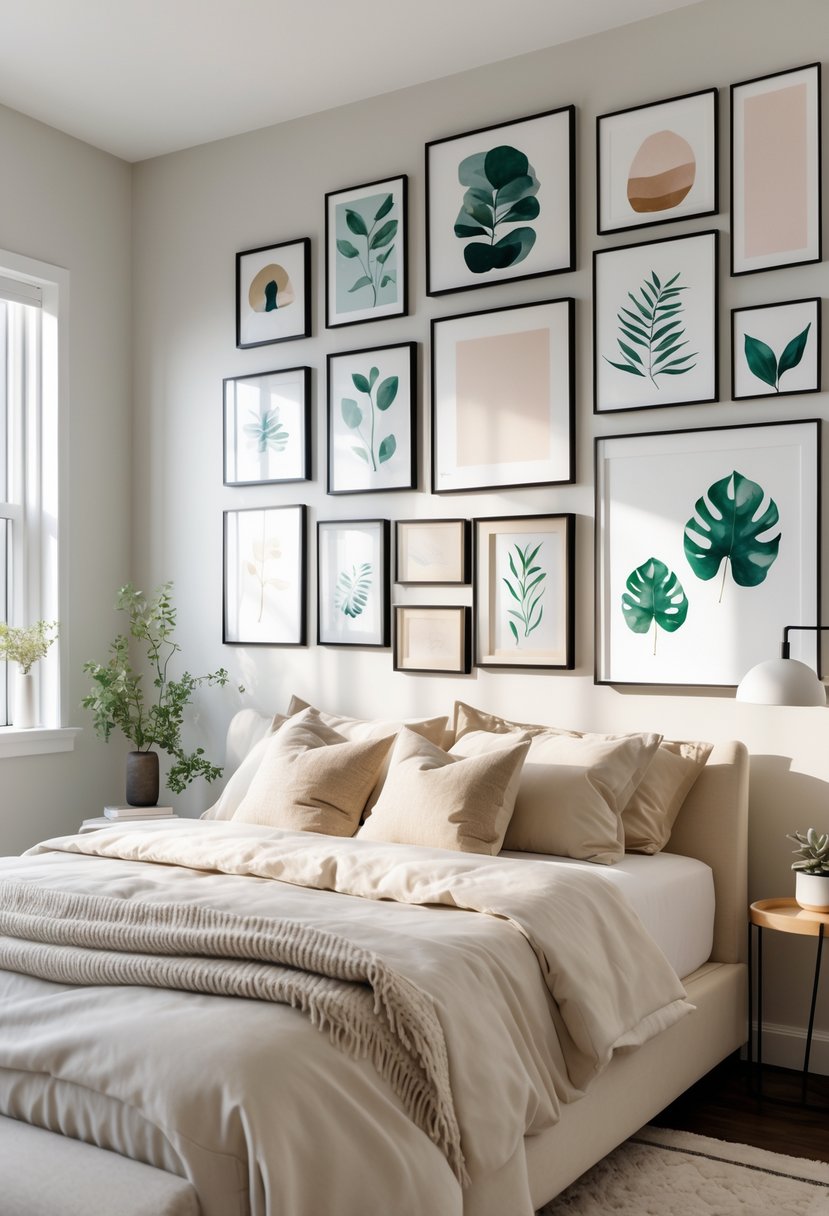
These layouts focus on balance, scale, and how pieces relate to furniture and wall size. Choose a method that fits your wall height, bed or dresser placement, and the frames or art you already own.
Symmetrical Grid Layout
A grid layout uses matching frames and equal spacing to create a clean, orderly look. Measure the wall width and divide by the number of columns to keep spacing even. Use a paper template or painter’s tape to mark nail positions before you hammer.
Keep art sizes identical or use mats to make different pieces appear the same size. Place the center of the grid at eye level or aligned with the top of your headboard for a cohesive look. This layout works well over beds and dressers and suits black-and-white photos or minimalist prints.
If you want variation, keep frame finish and mat color consistent while changing internal art. That preserves the grid’s visual order while letting your personality show.
Asymmetrical Gallery Wall Arrangements
Asymmetrical clusters mix frame sizes, shapes, and styles for a personal, collected feel. Start with one anchor piece—often a large print or mirror—then add smaller pieces around it in a loose cluster. Lay the arrangement on the floor first to test spacing and rhythm.
Vary frame finishes but repeat at least one color or material to tie the group together. Use a picture ledge when you want easy swaps; lean pieces and overlap slightly for depth. Keep 2–4 inches between frames for a balanced, airy look and leave white space so the wall doesn’t feel crowded.
This approach suits eclectic bedrooms or travel-photo displays and works especially well when you want to add texture with woven art or small wall sculptures.
Linear Horizontal and Vertical Displays
Linear displays run pieces in a single row or stack pieces vertically for strong, simple lines. Horizontal rows work great above headboards: aim for 60–80% of the bed width when placing the full row. Use three to five pieces for balance and align tops or centers for a unified line.
Vertical stacks suit narrow walls or bedside nooks. Align center points or edges to create a neat column. For either direction, keep consistent spacing and frame sizes or use identical mats to make mixed sizes read as a single unit.
Use this layout to draw the eye across the room or up toward the ceiling. Add one or two small ledges to hold changing prints if you like rotating art without rehanging nails.
Creative Ideas and Styling Tips
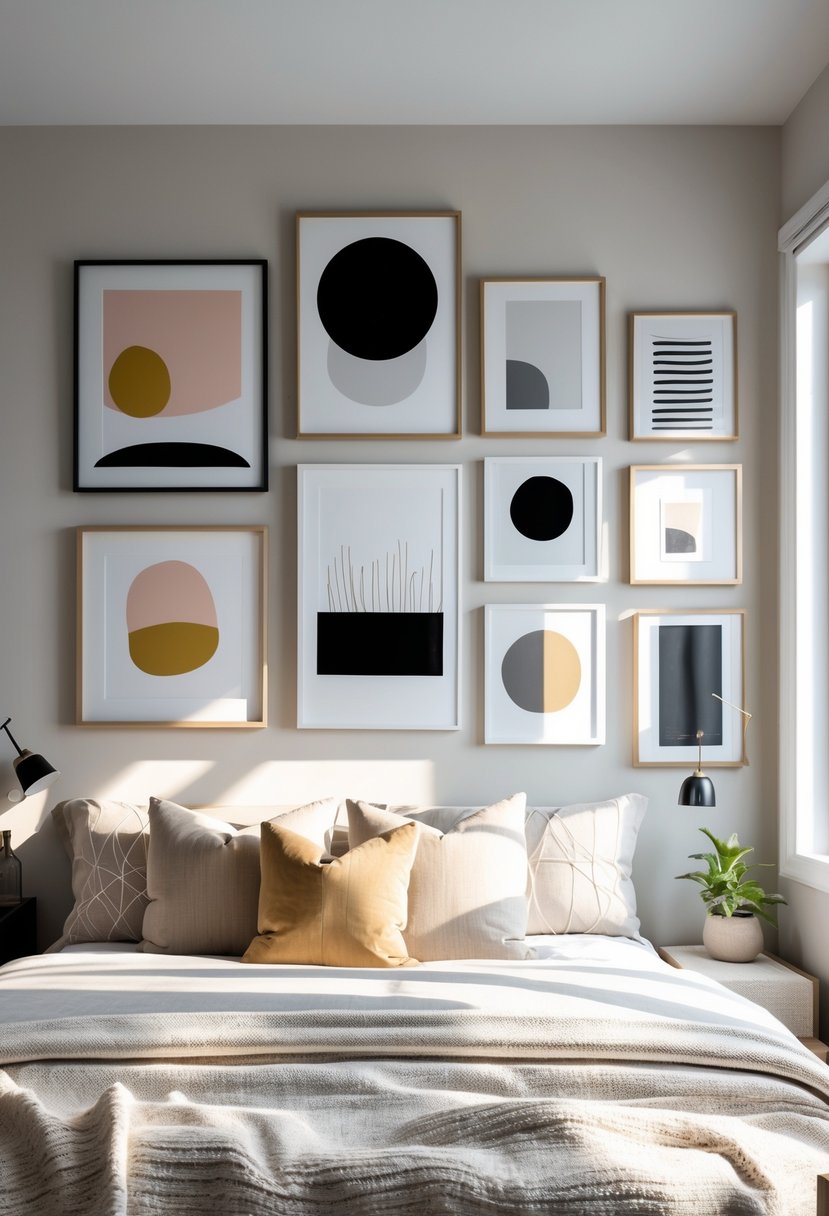
Use contrast, texture, and a clear anchor point to make a gallery wall feel planned. Pick a color or material to repeat, and place the largest or most detailed piece where the eye naturally rests.
Mixing Frame Styles and Materials
Mix wood, metal, and painted frames to add depth without chaos. Choose one unifying element—same color mat, matching frame finish, or a repeated small print—to keep the arrangement cohesive. Place heavier, darker frames toward the bottom or center to ground the composition.
Lay frames out on the floor first. Stand back and move pieces until the balance feels right, then trace outlines on kraft paper and tape to the wall. Use varied frame sizes but keep consistent spacing (2–3 inches) for a tidy look.
Include one non-frame object, like a woven wall hanging or small mirror, to add texture. This helps tie “mixing frame styles” into a deliberate bedroom decor choice rather than a random collection.
Minimalist Gallery Wall Approaches
Stick to 2–6 pieces for a minimalist gallery wall. Use simple black or white frames and neutral mats to keep the focus on the artwork. Center the group above the bed or dresser for a clear focal point.
Choose art with similar tones or a shared theme—line drawings, botanical prints, or monochrome photos work well. Arrange pieces in a loose grid or linear row to keep lines clean and predictable.
For very small rooms, lean on vertical arrangements to raise the eye and make ceilings feel taller. Keep spacing tight (1–2 inches) and avoid ornate frames to maintain the minimalist gallery wall look.
Vintage and Eclectic Gallery Walls
Start with a statement vintage piece—an ornate portrait or an antique map—then build around it with smaller prints and found objects. Mix gilt frames, dark wood, and distressed finishes for authentic vintage character.
Use varied frame sizes and place items closer together to create a cozy, collected-over-time feel. Layer a small shelf or shadow box into the layout to hold postcards, vintage keys, or a small plant.
Balance busy patterns or bold colors by repeating one color from the main piece across several smaller works. This keeps the bedroom gallery wall eclectic but still tied to your overall bedroom decor.
