
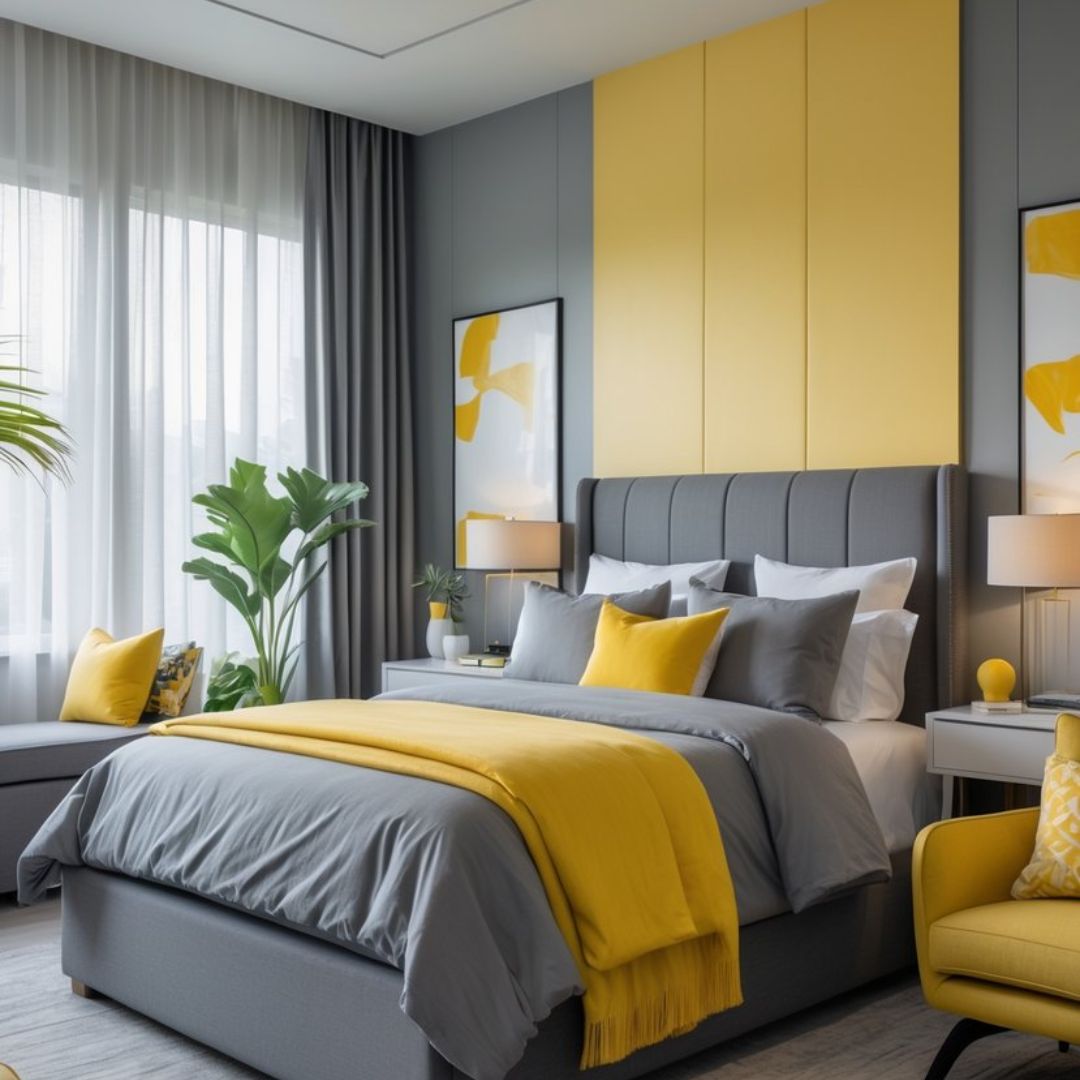
You can create a calm, modern master bedroom that still feels warm and lively by balancing grey walls with yellow bedding and accents. A grey and yellow bedroom works because the grey soothes while yellow adds brightness, so use grey as your base and add yellow in pillows, throws, lighting, or a single accent wall to get an instant lift.
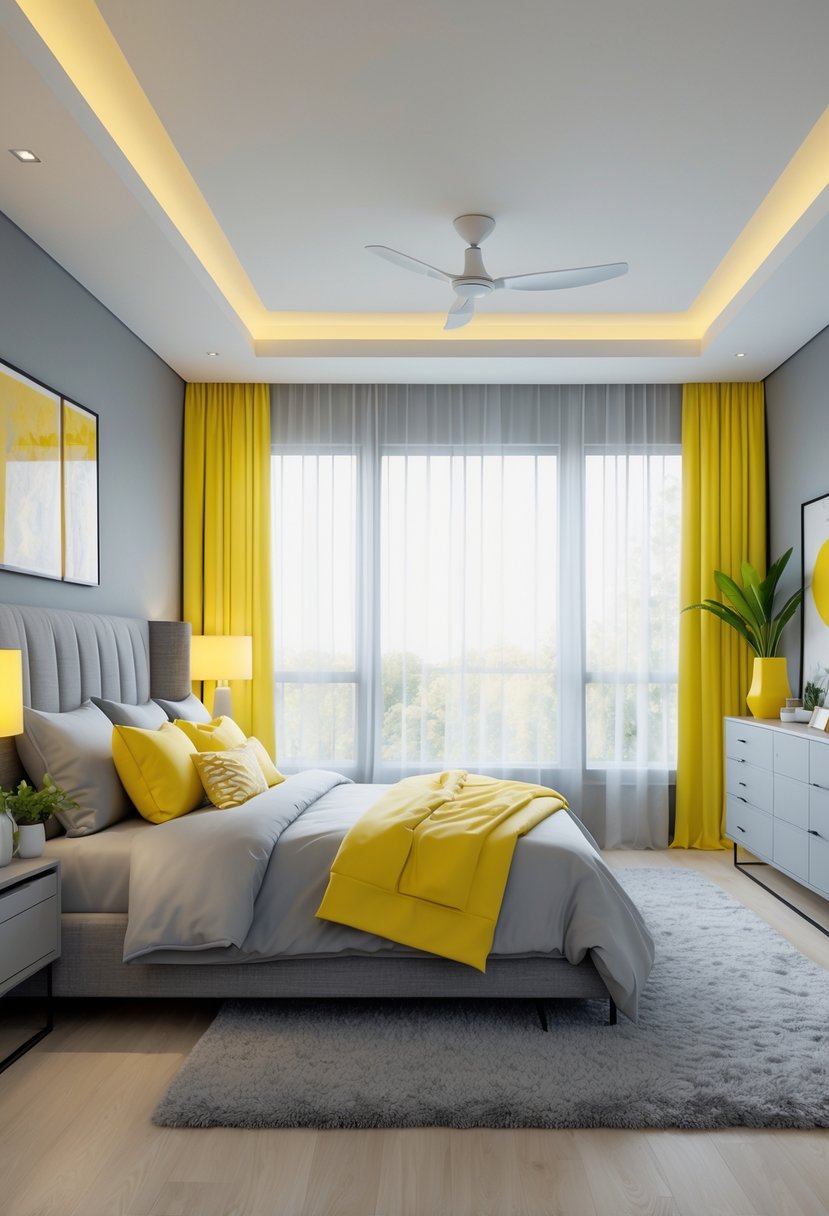
This article shows nine practical ways to use that yellow and gray color scheme, from wall ideas and focal furniture to lighting and small decor touches, so you can plan a cohesive bedroom design that fits your style. Expect tips on choosing the right grey tone, placing bold yellow elements without overwhelming the space, and making a striking focal point with furniture and lighting.
Essential Color Schemes and Wall Inspiration
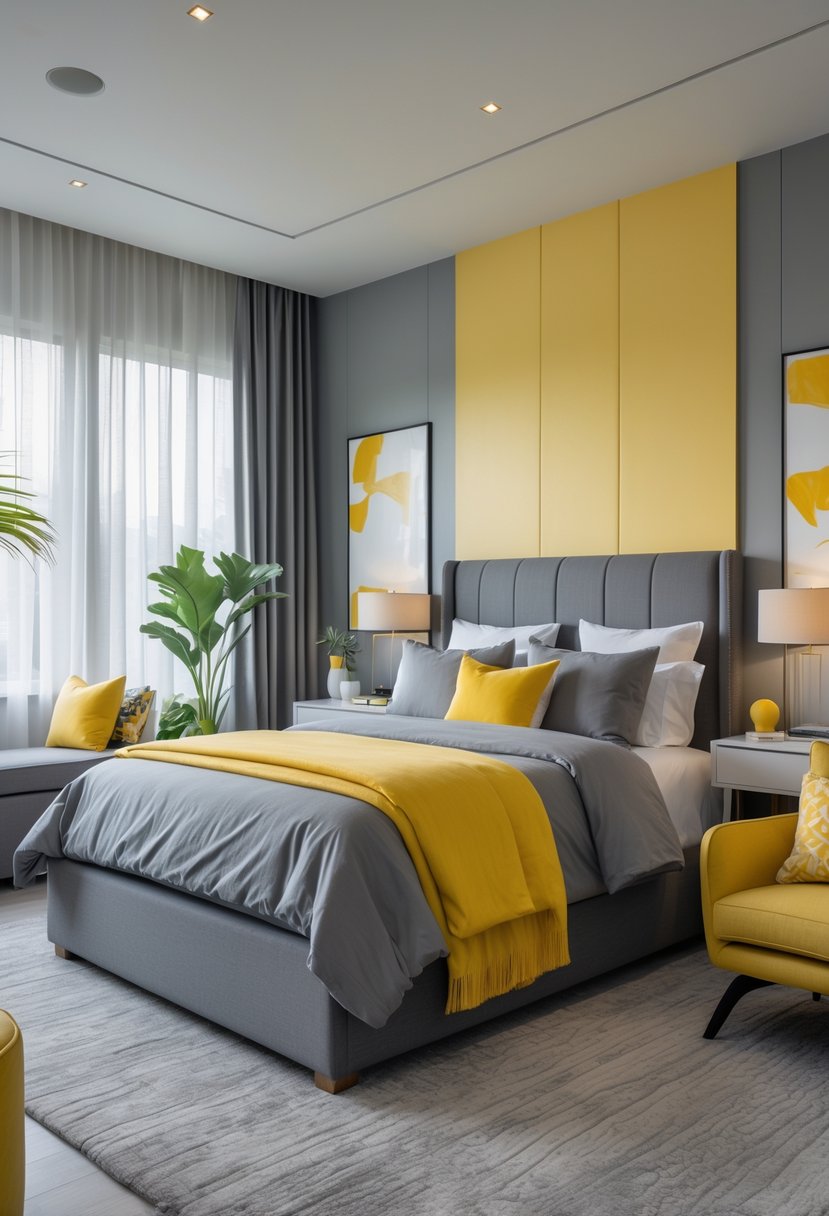
Choose a main wall color that sets the room’s mood and pick one strong accent to anchor furniture and textiles. Use paint placement, contrast level, and finish (matte vs. eggshell) to control light and warmth.
Grey Walls With Yellow Accents
Pick a specific grey tone for your walls—light warm grey for soft light, or charcoal for drama. Paint three walls in that grey and save the brightest yellow for pillows, a throw, or a bed runner so the color pops without overwhelming the room.
Layer textures: velvet cushions, a wool rug, and matte-painted walls give depth. Add white trim or a white ceiling to keep the room crisp and avoid a heavy feel. If you want a hint of green, introduce a small plant or an olive-green cushion to bridge grey and yellow naturally.
Use finishes wisely. Matte grey walls hide imperfections; silk or satin yellow textiles catch light. Keep large furniture neutral—grey or white—so yellow stays the accent, not the background.
Yellow Accent Walls and Feature Walls
A single yellow feature wall behind the bed creates a focal point and brings warmth. Choose mustard or ochre for a cozy look, or pale buttery yellow for a light, airy feel. Paint only the headboard wall to keep the room balanced.
Mix the feature wall with grey on surrounding walls to maintain calm. You can add a patterned wallpaper in yellow and grey for graphic interest. For a modern touch, add vertical or geometric panels on the yellow wall in a slightly darker grey to create contrast.
Balance brightness with white elements: white bedding, white trim, or a white ceiling prevent the yellow wall from feeling too intense. If you use green accents, pick muted greens so they harmonize with both yellow and grey.
Focal Points and Statement Furnishings
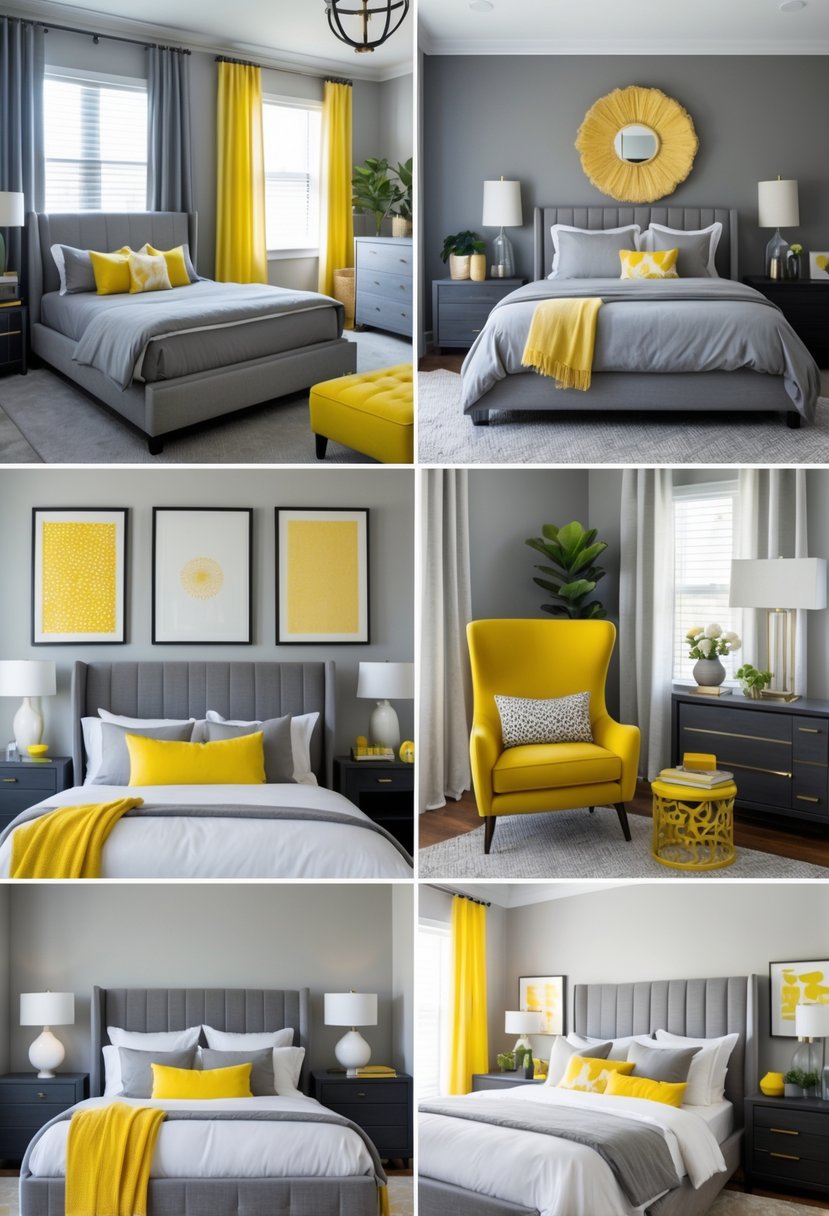
Pick one strong piece to anchor the room and one or two smaller pieces to reinforce the palette. Aim for texture and contrast rather than matching everything exactly.
Velvet and Upholstered Headboards
A velvet headboard reads luxe and anchors the room visually. Choose a deep mustard or sunflower yellow upholstered headboard for instant warmth against cool gray walls. Velvet reflects light softly, so it looks rich even in dim light.
If you pick a yellow upholstered bed, balance it with neutral gray bedding in varied textures—linen, knit, or a cotton sateen—to avoid a flat look. Consider a tall tufted velvet headboard to add height and drama, or a low channel-tufted style for a sleeker, modern feel.
Match scale to the room. In a large master, a wide, padded headboard works; in a small room, a slim upholstered headboard saves space. Add a pair of slim bedside lamps or wall sconces to frame the headboard without competing with it.
Bright Bedding and Textiles
Use bright yellow bedding or accent pieces to draw the eye to the bed as the focal point. A yellow duvet or quilt paired with gray sheets creates clear contrast and keeps the palette cohesive. Mix patterns sparingly—one floral or geometric throw pillow in yellow can unify solid gray bedding.
Add yellow throw pillows and a soft yellow throw at the foot of the bed to layer color. If you want a seating area, a yellow armchair near a window creates a second focal spot and ties into the bed’s accents. Keep large surfaces like curtains or area rugs in muted gray tones so the yellow elements pop.
Texture matters: pair smooth gray bedding with a chunky knit yellow throw or velvet yellow cushions to create depth. This mix keeps the room lively without feeling cluttered.
Lighting, Accessories, and Decor Touches
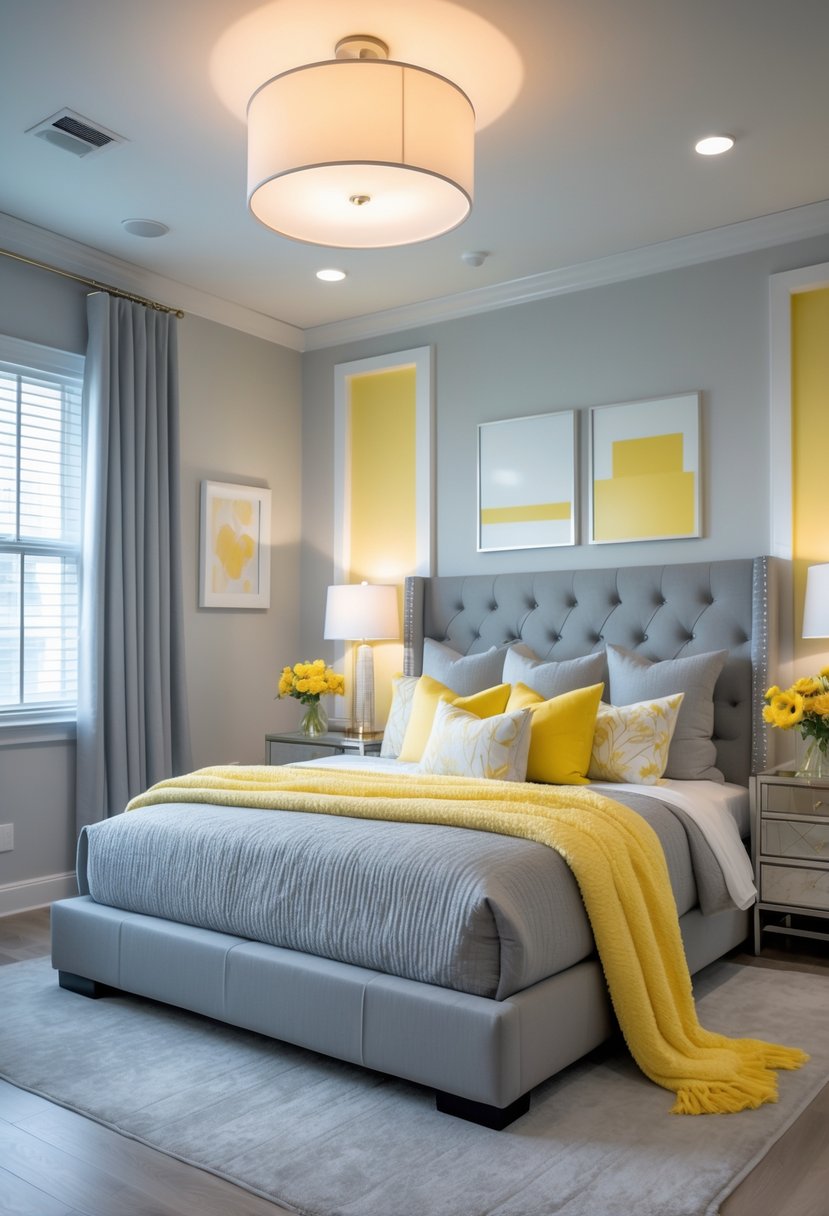
Focus on layered light, metal finishes, and a few bright textiles to make the grey calm feel warm and lively. Pick one dominant metal and two yellow accents to keep the room cohesive.
Gold and Yellow Lighting Fixtures
Choose a gold pendant or chandelier as a room anchor. A warm gold finish on a central fixture adds shine against dove or charcoal grey walls and keeps the palette elegant. For task lighting, place yellow bedside lamps with fabric shades on each nightstand. Pick lamps with a small gold base or gold detailing to tie them to the main fixture.
Use dimmers on overhead lights and separate switches for bedside lamps. This gives you control for reading, mood lighting, and bright tasks. For balance, match the bulb color temperature: 2700K–3000K keeps yellow tones soft and avoids a harsh, cool look.
Consider a yellow-accented floor lamp by a reading chair. That single pop of color coordinates with yellow throw pillows without overwhelming the room. Keep fixture styles similar—mid-century, modern, or traditional—to avoid visual clash.
Accent Rugs and Area Rugs
Place a yellow area rug under the bed or at the foot to ground the space. A rug with a muted yellow pattern works well on grey floors; it adds warmth while hiding wear. If your bedframe sits low, choose a rug that extends at least 24 inches beyond each side for visual balance.
Choose rug materials for your needs: wool for durability and texture, or flatweave for easy cleaning. Match rug pattern scale to other textiles—large geometric rugs suit simple bedding; smaller patterns pair well with patterned throw pillows.
Coordinate rug color with other yellow bedroom decor. If you already have yellow throw pillows or lamps, pick a rug with the same yellow tone or a complementary mustard. This creates rhythm across the room and makes the grey background feel intentional.
Design Styles and Space Ideas
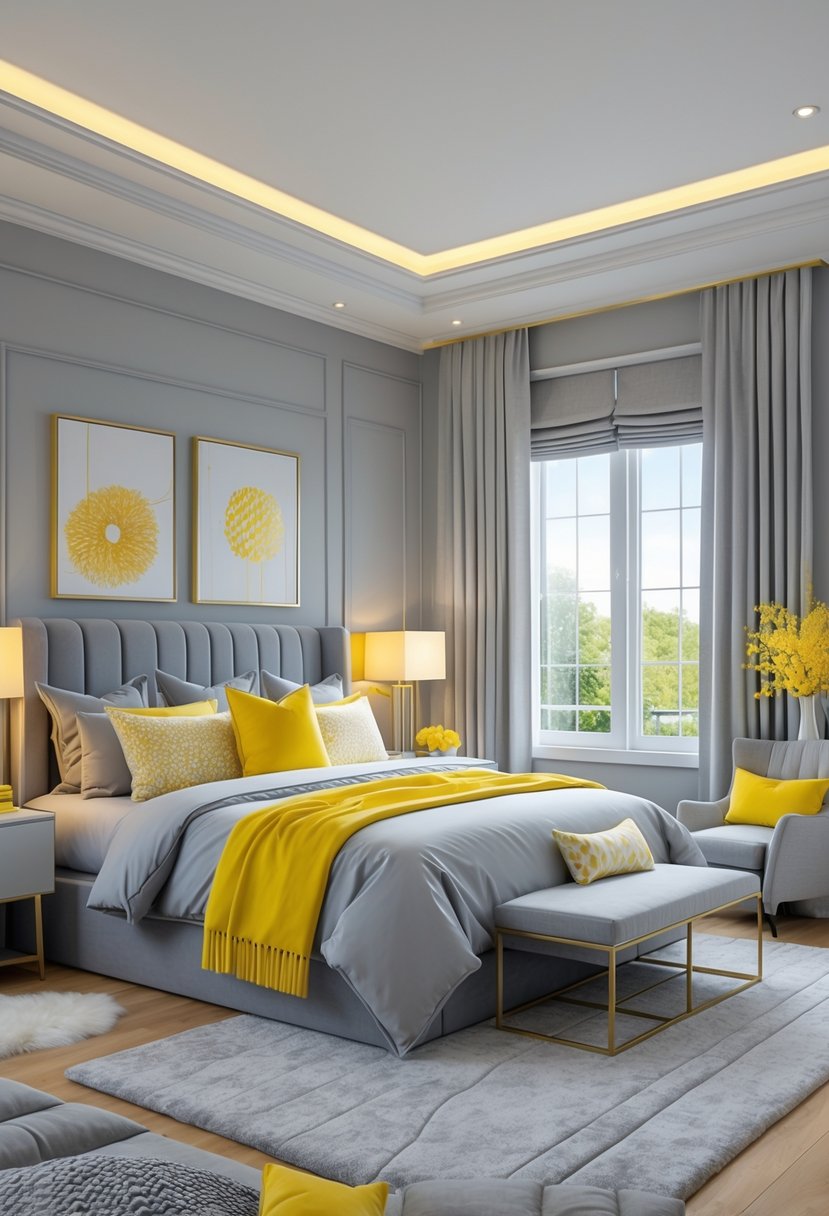
Choose finishes, lighting, and furniture that match the function you want: calm and simple for daily rest, warm and textured for a cozy farmhouse, or neutral and welcoming for guests. Focus on paint tones, accent placement, and practical storage to make the grey and yellow palette work for your layout.
Modern and Minimalist Master Bedrooms
Pick a cool light grey for walls and use mustard or warm yellow only in small, bold accents like a headboard cushion, a single piece of art, or a throw blanket. Keep furniture low-profile and with clean lines — think platform bed, slim nightstands, and built-in wardrobes to reduce visual clutter.
Add one sculptural light fixture and hidden LED strips behind the headboard for layered light without extra lamps. Use textiles in smooth fabrics (linen or cotton) and one textured rug to add warmth without busy patterns.
Limit decor to 3–5 items: a bedside lamp, a mirror, a plant, and a framed print. This keeps the gray and yellow bedroom calm and stylish while keeping cleaning and upkeep simple.
Farmhouse and Traditional Bedrooms
Start with a soft warm grey on walls or shiplap and layer in yellow through textiles like quilts, cushions, and curtains for a classic farmhouse bedroom feel. Choose wooden furniture — a distressed dresser, paneled headboard, and bedside tables — to bring in rustic texture that pairs well with both grey and yellow.
Add traditional elements: patterned rugs, pleated curtains, and brass or matte black hardware. Use muted mustard or butter yellow rather than neon tones to keep the look grounded.
Include practical touches like a bench at the foot of the bed, storage baskets, and a cozy reading chair to make the space feel lived-in and functional.
Guest Bedrooms and Flexible Spaces
Aim for a neutral grey base to suit many guests, then add yellow accents that are easy to swap: pillows, throws, and small decor pieces. Provide flexible furniture like a sofa bed or daybed and include a luggage rack and clear storage options for short stays.
Keep lighting adjustable with a bedside dimmer and a plug-in reading lamp so guests can control brightness. Offer practical amenities: extra blankets in a woven basket, a mirror, and a small tray for electronics.
This approach makes your yellow and gray bedroom feel welcoming without committing to a single strong style; you can shift it between guest, office, or nursery with small changes.
