
You’ll learn why National Tartan Day on April 6 matters and how it links to Scottish heritage, from the 1320 Declaration of Arbroath to today’s parades and pipe bands. This day honors Scottish history and the global contributions of people of Scottish descent, and it gives you a simple way to join those celebrations.

Explore how the holiday began, why April 6 was chosen, and how communities around the world mark the occasion with music, dance, and tartan. Expect clear, practical tips for taking part—whether you want to wear a kilt, find a clan, or join a local event—and a short history that explains the day’s meaning.
Origins and Historical Significance

This section explains why April 6 links to Scotland’s fight for independence, how tartan and clan dress grew into symbols, and how the Canadian-born celebration spread through Scottish communities worldwide.
The Role of the Declaration of Arbroath
You should know that National Tartan Day uses April 6 because of the Declaration of Arbroath, signed in 1320 at Arbroath Abbey. That document asserted Scotland’s right to self-rule and pushed back against English claims.
People connect the Declaration to later democratic ideas, including influence on the American Revolution and the U.S. founders.
The date ties Scottish identity and political freedom to modern celebrations. When organizers chose April 6, they aimed to honor both historical sovereignty and the many Scots who helped build other nations. That link makes Tartan Day more than fashion or pageantry; it frames tartan as a symbol of national resilience and legal claims to nationhood.
Evolution of Tartan and Clan Traditions
Tartan began as woven patterns used regionally, not as fixed “clan” designs. You should note that the idea of a single clan tartan became popular in the 18th and 19th centuries. This shift followed Romantic interest in Highland culture and a growing market for “ancient tartan” styles.
Highland dress—kilts, plaids, and specific tartans—became a public marker of Scottish identity.
The Act of Proscription after the 1745 Jacobite Rising banned Highland dress for a time, which later fed revivalist sentiment when bans lifted. Today clan tartans and Highland dress function as heritage signals for people of Scottish ancestry. They also shape how you recognize Scottish descent at events, from parades to family gatherings.
Spread to the Scottish Diaspora
Tartan Day began in Canada in the 1980s and officially moved into U.S. observance in the 1990s. You will see the holiday celebrated on April 6 in the United States and Canada because organizers wanted a common date tied to the Declaration of Arbroath.
Communities in Australia and New Zealand mark Scottish heritage on other dates, often July 1, reflecting local histories.
The celebration spread through clan societies, cultural groups, and festivals. Scottish-Americans and Scottish-Canadians use Tartan Day to honor contributions in politics, business, and culture. Events often include parades, pipe bands, and clan tents where people trace family tartans and register Scottish ancestry.
Modern Celebrations and Global Observance
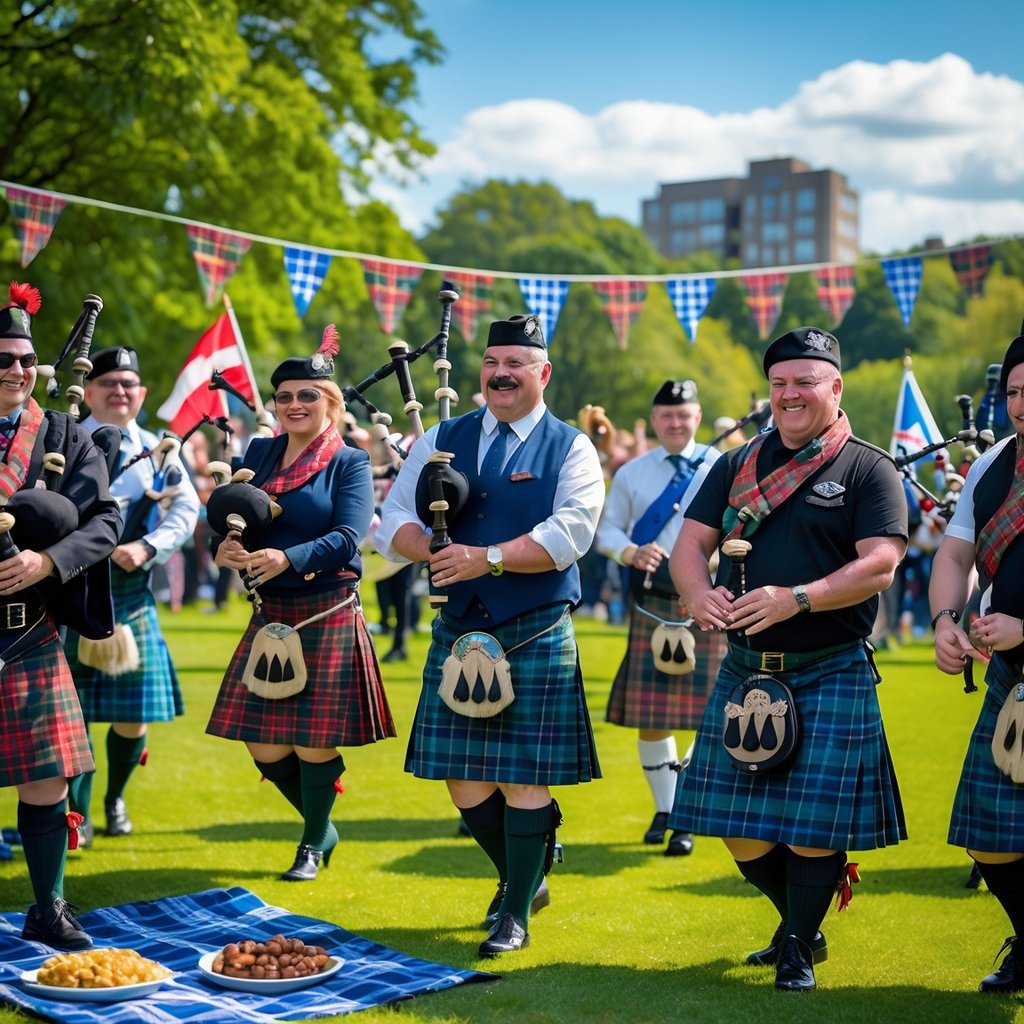
National Tartan Day events mix formal ceremonies with lively public festivals. You’ll find government recognitions, parades, clan gatherings, music, dancing, and food across North America and in other countries with Scottish ties.
National Tartan Day in the United States
You can trace the U.S. observance to Senate Resolution 155 and later House and presidential recognitions. Washington, D.C., and New York host major events that highlight Scottish American history and the link to the Declaration of Arbroath and American independence.
Many cities mark April 6 with flag-raising ceremonies, speeches by elected officials, and readings that connect Scottish ideas of liberty to the American Declaration of Independence. The National Capital Tartan Day Committee organizes events in Washington, DC and Alexandria, VA. Scottish societies, clan associations, and groups such as Scottish Heritage USA and the American-Scottish Foundation run formal and community programs.
You’ll often see tartan clothing, kilts, sporrans, and Balmoral bonnets at ceremonies. Pipe bands and bagpipes accompany official events and memorials. Local museums and libraries sometimes run exhibits on Scottish migration and Scottish Americans’ contributions.
Highlight Events and Parades Worldwide
Major parades attract global attention and TV coverage, with NYC Tartan Week and the Tartan Day Parade among the most visible. You can attend Tartan Week events—lectures, concerts, and the parade—usually held in early April with high-profile grand marshals.
New York’s parade and Tartan Week draw clan societies, pipe bands, and celebrity guests. Other large events include Tartan Day South in South Carolina and regional celebrations in Nova Scotia, where Scottish heritage is strong. International Tartan Day activities occur in Canada, Australia, and parts of Europe, often coordinated by Scottish government offices, Scottish Development International, or local Scottish societies.
Event schedules often list concerts, film screenings, and ceilidhs. You’ll find family-friendly activities, vendor markets selling tartan clothing and Scottish food like haggis, and information booths from the Scottish Register of Tartans and clan gatherings.
Traditions, Highland Games, and Cultural Performances
Highland games, dance, and music form the cultural core of many celebrations. You’ll see competitions in caber toss, heavy stone events, and Highland dancing judged under established standards.
Pipe bands and solo piping contests showcase bagpipes and traditional tunes. Highland dance performances feature national steps and solo dances, often linked to clan demonstrations. Clan societies set up tents for genealogy, tartan identification, and membership drives. You can learn how to wear tartan properly, find your family tartan via the Register of Tartans, and buy kilts, sporrans, and other gear.
Cultural programs also include Robert Burns readings, Gaelic singing, and workshops on Scottish history and crafts. Vendors serve traditional foods and teach festival-goers how to celebrate Tartan Day with music, dance, and community connection.
