
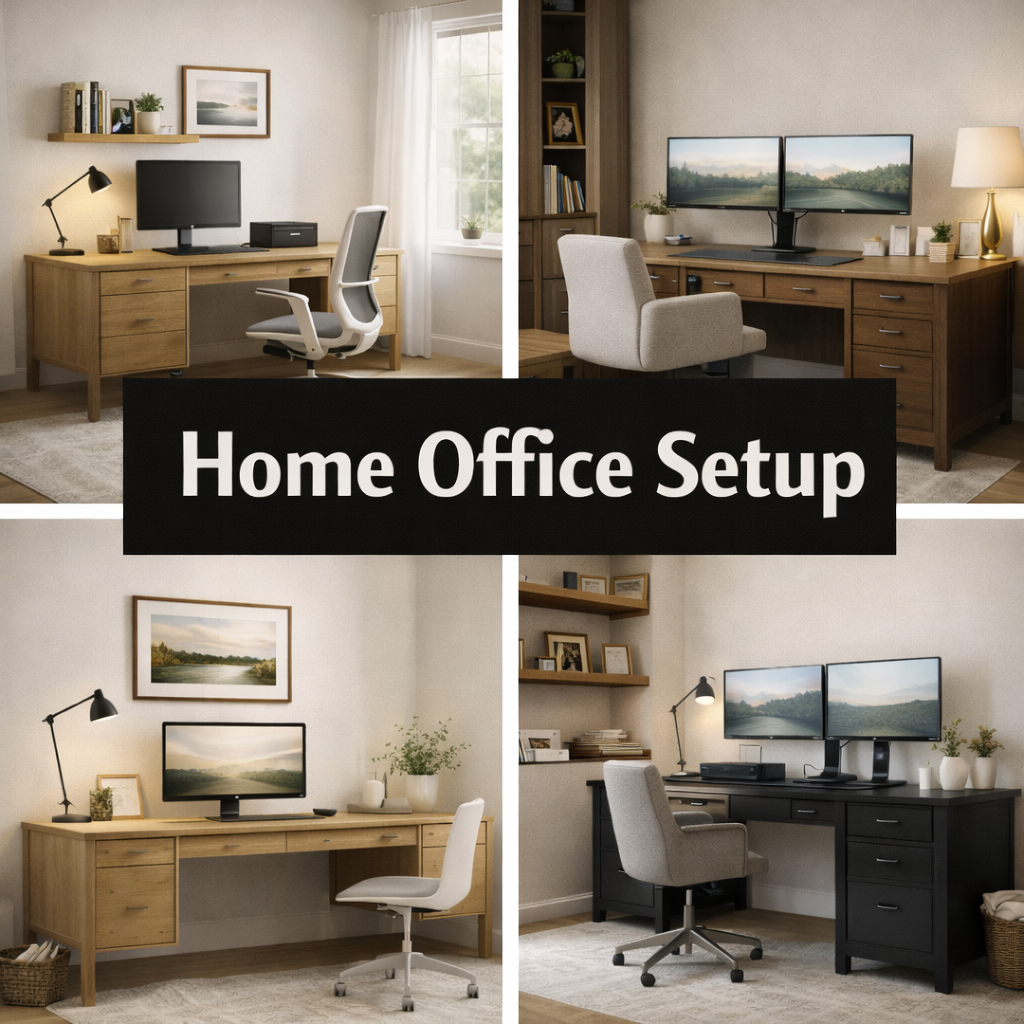
The way we work has transformed dramatically in recent years. For millions of professionals, the daily commute now stretches from bedroom to home office, from kitchen table to dedicated workspace. This shift has made thoughtful home office setup essential not just for productivity but for maintaining boundaries between professional and personal life.
Creating an effective workspace at home involves more than parking a desk in an unused corner. Successful home offices balance ergonomic function with personal expression, accommodating focused work while reflecting individual style. Whether you’re furnishing a dedicated room or carving workspace from shared areas, these strategies will help you create environment supporting both productivity and well-being.
Assessing Your Spatial Reality
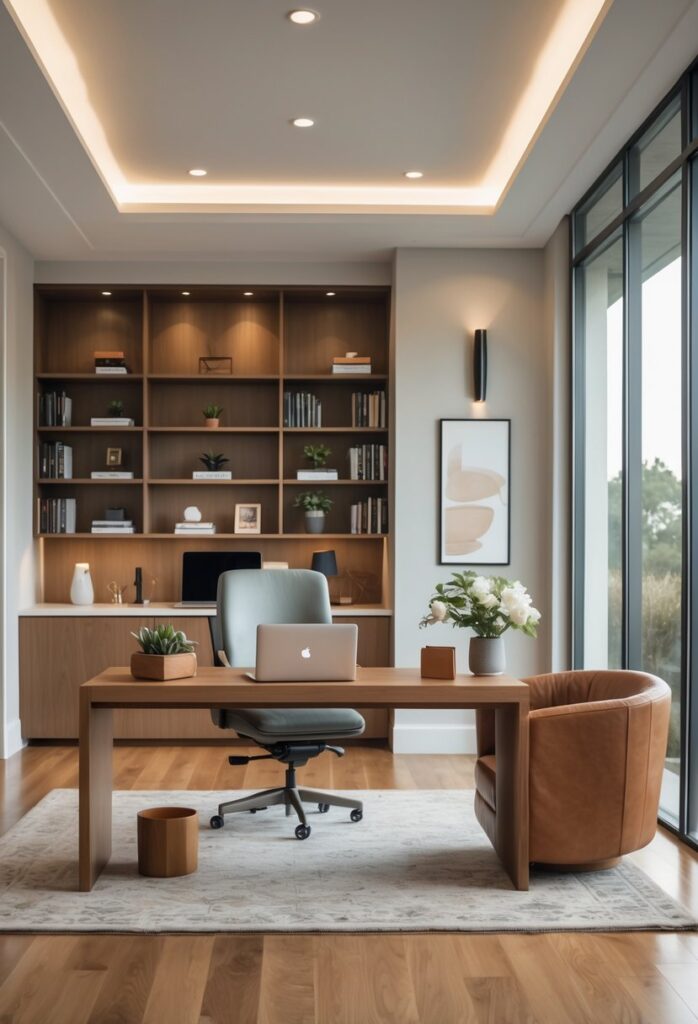
Before purchasing equipment or planning layouts, honestly evaluate available space and how it might best serve your work style.
Dedicated rooms offer obvious advantages—closing doors separates work from home life, and permanent setups remain undisturbed between work sessions. Measure carefully, noting window placements, outlet locations, and traffic patterns through adjacent spaces.
Shared spaces require more creative approaches. Living room corners, bedroom alcoves, and dining areas pressed into service need strategies maintaining home functionality during off-hours. Furniture that works for both contexts—attractive desks, concealed storage—proves essential.
Small home office ideas maximize limited square footage through vertical storage, compact furniture, and multifunctional pieces. Wall-mounted desks fold away when not working. Shelving reaches ceiling for storage without floor consumption.
Ergonomic Foundations for Health and Comfort
Physical comfort during long work hours directly impacts both productivity and long-term health. Investing in appropriate ergonomic foundations proves worthwhile.
Chair selection ranks among most important decisions. Look for adjustable height, lumbar support, and seat depth accommodating your specific proportions. Armrests should allow shoulders to relax while typing. Quality used office furniture often provides better ergonomics at lower cost than new budget options.
Desk height ideally allows elbows at ninety degrees when typing, feet flat on floor. Standard desks measure twenty-nine to thirty inches, appropriate for average-height users. Taller individuals may need risers; shorter users may benefit from keyboard trays or adjustable-height desks.
Monitor positioning prevents neck strain through proper placement. Screen tops at or slightly below eye level, arms-length distance. Laptops used as primary computers need risers bringing screens to correct height, with separate keyboard and mouse for comfortable typing.
Lighting considerations reduce eye strain while supporting circadian rhythms. Natural light proves ideal but requires glare management on screens. Task lighting illuminates documents without screen reflection. Avoid single overhead sources casting unflattering shadows.
Home Office Design for Productivity
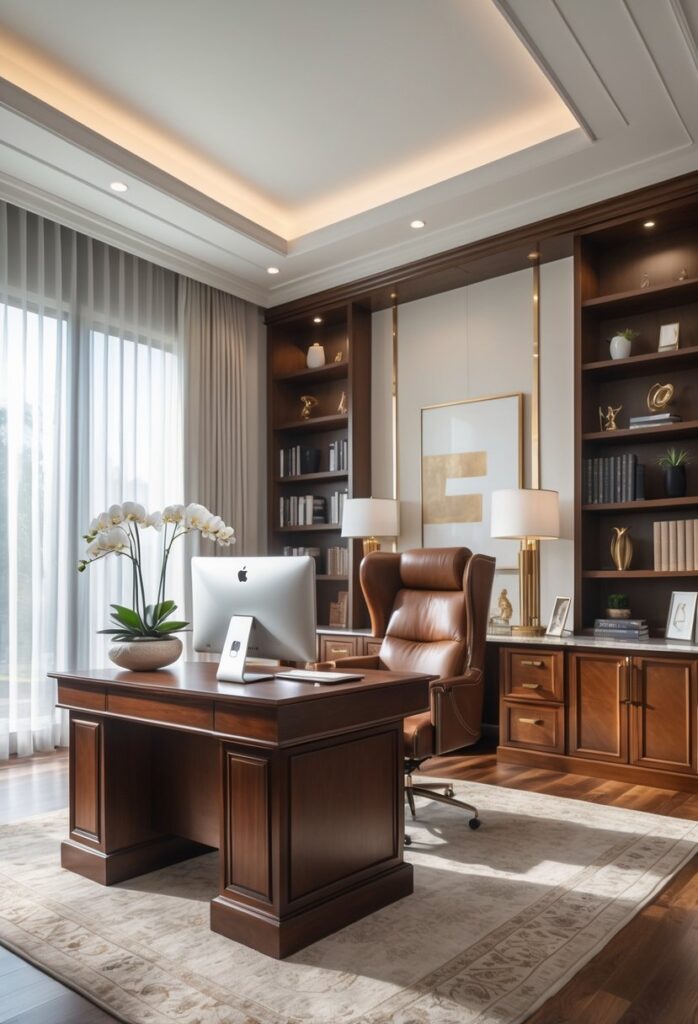
Home office design extends beyond furniture selection to encompass spatial organization supporting focused work.
Zone planning divides spaces into functional areas. Primary work zone centered at desk. Reference zone holding books and files within easy reach. Supply zone storing consumables. Break zone offering screen-free relaxation during brief pauses.
Traffic flow should avoid distractions from household movement. Position desks away from doors if family members pass frequently. Consider sight lines—what you see while working affects concentration.
Acoustic considerations matter enormously for focus. Hard surfaces reflect sound, increasing perceived noise. Area rugs, curtains, and upholstered furniture absorb sound. White noise machines or fans mask intermittent disturbances.
Home Office Decor Reflecting Personal Style
Home office decor transforms functional spaces into environments inspiring creativity and motivation. Your workspace should feel like yours.
Color psychology influences mood and productivity. Blues promote calm focus suitable for analytical work. Greens reduce eye strain while encouraging balance. Yellows spark creativity for brainstorming roles. Neutrals provide calm backdrops allowing accent colors through accessories.
Art and inspiration displayed intentionally supports work mindset. Pieces motivating achievement, calm during stress, or sparking creative thinking belong where you’ll see them during work hours. Rotate displays periodically for fresh perspective.
Plants improve air quality while adding life to workspaces. Low-maintenance options including snake plants, porthos, and ZZ plants tolerate varied light conditions. Small succulents require minimal attention while providing organic presence.
Personal objects displayed with intention—family photos, meaningful objects, achievement reminders—connect workspace to larger life purpose. Edit thoughtfully rather than cluttering surfaces.
Home Office Aesthetic Development
Home office aesthetic emerges from coherent choices expressing your style while supporting work function.
Modern aesthetics emphasize clean lines, minimal ornamentation, and streamlined furniture. White or neutral palettes with black accents create crisp, professional appearance. Hidden storage maintains uncluttered surfaces.
Cozy home office approaches embrace warmth through layered textures, warm lighting, and comfortable furnishings. Area rugs, upholstered chairs, and soft window treatments soften spaces. Warm paint colors and wood tones add organic comfort.
Scandinavian influences combine light colors, natural materials, and functional beauty. Pale wood desks, white walls, and simple storage create calm backdrops. Pops of color through accessories add personality without overwhelming.
Industrial elements including metal shelving, exposed bulbs, and utilitarian furniture suit creative professionals. Warm with wood tones and textiles prevents coldness.
Technology Integration for Seamless Work
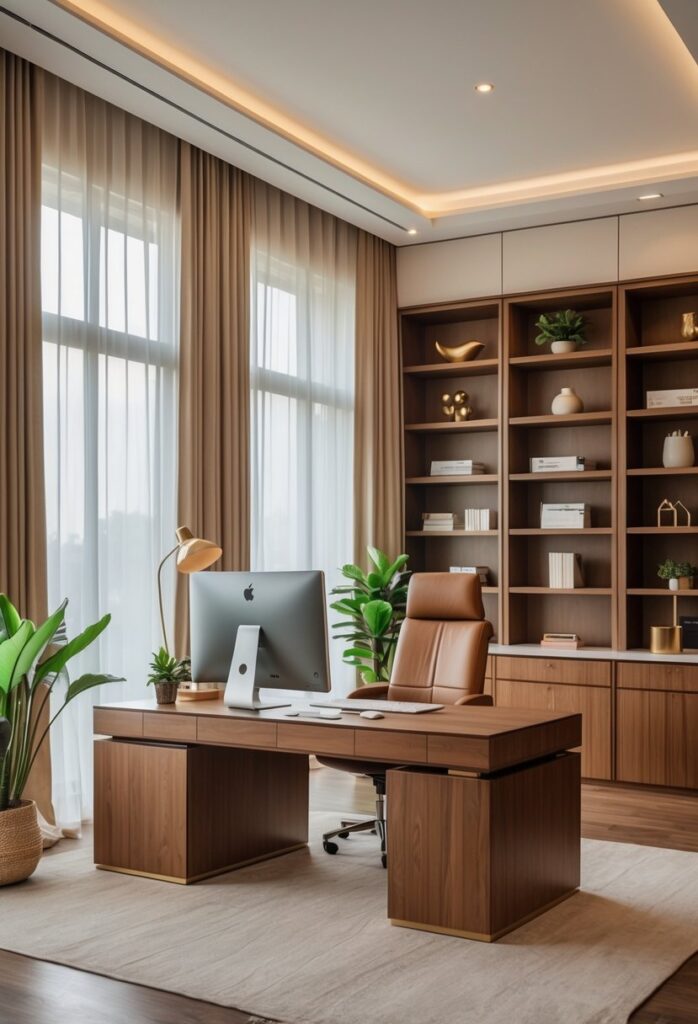
Modern work demands reliable technology appropriately integrated into workspaces.
Connectivity planning ensures adequate outlets, cable management, and WiFi coverage. Locate desks near outlets or plan extension cord routing. Cable trays, sleeves, or clips organize cords preventing tangles. Mesh WiFi systems improve coverage in larger homes.
Monitor selection depends on work type. Single large monitor suits many roles. Dual monitor setups increase efficiency for research-heavy work. Laptop users benefit from docking stations connecting peripherals through single cable.
Peripheral choices including keyboards, mice, and headsets affect daily comfort. Ergonomic options reduce strain during extended use. Wireless versions reduce cable clutter. Quality headsets improve video call clarity.
Backup power protects work during outages. Uninterruptible power supplies provide temporary power for safe shutdown. Surge protectors safeguard equipment from electrical spikes.
Storage Solutions Maintaining Order
Effective storage prevents clutter that distracts and stresses. Home office quarto (room) organization systems should accommodate your specific materials.
Vertical storage maximizes limited floor space. Floor-to-ceiling shelving holds books and files efficiently. Wall-mounted organizers keep supplies accessible without desk consumption. Pegboards with accessories customize to your tools.
Paper management systems prevent accumulation. Daily scanning reduces physical storage needs. Filing cabinets with hanging files organize necessary documents. Regular purging maintains system effectiveness.
Cable management eliminates visual chaos. Under-desk trays hide power strips and excess cord length. Cable sleeves bundle multiple cords into single manageable units. Labeling simplifies troubleshooting.
Supply organization keeps consumables accessible but contained. Drawer dividers customize spaces to your items. Clear containers show contents at glance. Regular inventory prevents duplicate purchases.
Creating Boundaries for Work-Life Balance
Home offices blur lines between professional and personal. Intentional boundaries protect both domains.
Physical separation through doors, screens, or room dividers signals transition between work and home. If dedicated space impossible, distinct rituals—closing laptop, covering equipment—mark work conclusion.
Scheduled hours communicated to household members establish expectations. Visual signals—open door, closed door, specific lighting—indicate availability without verbal reminders.
End-of-day routines clear workspace while signaling mental transition. Straightening desk, closing programs, covering equipment prepares space for next day while releasing work thoughts.
Separation strategies for small spaces include laptop storage in closed cabinets, desk facing away from relaxation areas, and consistent surfaces clearing after work hours.
Adapting to Your Work Style
Different work types require different spatial and equipment considerations. Tailor your work from home office to your specific needs.
Focused individual work benefits from minimal distractions, comfortable seating, and adequate task lighting. Noise-isolating headphones aid concentration. Visual access to outdoors provides restorative breaks.
Video call frequent flyers need flattering lighting, professional backdrops, and quality audio. Ring lights improve facial illumination. Bookshelves, art, or neutral walls create appropriate backgrounds. External microphones enhance sound quality.
Creative work thrives on inspiration displays, flexible workspaces, and material access. Whiteboards capture ideas. Varied surfaces accommodate different creative modes. Inspiration boards display reference materials.
Administrative tasks need efficient file access, comfortable data entry setups, and organized supply storage. Multiple screens increase efficiency. Scanner integration streamlines documentation.
Conclusion
Creating effective home office setup involves balancing multiple considerations—ergonomics, technology, storage, aesthetics, and boundaries. The most successful spaces support your specific work while reflecting your personal style and respecting your home context.
Begin with ergonomic foundations protecting your physical health during long work hours. Layer technology supporting seamless productivity. Develop storage systems maintaining order without constant attention. Finally, infuse personality through decor choices making space distinctly yours.
Your home office should serve both practical functions and larger purpose—enabling meaningful work while fitting harmoniously into your life. Thoughtful attention to each element creates workspace supporting professional success and personal well-being for years ahead.
