
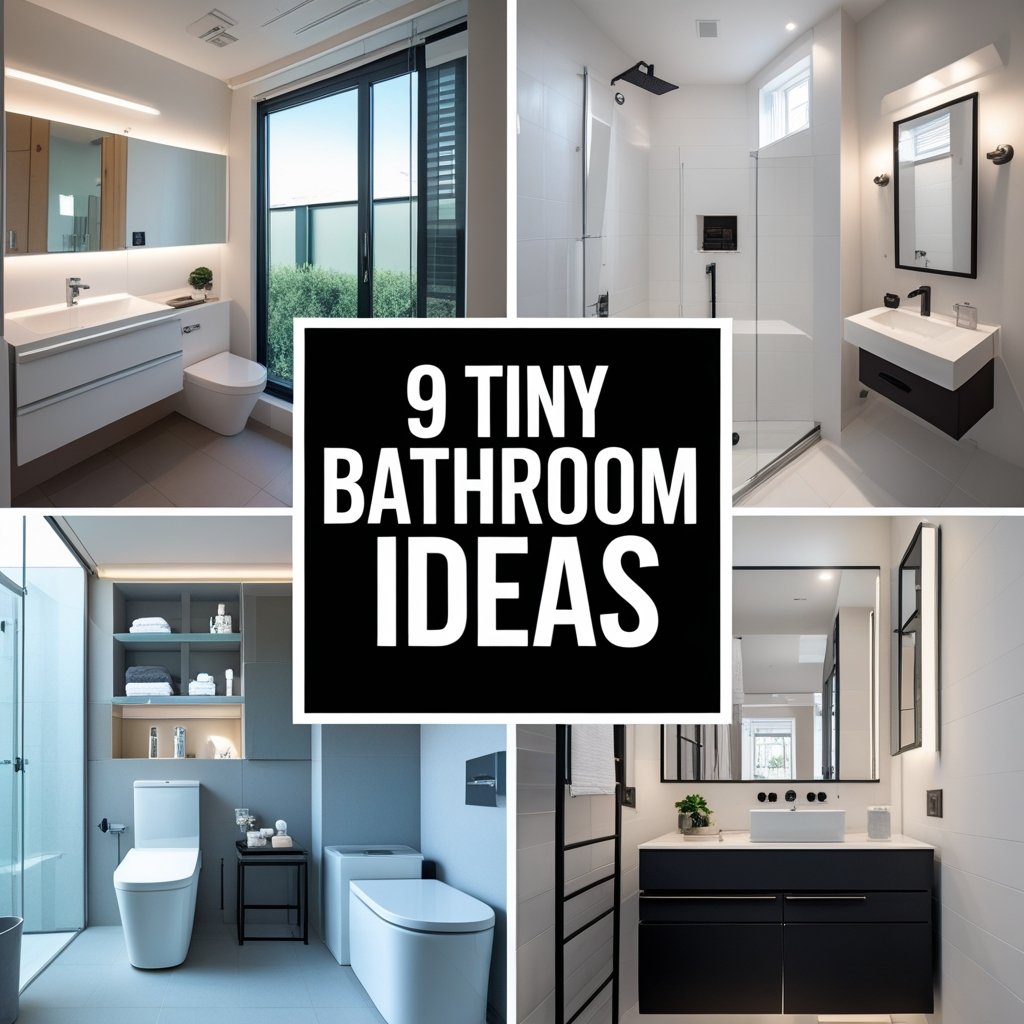
Small bathrooms often present challenges in terms of space and functionality. Many people struggle to make the most of these compact areas without sacrificing style or comfort.
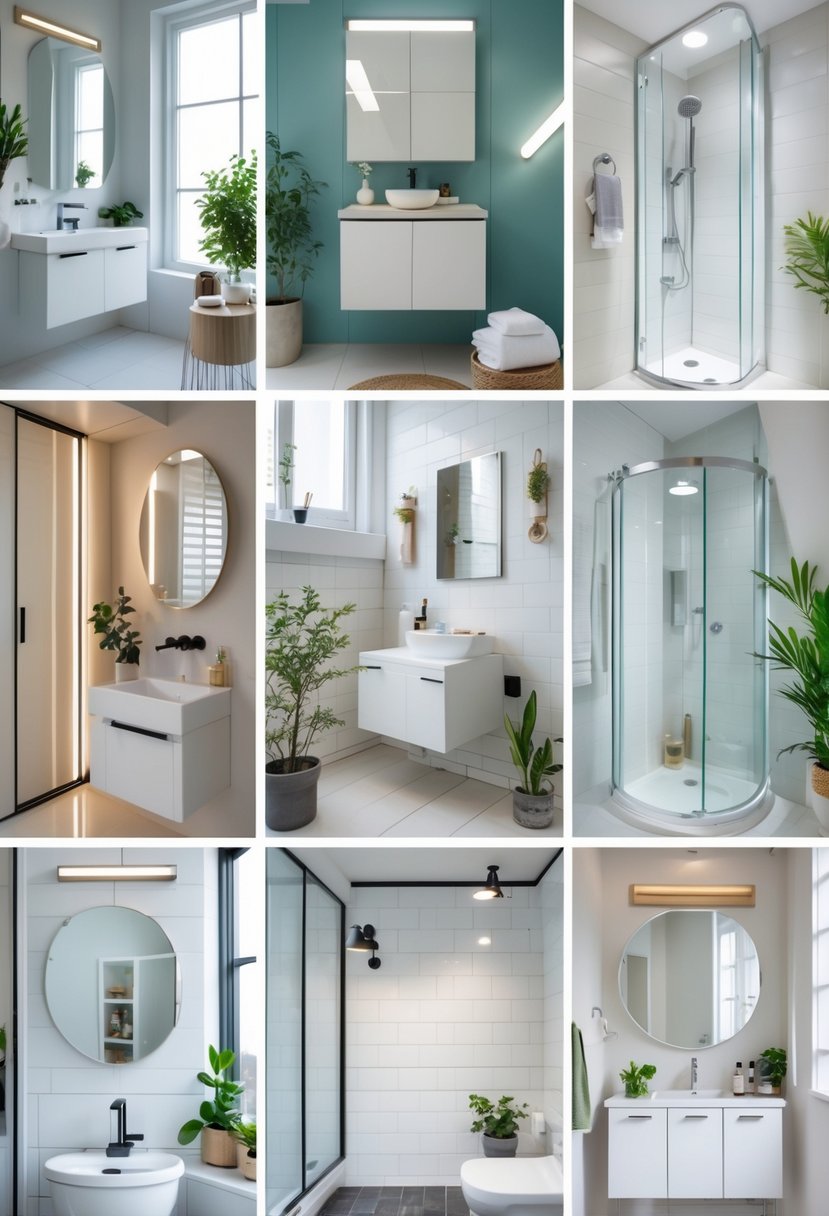
This article offers nine practical ideas to help maximize space and improve the look and feel of tiny bathrooms. By focusing on smart design choices, even the smallest bathroom can become both useful and attractive.
1) Install a pedestal sink to save floor space
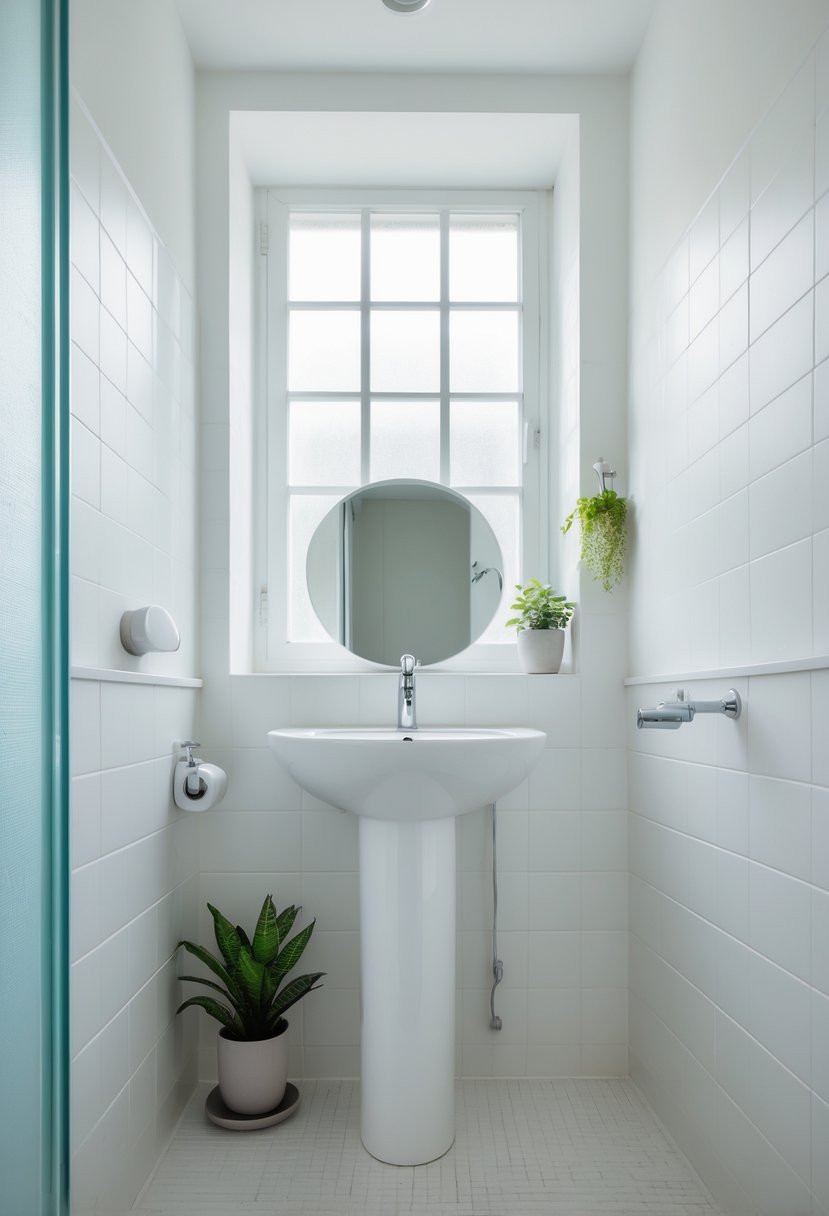
A pedestal sink is a smart choice for tiny bathrooms. It takes up less floor space than a traditional vanity, which helps the room feel more open. Because it stands on a single column, this type of sink keeps the floor visible and easier to clean.
Pedestal sinks usually have a slim design. This makes them ideal for narrow or awkward corners where a bulky cabinet wouldn’t fit. They also give the bathroom a simple, clean look that works well in both modern and classic styles.
One downside is that pedestal sinks offer little or no storage. To fix this, people often add shelves or small baskets nearby to hold essentials. This keeps the area organized without crowding the floor. By choosing a pedestal sink, a small bathroom can stay practical and visually uncluttered.
2) Use large mirrors to create an illusion of depth
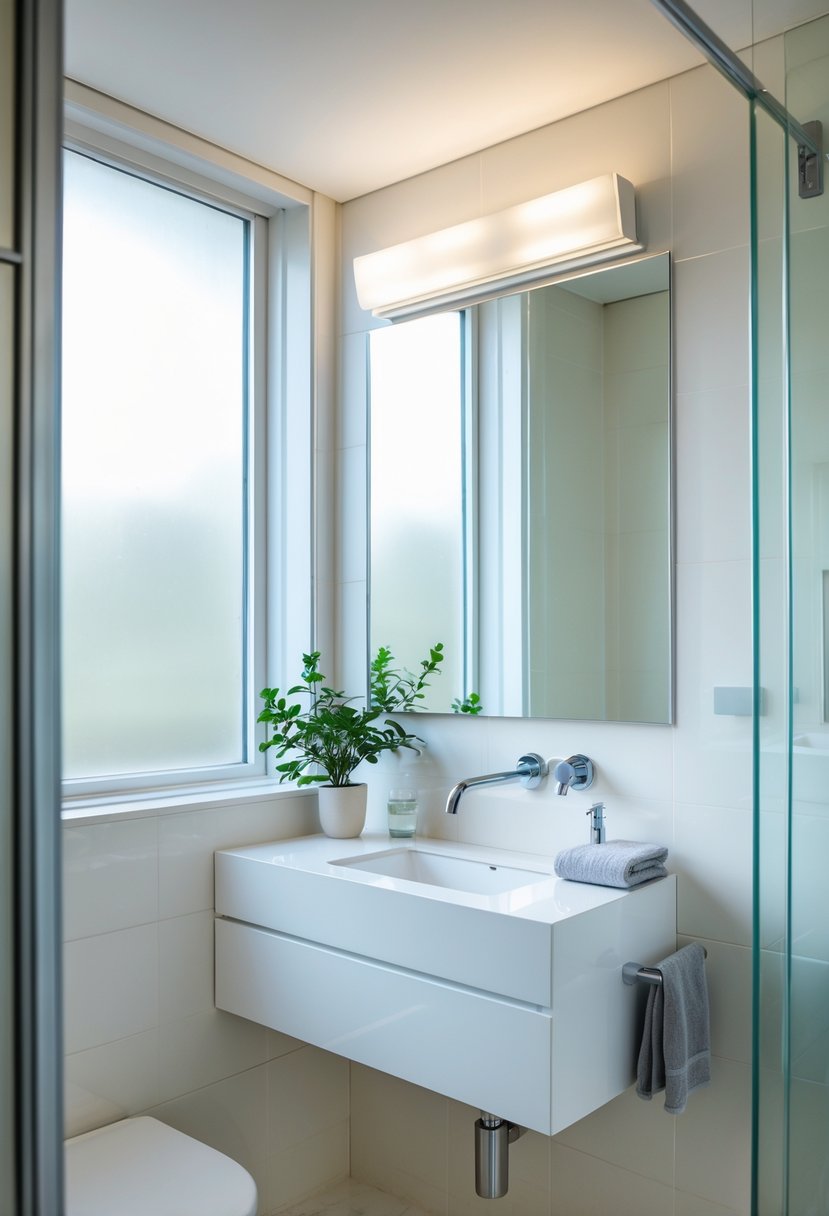
Large mirrors can make a tiny bathroom feel more open by reflecting light and space. When placed across from a window or light source, they bounce natural light around the room. This helps brighten the area and makes it appear larger than it really is.
A full wall mirror or a tall, frameless mirror works well to enhance depth. It tricks the eye into seeing more space beyond the room’s real boundaries. Floor-to-ceiling mirrors can also add height by creating the illusion of taller walls.
Mirrors placed behind lamps or light fixtures can boost light and add warmth. This layering of light makes the room feel less cramped. Grouping several mirrors together is another option, creating a gallery effect that opens up the space visually.
Choosing the right size is important. Oversized mirrors maximize the illusion of roominess, while smaller mirrors placed thoughtfully can contribute to the overall depth. Using large mirrors strategically is one of the simplest ways to improve a tiny bathroom without major changes.
3) Opt for wall-mounted toilets to free up room
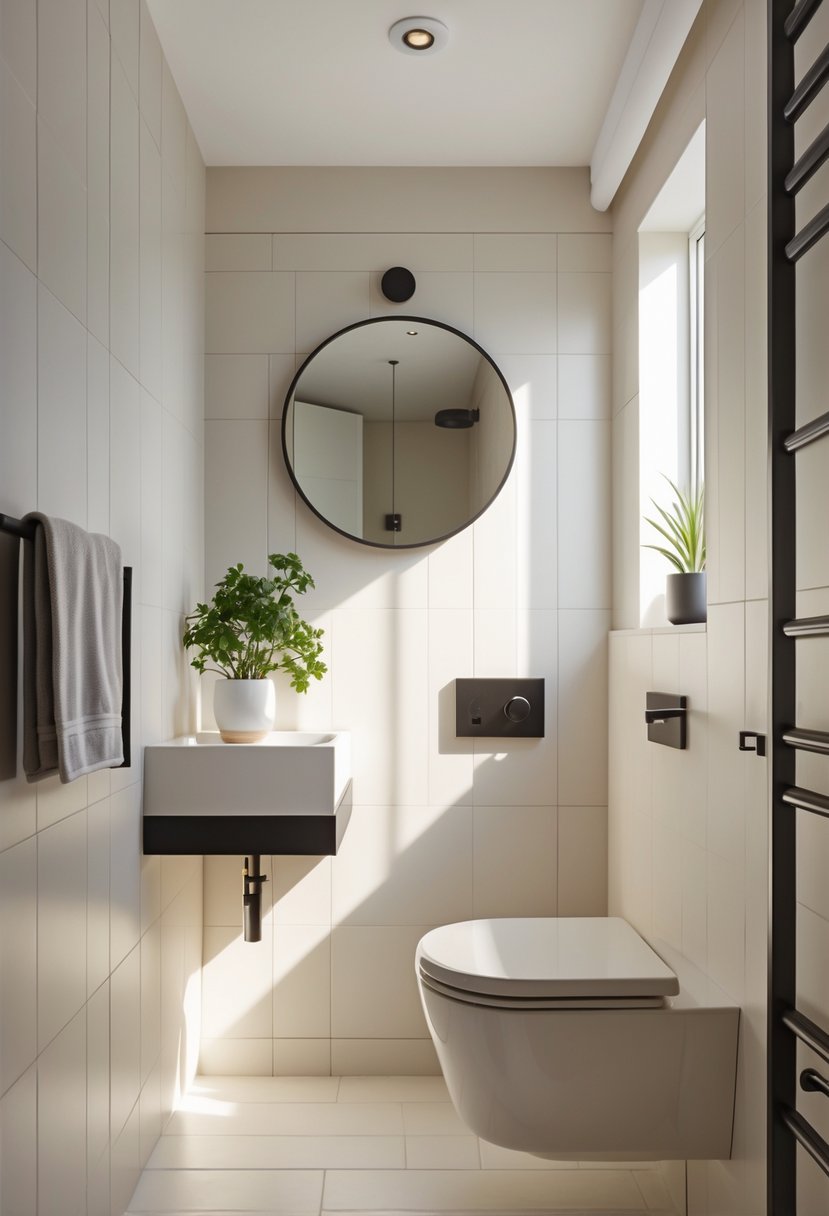
Wall-mounted toilets are a smart choice for small bathrooms. They attach directly to the wall, which frees up floor space. This makes the room feel less crowded and easier to clean.
Because the toilet’s tank is hidden inside the wall, the design looks sleek and modern. It also saves several inches compared to traditional toilets with visible tanks. This extra space can make a big difference in a tiny bathroom.
People often pair wall-mounted toilets with floating vanities. Together, they open up the floor area and create a more open, airy atmosphere. This setup helps small bathrooms appear larger without adding anything bulky.
Installing a wall-mounted toilet requires some work behind the wall, so it might cost more upfront. However, the space-saving benefits often outweigh the extra installation effort. For tight spaces, this style is a practical way to maximize usable room.
4) Incorporate vertical storage with tall shelving units
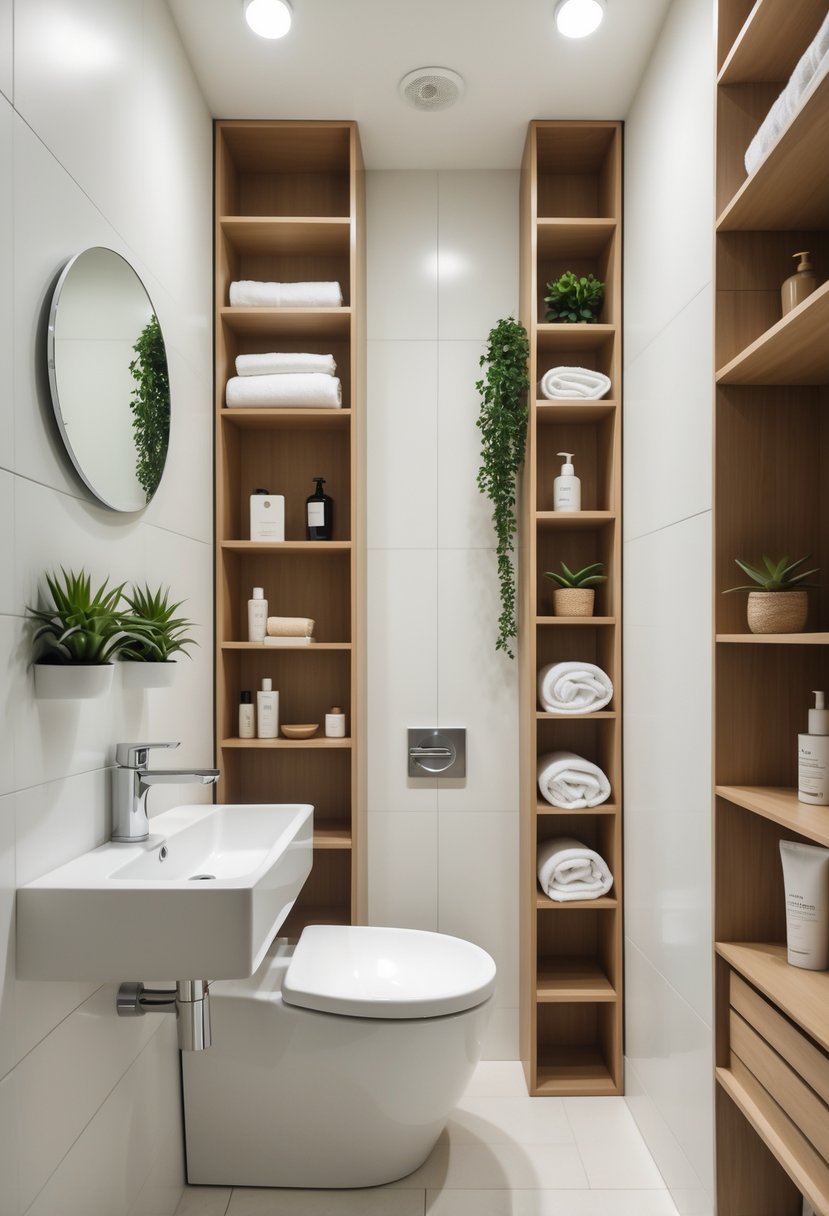
Tall shelving units are a practical way to add storage in a small bathroom. They use vertical space without taking up much floor area. This helps keep the bathroom organized while leaving more room to move around.
Narrow shelves that reach close to the ceiling can hold towels, toiletries, and other essentials. Open shelves also create a feeling of openness and make items easy to reach. This approach reduces clutter and keeps everyday items within sight.
Freestanding or built-in tall shelves work well depending on the bathroom layout. They can be placed next to the sink or near the shower area. Choosing a design that fits the style of the bathroom adds function without sacrificing appearance.
By focusing on height, tall shelving units bring order to tight spaces. This makes small bathrooms feel less crowded and more efficient for daily use.
5) Choose sliding or pocket doors instead of swinging doors
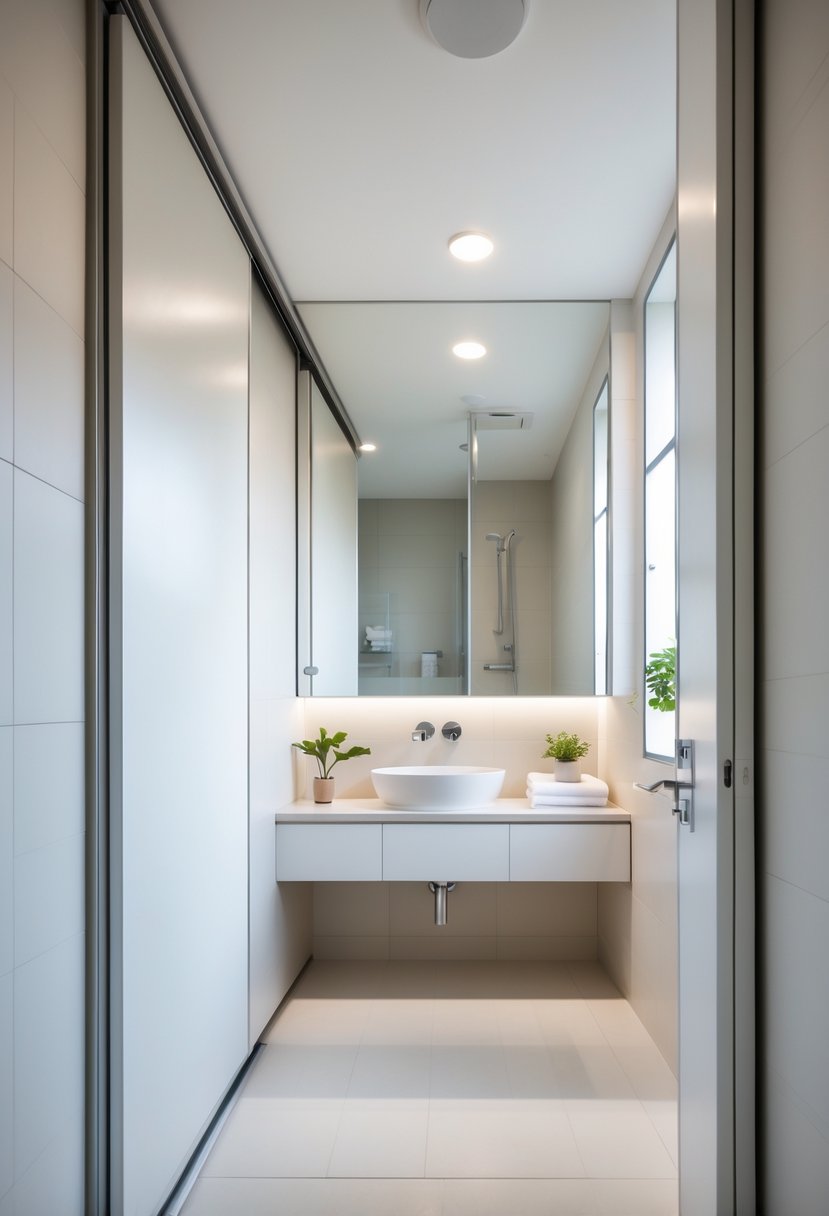
Sliding and pocket doors save space in small bathrooms by eliminating the need for door clearance. Unlike swinging doors, they do not require room to open inward or outward. This allows more flexibility in arranging fixtures and storage.
Pocket doors slide into the wall, disappearing completely when open. This creates a clean, seamless look and gives maximum usable floor space. They work well in tight areas where every inch counts.
Sliding barn doors also save space but stay visible when open. They add character and can be easier to install than pocket doors because they don’t require wall cavities. However, they need some wall space beside the door for sliding.
Both door types avoid the problem of swinging doors blocking bathroom features or hitting walls. They improve movement and can make a small bathroom feel less cramped.
Choosing sliding or pocket doors is a practical way to increase bathroom functionality in a tiny space. It allows for better layout options and more comfortable use.
6) Apply light, neutral paint colors to brighten the space
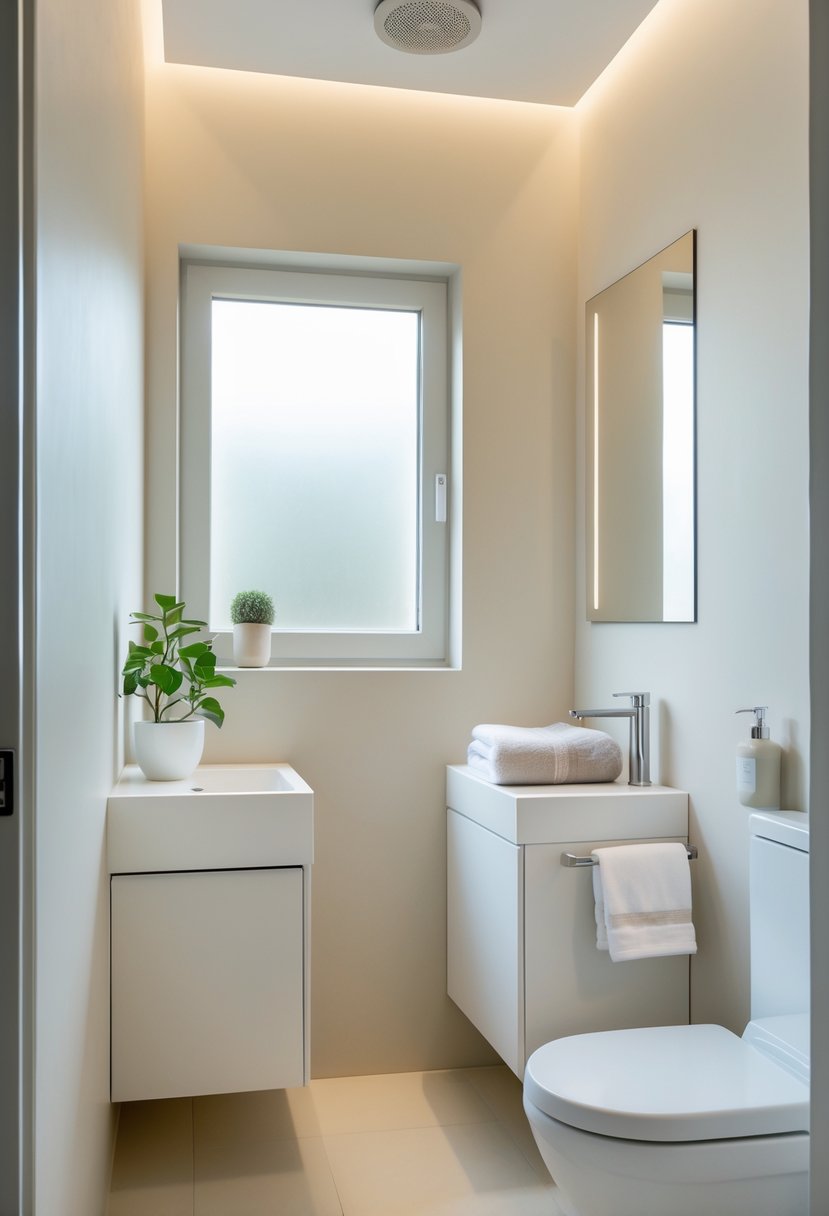
Using light, neutral paint colors is a simple way to make a tiny bathroom feel brighter and larger. Shades like soft whites, pale grays, and light blues reflect natural and artificial light better than darker tones. This reflection helps open up the space visually.
Neutral colors create a calm and clean look. They don’t overwhelm the room, which is important in a small space. Light paint also works well with mirrors and glossy surfaces, which further enhance brightness.
Choosing the right paint color can change how the bathroom feels. A bright, airy room feels more inviting and less cramped. This choice is especially helpful if the bathroom has little or no natural light.
In small bathrooms, light neutral colors provide a fresh and open atmosphere. They support a variety of decorating styles and make it easier to update accessories over time.
7) Install recessed medicine cabinets for hidden storage
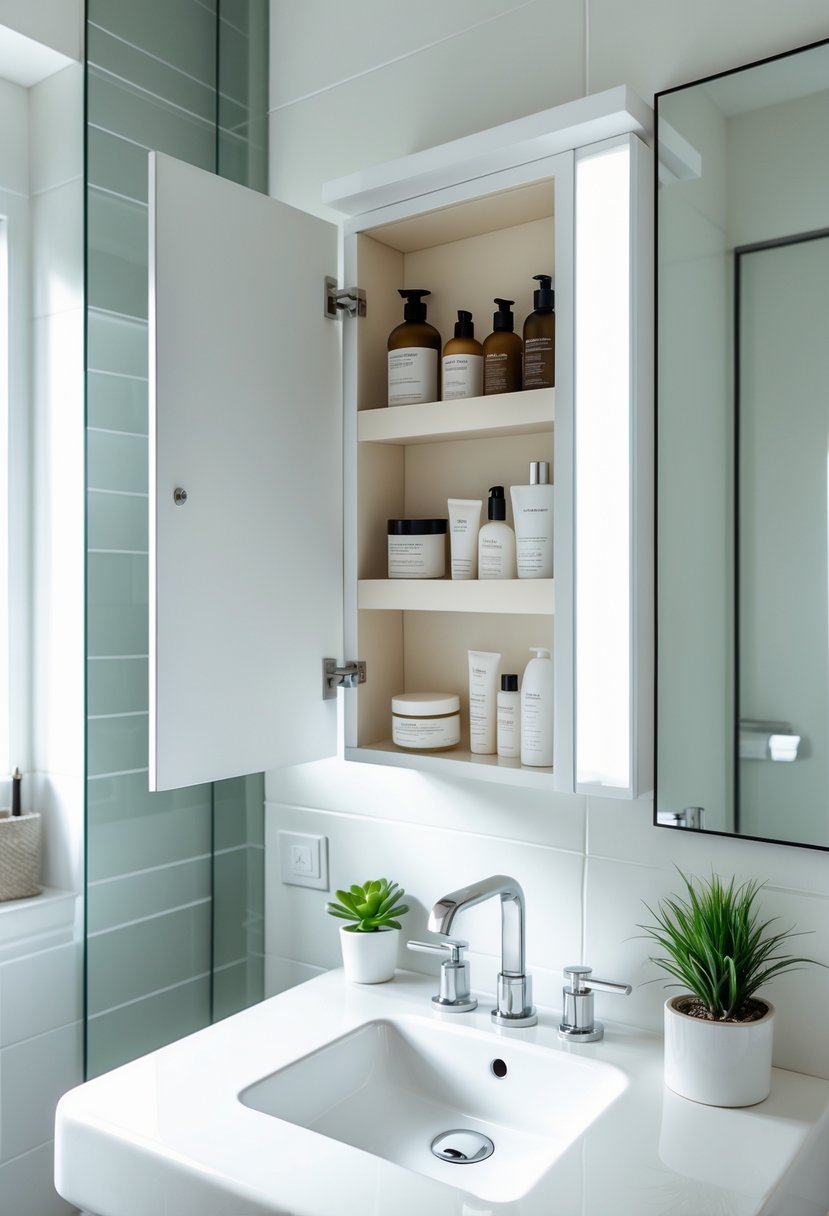
Recessed medicine cabinets fit directly into the wall, saving valuable space in a small bathroom. This design keeps the cabinet flush with the wall surface, so it does not take up any extra room.
Many recessed cabinets come with mirrored fronts, which serve two purposes. They provide storage inside while acting as a bathroom mirror, reducing the need for extra wall fixtures.
Choosing the right size and style is important. The cabinet should be deep enough to hold essentials but not so deep that it causes installation problems. A slim, shallow cabinet can work well in tight spaces.
Installation requires cutting into the wall and adding support, so careful planning is necessary. Once installed, it offers a clean, streamlined look that helps keep the bathroom clutter-free.
Recessed medicine cabinets provide good hidden storage while maintaining a neat, organized appearance. They are a practical choice for maximizing small bathroom space without crowding the room.
8) Use clear glass shower doors to avoid visual barriers
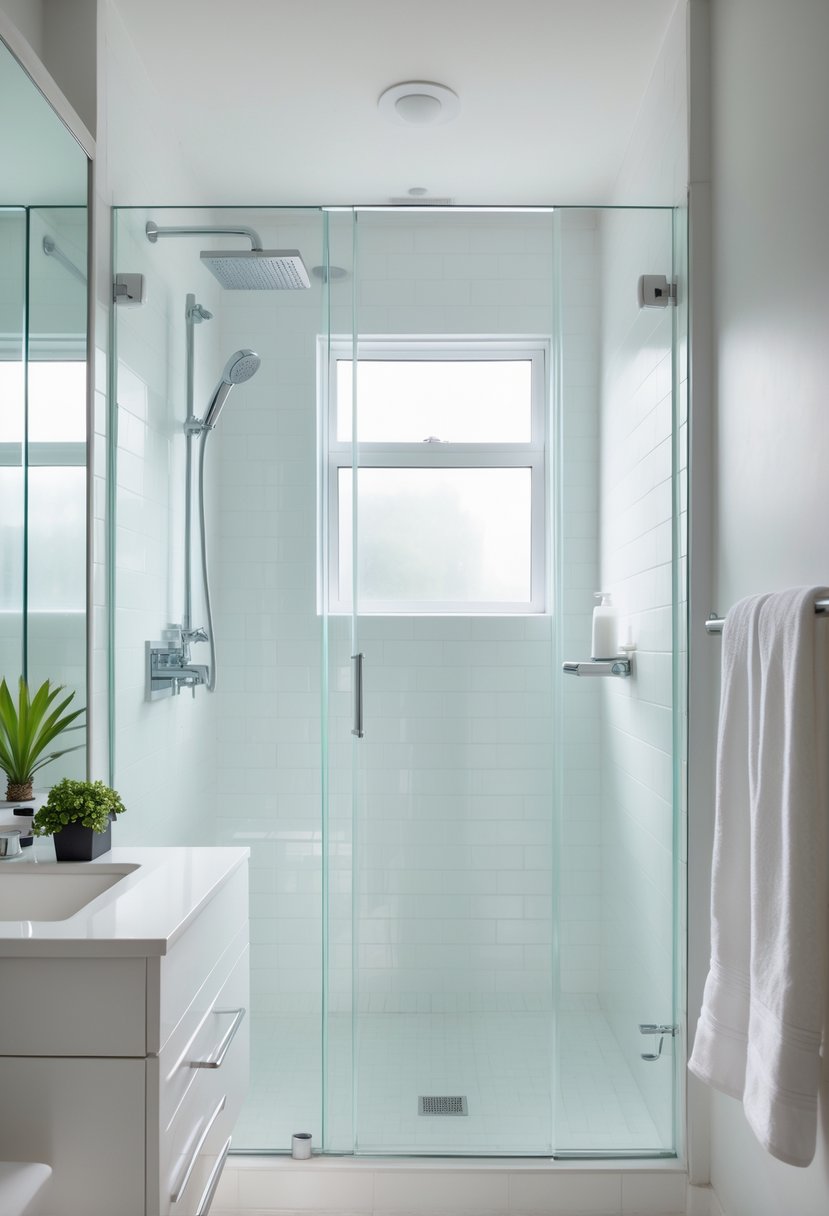
Clear glass shower doors help make a small bathroom feel more open. They remove visual barriers that framed or opaque doors often create. This allows the eye to see across the entire space, which gives the illusion of more room.
Light passes freely through clear glass. This brightens the bathroom and prevents the space from feeling closed off or cramped. It also highlights other design features without interruption.
Frameless glass doors are a popular choice because they provide an uninterrupted view. They add a modern, clean look while keeping the shower area visually connected to the rest of the room. This can make a tiny bathroom appear larger and less crowded.
Clear glass doors are also practical. Without heavy frames or extra hardware, they tend to be easier to clean. Plus, they help prevent water from splashing out without breaking the visual flow of the space.
9) Add floating vanities to increase floor visibility
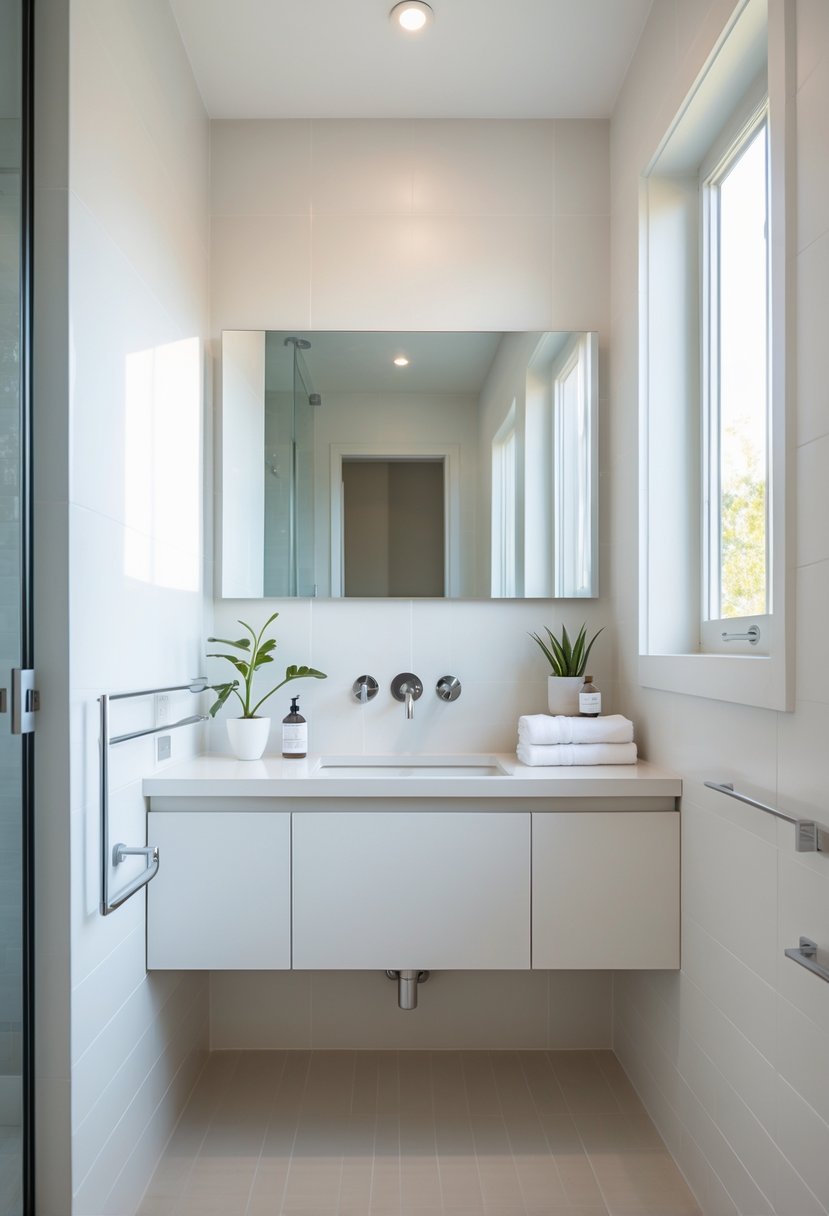
Floating vanities are a smart choice for tiny bathrooms because they free up floor space. By mounting the vanity on the wall, the floor beneath stays visible, making the room feel more open and less crowded. This simple change helps create a cleaner look and makes cleaning easier.
These vanities often come with built-in drawers or shelves. This allows for good storage without taking up extra space. Items like towels and toiletries can be kept organized and within reach, keeping the countertop clear and clutter-free.
Floating vanities also add a modern touch to the bathroom. Their sleek design fits well with different styles, from minimalist to rustic. Because they don’t sit on the floor, they give the illusion of more space and improve the overall flow of the bathroom.
In small rooms where every inch counts, floating vanities can make a big difference. They improve both function and style while helping the space look larger and less cramped.
Design Principles for Small Bathrooms
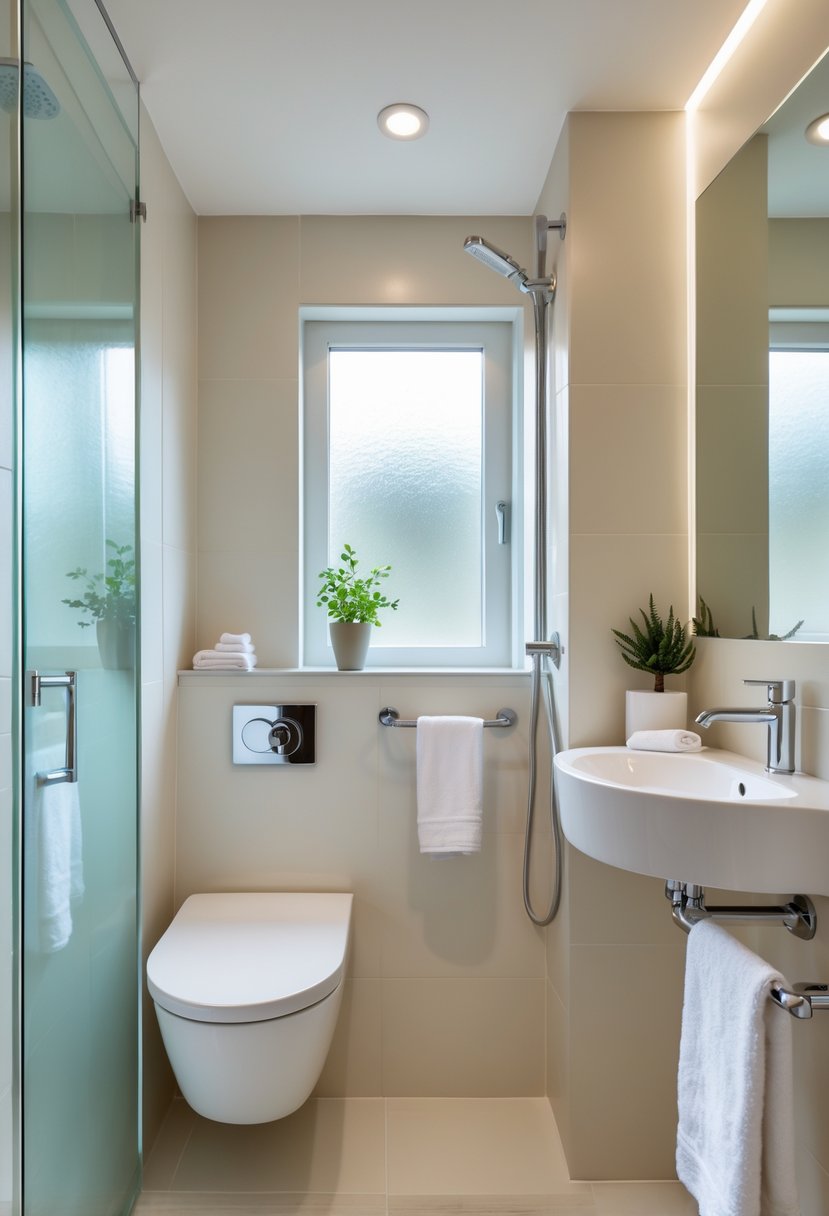
In a tiny bathroom, every choice affects how spacious and functional the room feels. Using the right layout, light, and fixtures can help make the space efficient and comfortable without feeling crowded.
Maximizing Vertical Space
Using vertical space is essential in a small bathroom. Shelves installed above the toilet or door can hold towels and toiletries. Tall, narrow storage units work well because they fit tight spaces but add plenty of storage.
Wall hooks and hanging baskets free up counter space by keeping items off surfaces. Mirrors placed higher on walls can also create the feeling of more height and openness.
Stacked or hanging towels keep things organized and easy to reach without cluttering counters. This principle helps keep floors and counters clear, which makes the room feel larger.
Optimizing Natural and Artificial Lighting
Good lighting is key to making a small bathroom feel open and welcoming. Maximizing natural light by using sheer or frosted windows keeps the room bright without sacrificing privacy.
Artificial lighting should include layers: overhead lights for general use and task lighting near mirrors for grooming. LED lights save space and energy.
Using light colors on walls and reflective surfaces like mirrors enhances brightness. Avoid heavy or dark curtains that block natural light, and consider adding dimmable lights for flexibility.
Choosing Space-Saving Fixtures
Choosing the right fixtures can free up important floor and wall space. Corner sinks fit where traditional vanities won’t, saving room. Compact toilets and wall-mounted models create more floor area.
A single-sink vanity with built-in storage can hold essentials without taking too much space. Sliding or pocket doors prevent the problem of swinging doors that crowd the bathroom.
Select fixtures with clean lines and light finishes. Bulky or ornate items can make the space feel cramped. Prioritize functionality and size to keep the bathroom easy to move around in.
Common Mistakes to Avoid in Tiny Bathroom Makeovers
A tiny bathroom needs careful choices to stay functional and comfortable. Overloading the space or missing smart storage options can quickly spoil the design and make the room hard to use.
Overcrowding With Décor
Many small bathrooms become cramped because homeowners add too many decorative items. While some decoration can enhance style, too much creates clutter and reduces usable space. Items like large art pieces, bulky plants, or oversized rugs can make the room feel smaller.
It’s better to pick a few small, simple accents. Mirrors not only decorate but also open up the space by reflecting light. Avoid heavy curtains or thick towels that take up visual and physical space. Every decoration should have a purpose or a clear place that does not block movement or storage.
Ignoring Storage Solutions
One of the biggest problems in tiny bathrooms is poor storage planning. Without enough places to put things, surfaces get messy fast, and the room feels chaotic.
Using vertical storage can free up floor space. Shelves above the toilet or wall-mounted cabinets help keep items organized but out of the way. Under-sink cabinets or drawers add hidden storage without crowding.
Storage should be planned alongside fixtures and decor. If the space is too tight for large cabinets, consider slim or recessed options. Keeping essentials neatly stored improves both the look and function of a tiny bathroom.
Frequently Asked Questions
Small bathrooms require careful planning to make the most of limited space. Choosing the right fixtures, storage, lighting, and colors can significantly improve both function and style.
How can I maximize space in a tiny bathroom?
Using a pedestal sink saves valuable floor area. Wall-mounted toilets also free up room by keeping the floor clear. Sliding or pocket doors take up less space than traditional swinging doors.
What are the best storage solutions for small bathrooms?
Vertical storage works well, such as tall shelving units that use wall height. Built-in niches in the shower or walls provide extra storage without taking floor space. Hooks and magnetic strips can keep items organized and off counters.
What are some effective small bathroom design strategies?
Large mirrors help create an illusion of depth, making the room feel larger. Choosing minimal fixtures and keeping surfaces clear also supports a more spacious look. Opting for open shelving instead of bulky cabinets adds to the airy feel.
How do I choose fixtures for a tiny bathroom?
Select compact fixtures designed for small spaces. A pedestal sink or wall-mounted vanity saves floor space. Use wall-mounted accessories like soap dispensers and towel bars to avoid clutter.
What lighting works best in a small bathroom?
Bright, even lighting is essential. Using layered lighting with ceiling lights and wall sconces helps eliminate shadows. Natural light, if available, enhances the space further, especially when paired with reflective surfaces.
Which color schemes make a small bathroom appear larger?
Light, neutral colors such as whites, soft grays, and pastels open up the space visually. Avoid dark colors that can make the room feel smaller. Combining light colors with ample natural or artificial light improves the overall sense of roominess.
