
Many people want to bring nature into their homes but think they don’t have enough space. Small balconies in apartments can feel empty or wasted, but they actually hold lots of potential to become green, relaxing spots.
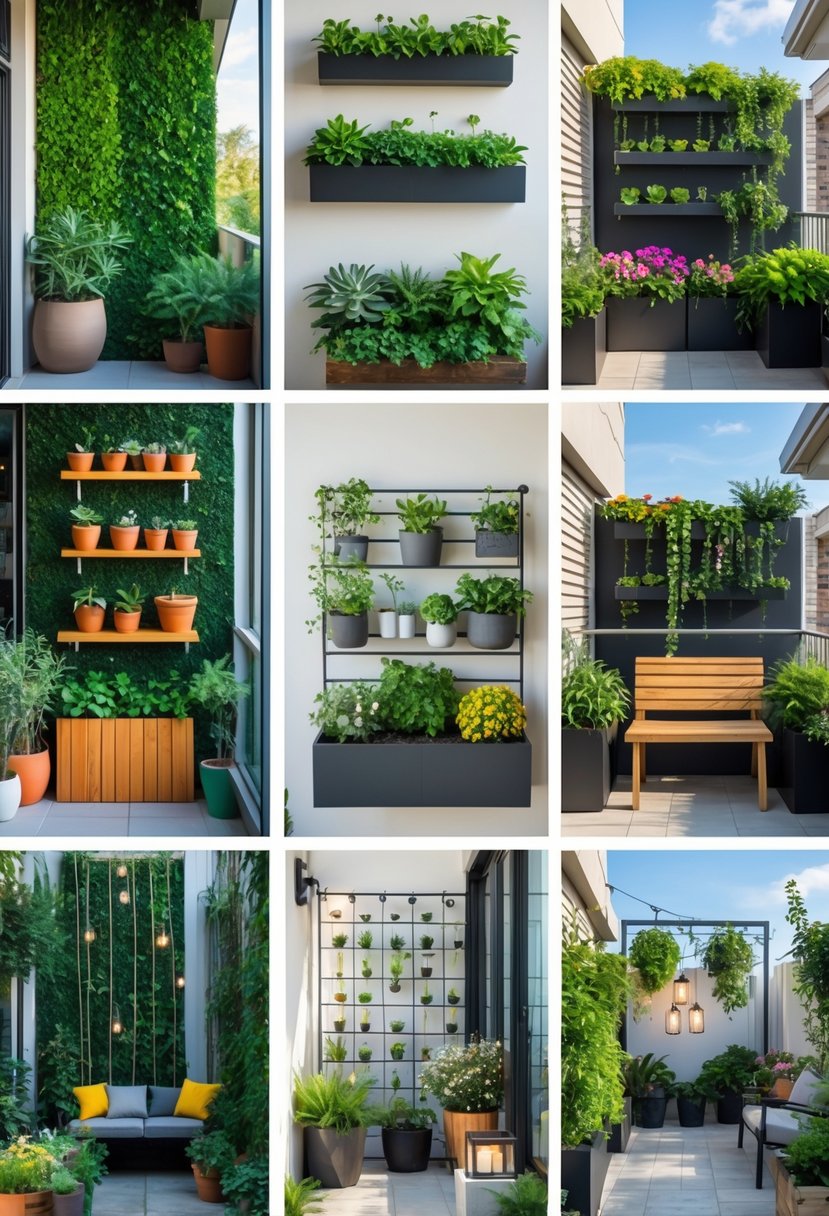
Apartment balcony gardens offer a simple way to add beauty, fresh herbs, and even vegetables without needing a big yard. With some creativity, anyone can turn their balcony into a peaceful outdoor space to enjoy every day.
1) Use vertical planters to maximize space and add greenery upwards!
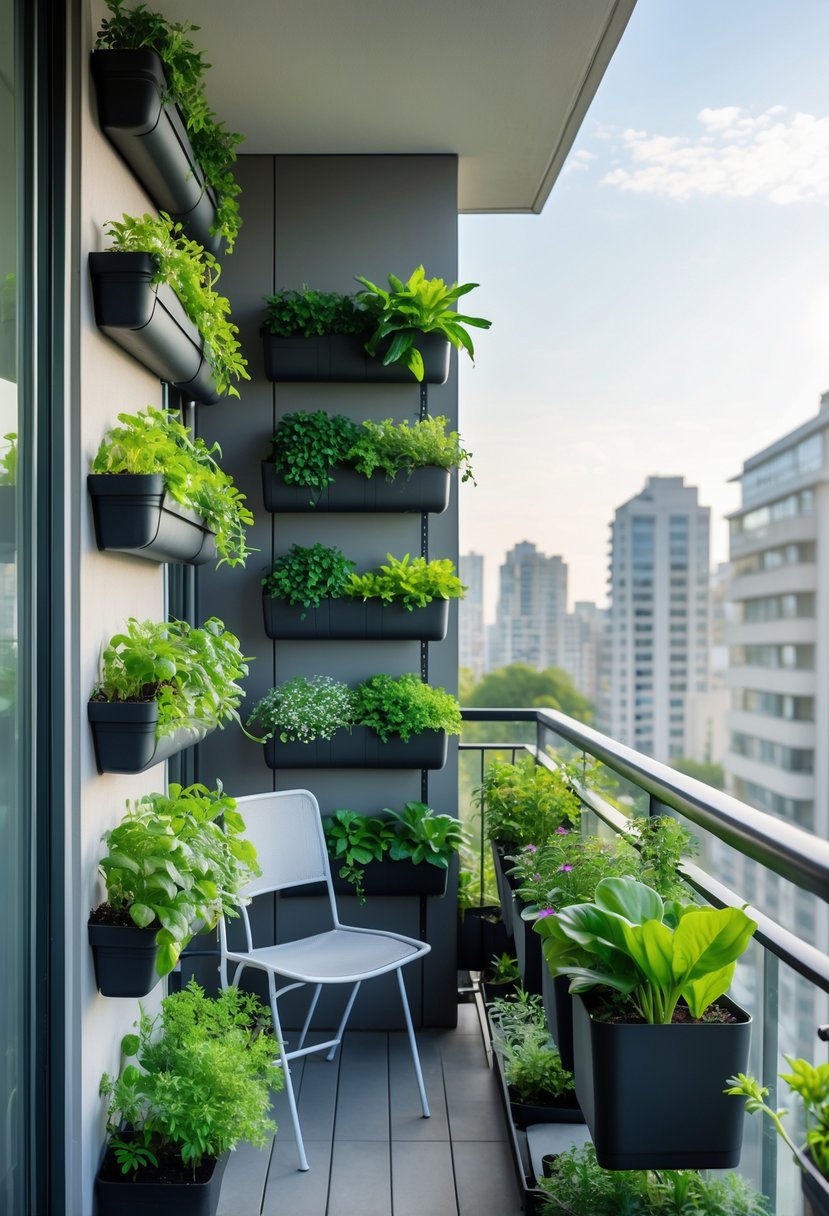
Vertical planters are perfect for small apartment balconies. They let gardeners grow many plants without taking up floor space. By using walls or railings, they create a beautiful green display that rises instead of spreads out.
These planters work well for herbs, flowers, and even small vegetables. Gardeners can start with simple wall-mounted containers or stack planters in tiers. This approach turns limited space into a lush, living wall full of color and life.
Vertical gardening also helps brighten up balconies and makes them feel more inviting. It’s a fun and creative way to grow plants, even in tiny outdoor areas. People can enjoy fresh herbs or pretty blooms while saving space.
2) Create a cozy seating nook with waterproof cushions and fairy lights.
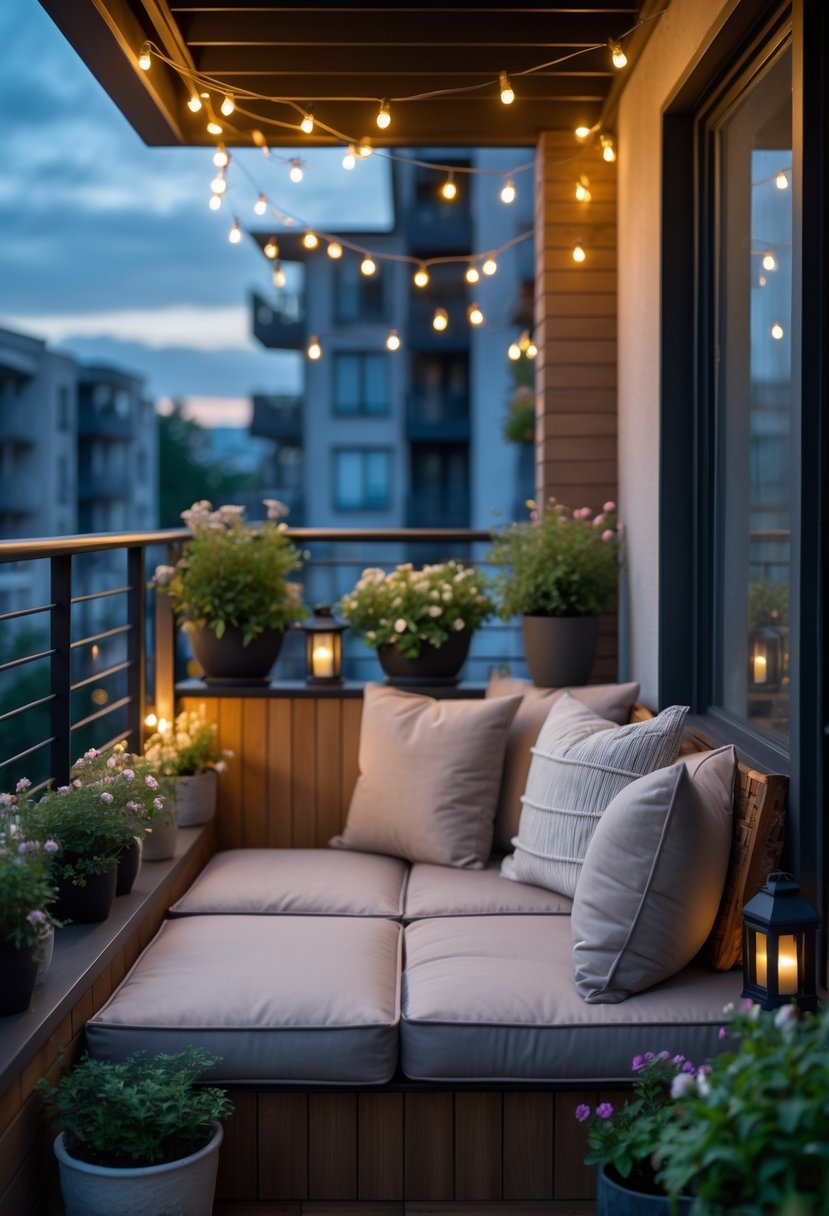
They can turn their balcony into a comfy retreat by adding waterproof cushions to a small bench or chair. These cushions are great because they stay dry and resist damage from rain. Soft cushions make the space inviting for relaxing or reading.
Fairy lights bring a warm, magical glow in the evening. Draping them around the railing or overhead creates a pleasant, cozy atmosphere. The gentle lights make the balcony feel like a special getaway.
Together, waterproof cushions and fairy lights make the balcony both practical and charming. It becomes a perfect spot to enjoy fresh air any time of day or night.
3) Grow herbs like basil, mint, and thyme in small containers for fresh flavors.
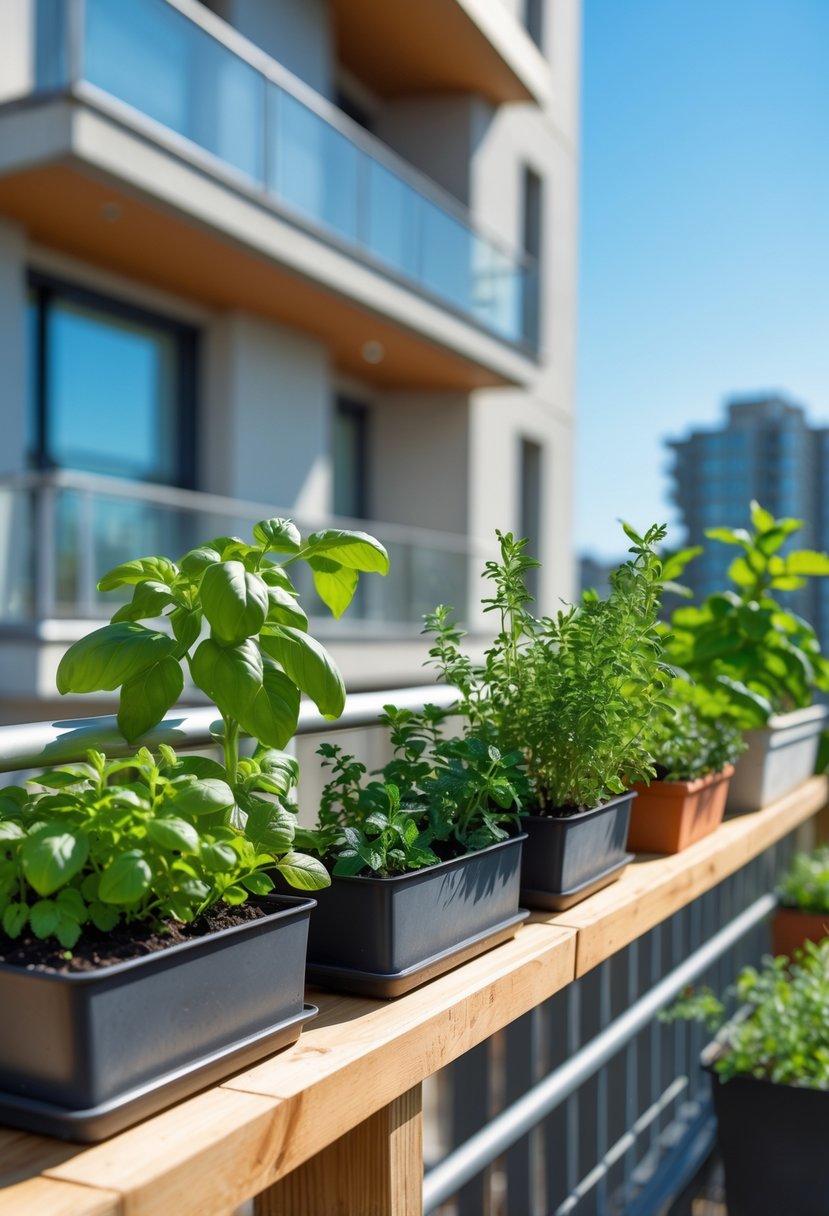
They can easily grow herbs like basil, mint, and thyme in small containers on their balcony. These plants do well in limited space and bring fresh flavors right to the kitchen.
Using pots just six inches deep with good drainage helps herbs stay healthy. Placing containers where they get plenty of sunlight is key.
Regular watering and pruning keep the herbs growing strong. It also encourages leaves to stay full of flavor.
This simple setup is perfect for anyone who wants fresh herbs for cooking without needing a big garden. Plus, the smell and look of these green plants make the balcony feel lively and fresh!
4) Install hanging baskets filled with trailing flowers for vibrant color.
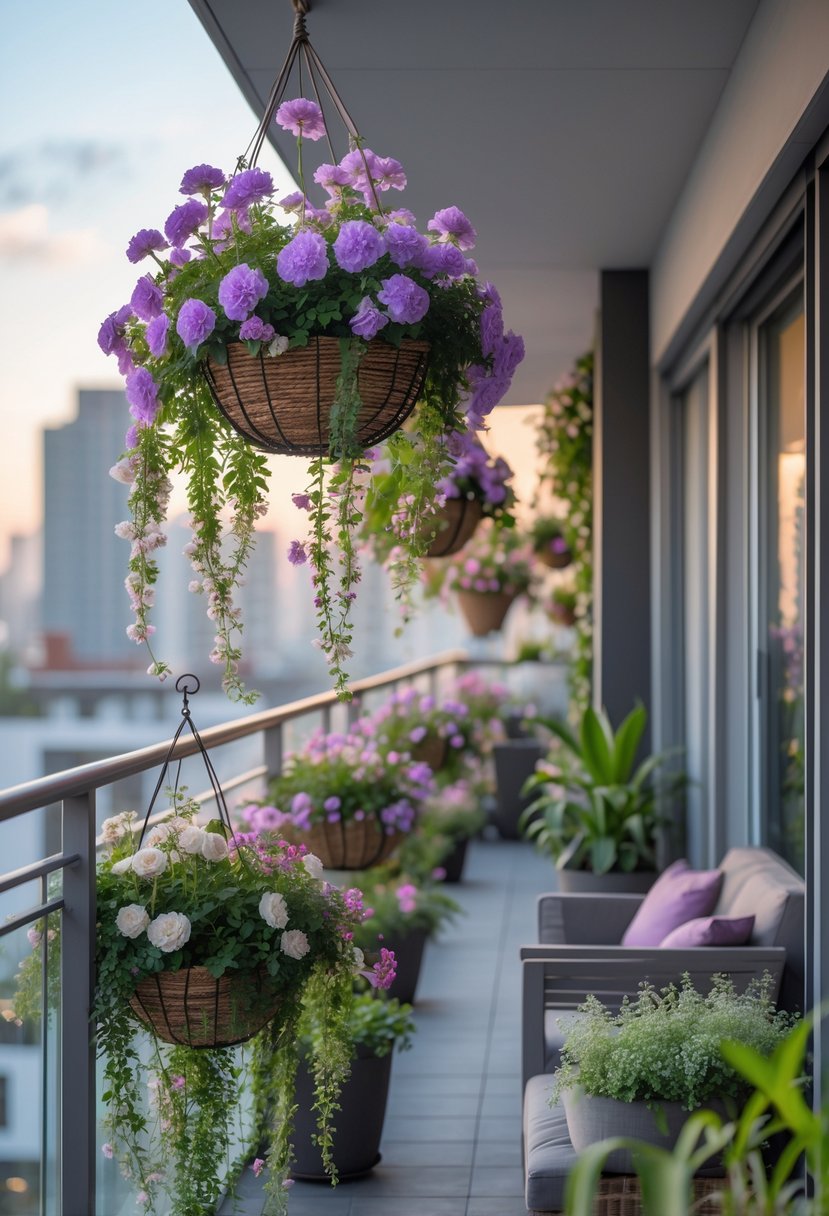
He can add instant color to his balcony by hanging baskets full of trailing flowers. These plants spill over the edges, creating a lively and natural look.
Trailing flowers like lobelia, petunias, and begonias work well because they drape down beautifully. Their bright colors brighten up small spaces without taking up floor room.
She will love how these hanging baskets bring life and movement to a balcony garden. Mixing different flower types and colors makes the display even more eye-catching.
With trailing flowers, he can easily create a splash of color that changes with the seasons. They are a fun way to add charm and beauty to any apartment balcony.
5) Try compact vegetable plants like cherry tomatoes or peppers for a mini garden
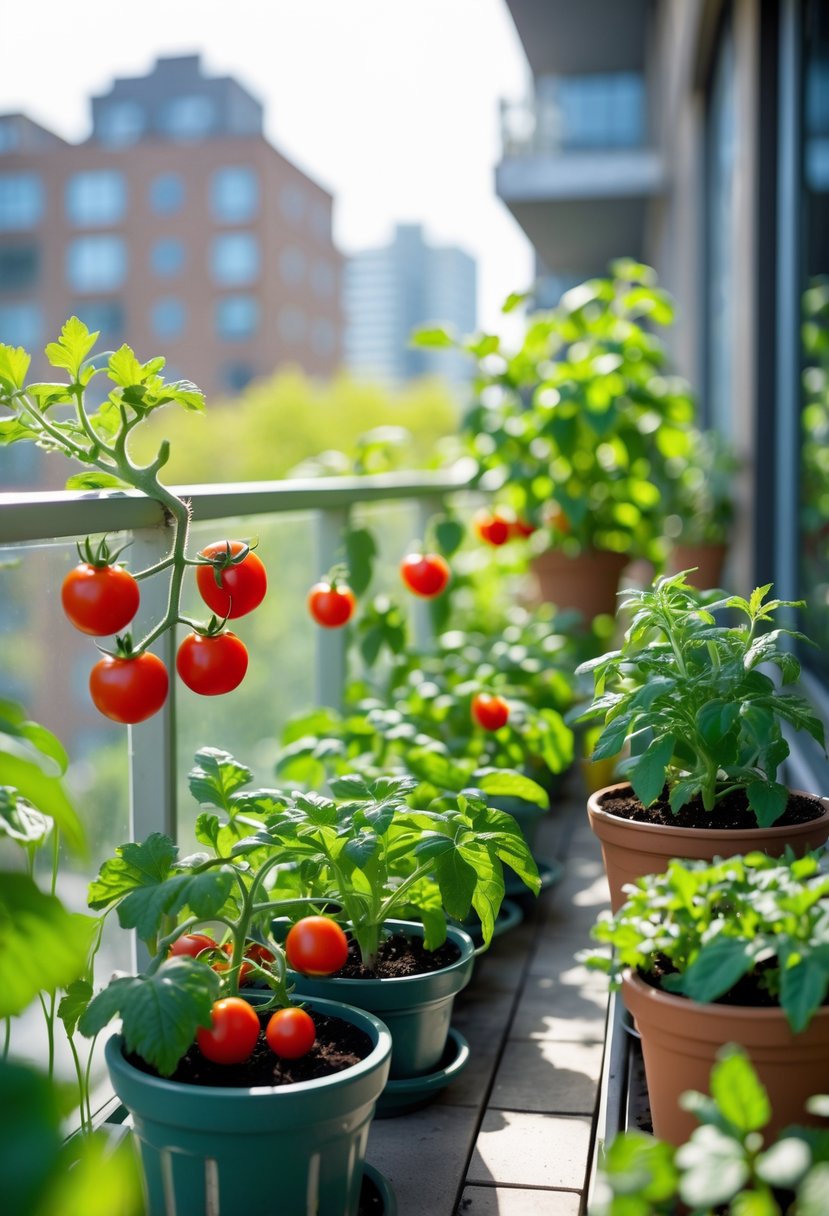
They make great choices for small balcony gardens. Compact vegetables like cherry tomatoes and peppers don’t need much space but still give a good harvest. These plants work well in pots or small containers.
Cherry tomato plants produce lots of small, tasty fruits. They grow quickly and brighten up any balcony with their colorful red, yellow, or orange tomatoes. Peppers come in many sizes and colors, and some dwarf varieties stay small enough for tiny spaces.
Growing compact vegetables allows people to enjoy fresh produce without a big garden. These plants are easy to care for, making them perfect for beginners. With just a few pots, their balcony can turn into a mini garden full of life and flavor.
6) Add a vertical garden wall to turn your balcony into a lush paradise.
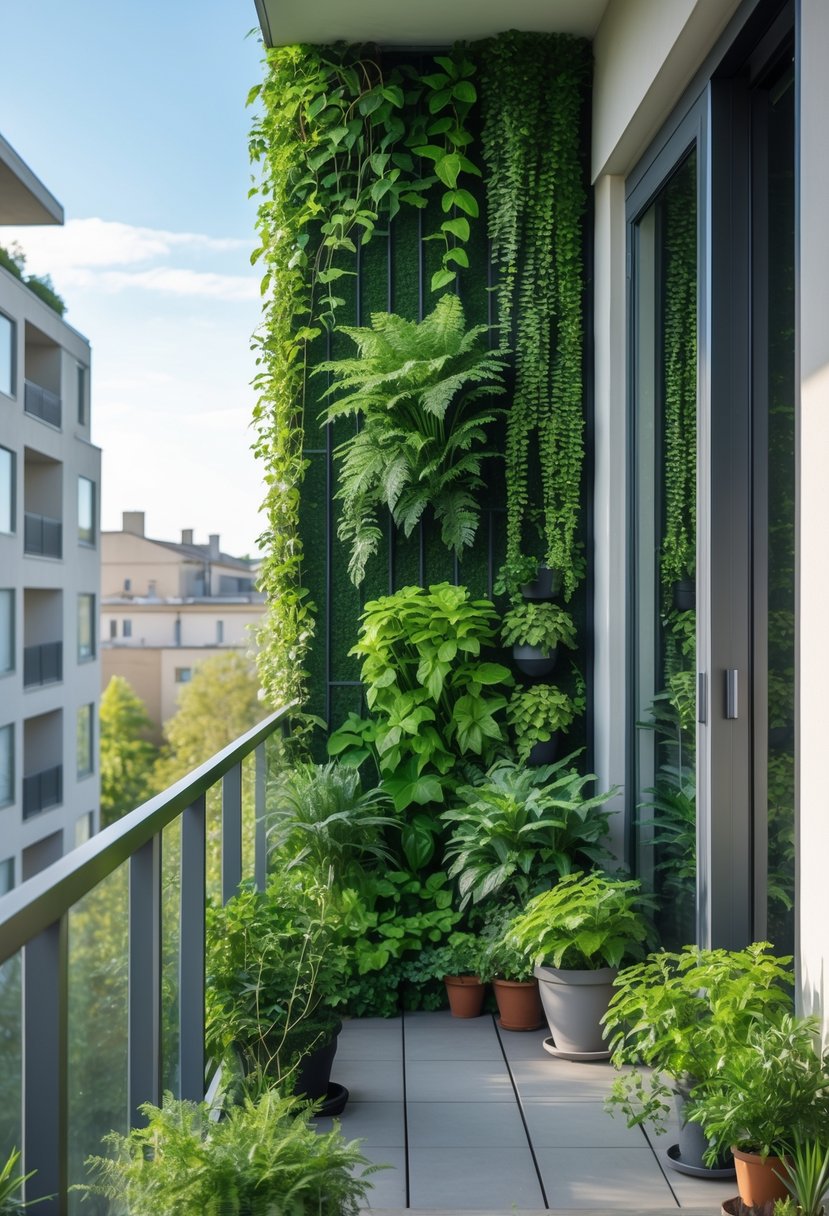
They can create a vertical garden wall using planters or pockets attached to a sturdy frame. This saves floor space and adds a burst of green right on the wall. Climbing plants or small pots of flowers bring life and color in a small area.
A vertical wall garden improves air quality and adds privacy without blocking light. It also makes the balcony feel cozy and fresh. They can choose a mix of herbs, flowers, or leafy greens to suit their style.
With a little care, this green wall becomes the balcony’s main feature. It’s a creative way for plant lovers to enjoy nature, even in limited space.
Balcony Garden Essentials
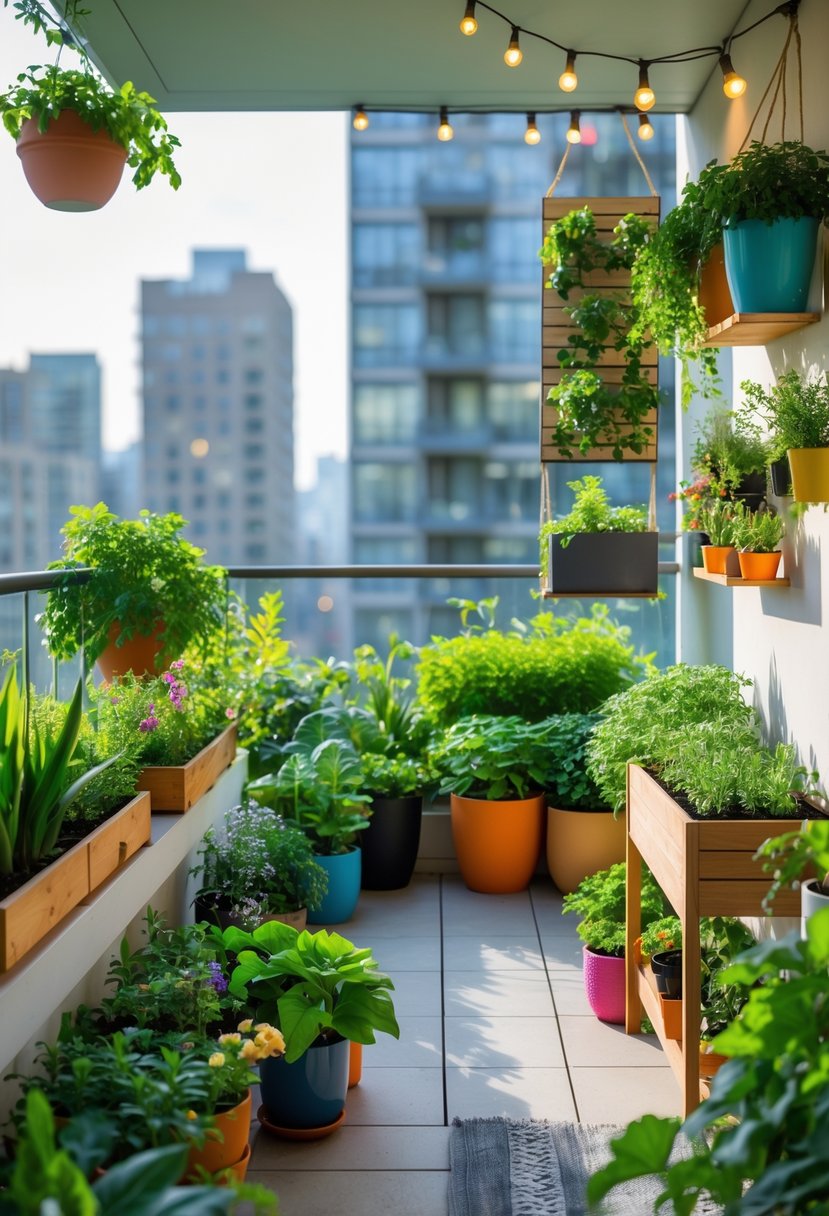
Creating a balcony garden starts with the right tools and knowledge. Key factors include picking containers that fit the space, ensuring safety for the balcony and plants, and mastering sunlight and watering needs. These details help the garden thrive and stay enjoyable.
Choosing the Right Containers
Containers are the foundation of any balcony garden. Lightweight pots made of plastic or resin are ideal because they’re easy to move and won’t strain the balcony’s weight limit. Heavier options like ceramic or terracotta look good but need care to avoid cracks or damage.
Size matters: deeper containers suit vegetables and larger plants, while shallow ones work well for herbs and flowers. Look for pots with drainage holes to prevent water buildup, which can harm roots.
Using vertical planters or hanging baskets is a smart way to save floor space. Grouping containers on shelves or plant stands also helps organize the area and adds visual interest.
Balcony Safety Considerations
Balcony safety protects both plants and people. Heavier containers should be placed safely on the ground, away from edges. Lightweight hanging planters must be securely anchored to avoid falling during wind or bad weather.
Check the balcony’s weight limit with the building management, especially if adding multiple pots, furniture, and extra soil. Avoid blocking exits or walkways to keep the space safe and comfortable.
Windbreaks like railing screens or bamboo shades help protect plants from strong gusts. It’s also important to consider how water drains to avoid leaks that might bother neighbors below.
Sunlight and Watering Tips
Balconies vary in sunlight, so it’s important to know how many hours of sun the space gets each day. South-facing balconies receive the most sun, great for sun-loving plants like tomatoes or peppers. North-facing ones get less light, better for shade-tolerant plants like ferns or mint.
Watering depends on the container and the weather. Small pots dry out faster and may need daily watering, especially in hot weather. Using self-watering containers or adding mulch helps keep soil moist longer.
Early morning or late afternoon are the best times to water. This prevents water evaporation and lets plants absorb moisture before the heat of the day.
Maximizing Small Balcony Spaces
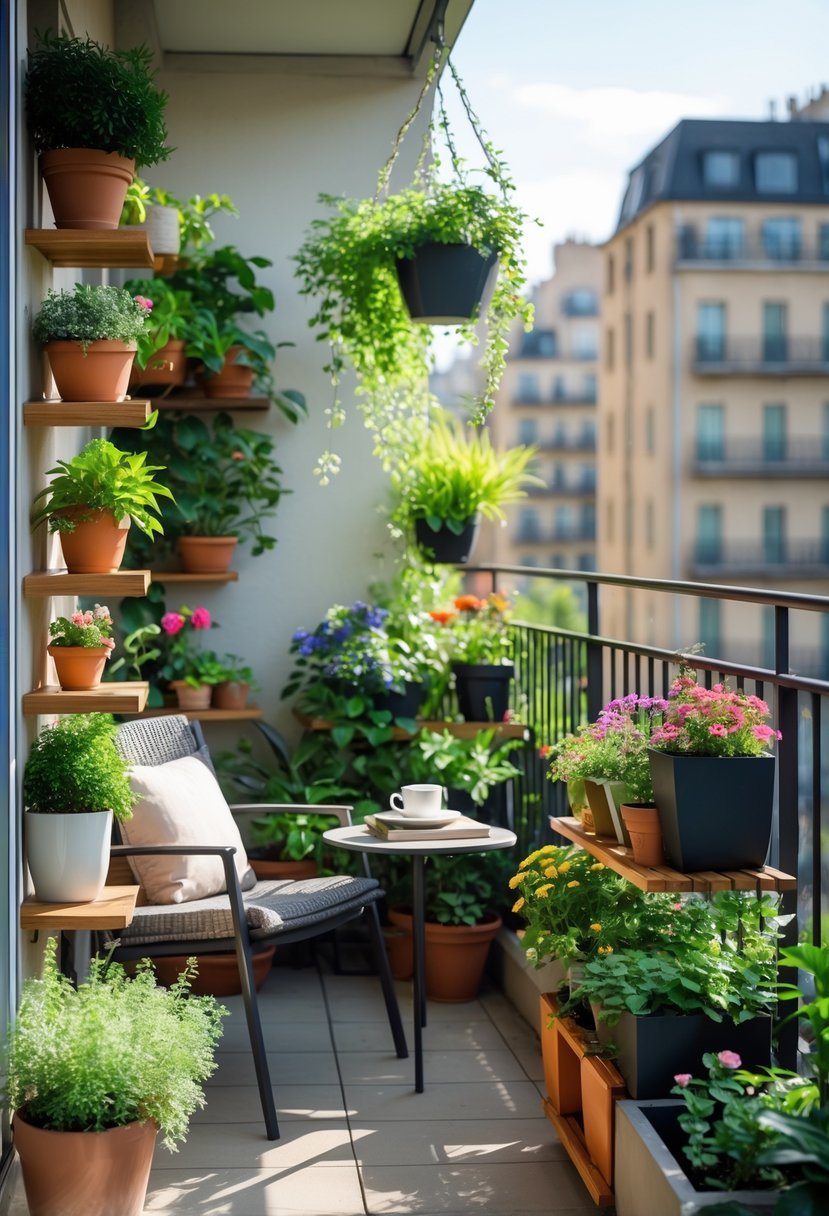
Small balconies don’t have to limit what someone can grow or enjoy. Clever ways to use walls, railings, and storage can transform even the tiniest outdoor spot into an efficient and lively garden.
Vertical Gardening Solutions
Using vertical space lets a person fit more plants without crowding the floor. Wall planters, hanging pots, and tall trellises help climb vines or hold small pots stacked vertically. These tools allow for growing flowers, herbs, or even small vegetables in layers.
Vertical gardens can be built with wooden pallets, metal grids, or specially made pocket planters. They keep plants organized and add a green wall effect. Vertical gardening also improves airflow and sunlight exposure to all plants, which helps them stay healthy.
Creative Use of Railings
Balcony railings offer valuable space to add greenery without using the floor. Hanging railing planters or baskets allow someone to grow cascading flowers or herbs close at hand. This doubles as a natural privacy screen, blocking views from neighbors.
Special railing shelves can hold small pots and create tiers. Attaching lightweight containers to railings must be done securely to ensure safety. This method keeps the balcony open while maximizing the green area along the edges.
Space-Saving Storage Ideas
Storage is key when space is tight. Using multipurpose furniture like benches with built-in storage boxes lets a person store gardening tools, soil, or cushions out of sight.
Stackable shelves and rolling carts provide more room for pots and supplies without cluttering the floor. Hooks placed on walls or ceilings keep gardening gloves, watering cans, or small tools within easy reach and off surfaces. These ideas keep the balcony tidy and functional.
